 ARCORA FAUCETS
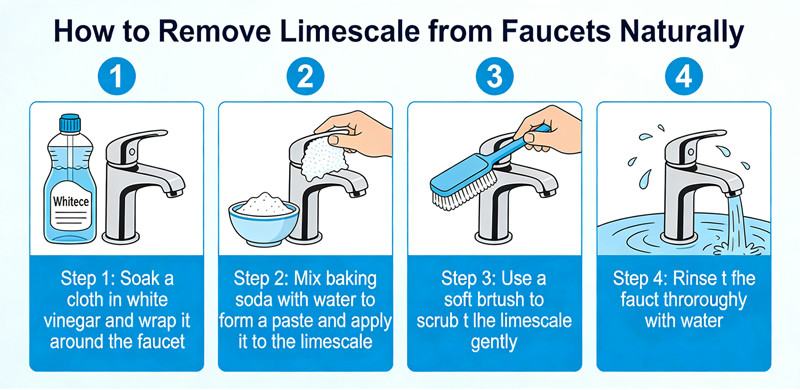
Limescale buildup on faucets is a common household problem, especially in areas with hard water. Those chalky white deposits not only make your kitchen or bathroom look less clean, but they can also affect water flow and damage your faucet over time. The good news is that you don’t need harsh chemicals to solve the problem. Natural cleaning methods are effective, affordable, and safe for both your home and the environment.
What Is Limescale and Why Does It Form?
Limescale is a hard, chalky residue left behind when water evaporates and leaves minerals like calcium and magnesium on surfaces. Over time, these minerals accumulate around faucet spouts, handles, and aerators.
The more frequently your faucet is used, the faster limescale can build up—especially if your water supply contains high mineral content. If left untreated, it can clog aerators, reduce water pressure, and dull the finish of your faucet.
Why Choose Natural Cleaning Methods?
Many commercial cleaners contain strong acids and chemicals that can damage faucet finishes or irritate your skin. Natural solutions, on the other hand, are:
- Safer for daily use
- Eco-friendly
- Cost-effective
- Gentle on finishes like chrome, stainless steel, or brushed nickel
Using natural ingredients also reduces the risk of corrosion or discoloration over time.
Best Natural Ways to Remove Limescale
1. White Vinegar Soak
White vinegar is one of the most effective natural cleaners for dissolving limescale. Its mild acidity breaks down mineral deposits quickly.
How to use it:
- Soak a cloth or paper towel in white vinegar.
- Wrap it around the affected area of the faucet.
- Let it sit for 30–60 minutes.
- Remove the cloth and gently scrub with a soft brush or sponge.
- Rinse thoroughly with water and dry with a clean cloth.
For stubborn buildup, you can repeat the process or leave it on slightly longer.
2. Lemon Juice Treatment
Lemon juice works similarly to vinegar because it contains natural acids that dissolve limescale.
Steps:
- Cut a lemon in half.
- Rub the cut side directly on the limescale.
- Let the juice sit for 20–30 minutes.
- Wipe clean and rinse.
Lemon also leaves a fresh scent, making it a pleasant alternative to vinegar.
3. Baking Soda Paste
Baking soda is a gentle abrasive that helps remove residue without scratching surfaces.
How to apply:
- Mix baking soda with a small amount of water to form a paste.
- Apply the paste to the limescale areas.
- Gently scrub using a soft toothbrush or sponge.
- Rinse and dry thoroughly.
For extra effectiveness, you can combine baking soda with vinegar for a fizzing reaction that helps lift deposits.
4. Vinegar Bag Method for Aerators
If limescale is clogging the faucet aerator, this method works well:
- Fill a small plastic bag with vinegar.
- Place it over the faucet head so the aerator is submerged.
- Secure it with a rubber band.
- Leave it for 1–2 hours.
- Remove the bag, rinse, and run water to flush out debris.
This method restores water flow and removes hidden buildup.
5. Toothbrush Detailing
For small crevices and tight spaces around the faucet base or handles, use an old toothbrush.
- Dip it in vinegar or lemon juice
- Scrub gently to reach hidden limescale
- Rinse and wipe dry
This ensures a thorough clean, especially in areas where buildup is harder to see.
Tips to Protect Your Faucet Finish
While natural cleaners are gentle, it’s still important to clean carefully:
- Avoid using steel wool or hard brushes that can scratch surfaces
- Always rinse thoroughly after cleaning
- Dry the faucet to prevent new water spots
- Test cleaning solutions on a small area first
Different finishes may react differently, so gentle care helps maintain appearance.
How to Prevent Limescale Buildup
Prevention is just as important as cleaning. Here are some simple habits to keep your faucets looking new:
1. Wipe Faucets After Use
Drying your faucet with a cloth after use prevents water from evaporating and leaving mineral deposits behind.
2. Clean Regularly
Light cleaning once or twice a week prevents heavy buildup, making deep cleaning unnecessary.
3. Install a Water Softener
If you live in a hard water area, a water softener can significantly reduce mineral content and slow down limescale formation.
4. Use a Faucet Filter
Filters can help reduce impurities and improve water quality, which also minimizes residue.
When to Take Extra Action
If limescale buildup becomes severe, it can affect faucet performance. Signs include:
- Reduced water pressure
- Uneven water flow
- Visible thick deposits
In these cases, removing and soaking parts like the aerator or consulting a professional may be necessary.
Final Thoughts
Limescale is a common but manageable issue that affects both the appearance and performance of your faucets. Fortunately, natural solutions like vinegar, lemon juice, and baking soda provide an effective way to remove buildup without harsh chemicals.
By incorporating these simple methods into your cleaning routine and taking preventive steps, you can keep your faucets looking clean, functioning properly, and lasting longer. A little regular maintenance goes a long way in preserving both the beauty and efficiency of your kitchen and bathroom fixtures.
If you want, I can also create:
- SEO titles (high ranking)
- Pinterest-style titles
- Or product-related content for your faucet site 👍