 ARCORA FAUCETS
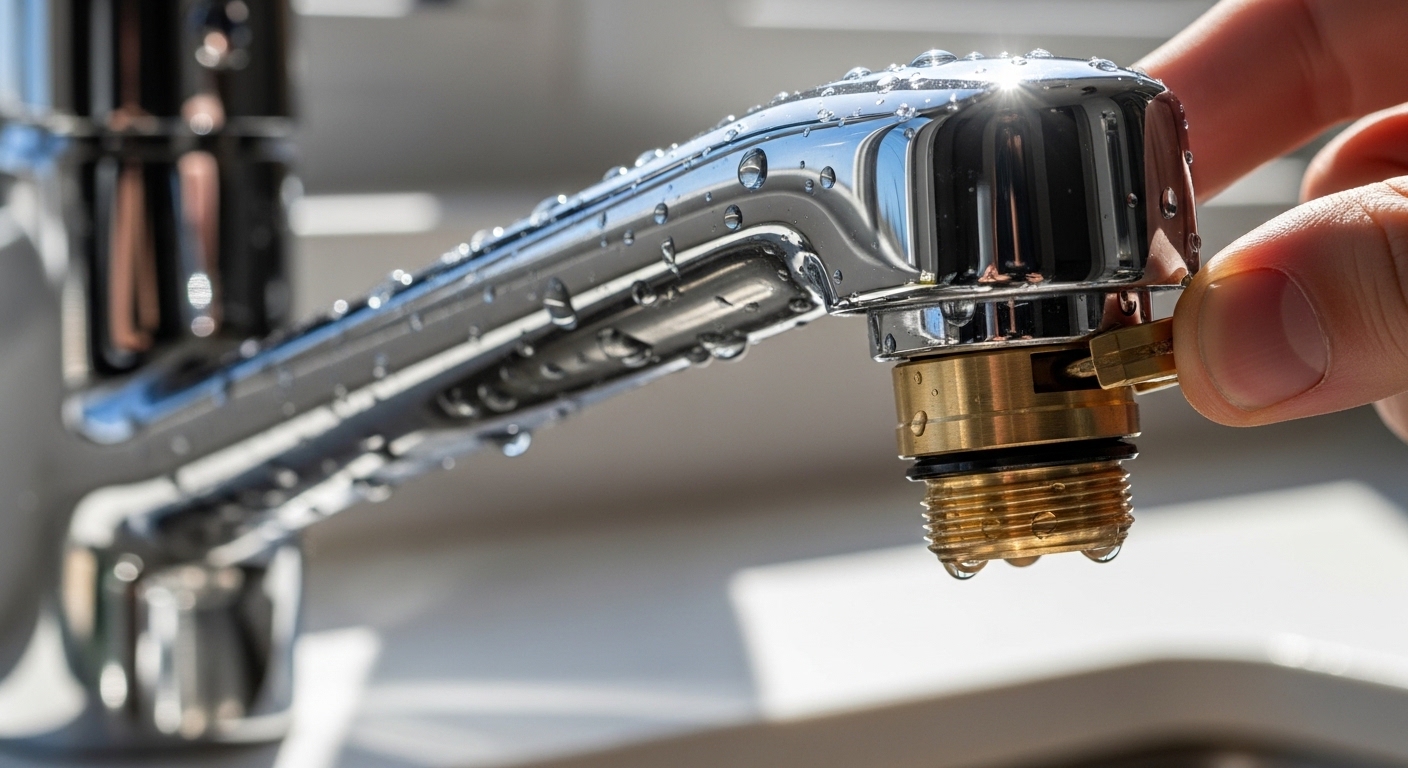
If you’ve ever stripped a faucet’s tip trying to unscrew a corroded aerator, you already understand why the sink aerator quick connect system has become the fastest-growing accessory category in kitchen and bathroom plumbing. Instead of fighting calcified threads, a quick-connect adapter snaps onto your spout and lets you click any compatible aerator, spray wand, or inline filter into place with a single push. For DIYers, landlords, and pros managing dozens of fixtures, that’s hours of labor saved every month — and it’s also the cleanest way to add features like swivel sprays, child-friendly soft flow, or sediment filtration without replacing the whole faucet.
What Is a Sink Aerator Quick Connect and Why It Matters in 2026
A sink aerator quick connect is a two-piece coupling system. The first piece — the male adapter — threads permanently onto your faucet’s spout, replacing the original aerator housing. The second piece — the female cartridge — holds the aerator screen, flow restrictor, or accessory (a pull-out sprayer, a faucet-mounted filter, a magnetic dock). The two halves lock together with a spring-loaded collar or bayonet ring. A quarter-turn release, and the cartridge pops free.
The technology is borrowed from pneumatic and hydraulic industries, where quick disconnects have been standard for decades. Home plumbing has only recently caught up because faucet manufacturers finally standardized male and female thread sizes — typically M22 × 1 male outer or M24 × 1 male outer for kitchen faucets, and M22 × 1 female inner or M18.5 × 1 for bathroom faucets. Once you know which thread your faucet uses, choosing a sink aerator quick connect becomes straightforward.
Why Homeowners Are Switching from Threaded to Quick-Connect Aerators
- Speed: A traditional aerator takes 30–90 seconds to unscrew, especially when limescale has welded the threads. A quick connect releases in under two seconds.
- No tools required: No more strap wrenches, jaw pliers, or wrapping the spout in painter’s tape to protect the finish.
- Modular function: Swap between a standard 1.5 GPM aerator, a 0.5 GPM laminar flow for kids’ hand-washing, and a charcoal filter cartridge — all on the same spout.
- Cleaner kitchen workflow: Click on a magnetic spray wand when you’re rinsing produce, click it off when you want a clear spout for filling pots.
- Better for rentals: Property managers can issue tenants a flow-restricting aerator and retrieve it without touching plumbing.
The Main Types of Sink Aerator Quick Connect Systems
Not every “quick connect” works the same way. When you’re shopping, you’ll see at least four distinct mechanisms on the shelf and online. Knowing the difference protects you from buying an adapter that won’t seat on your spout.
1. Push-and-Click Collar (Most Common)
The cartridge slides into the adapter and a metal or polymer collar snaps over a retaining groove. To remove, you pull the collar downward or sideways while lifting the cartridge. This is the most consumer-friendly version and the one Arcora ships on its 2026 pull-down kitchen faucet line.
2. Bayonet Quarter-Turn
Two or three lugs on the cartridge slide into matching slots in the adapter; a 90-degree twist locks them. It’s stronger than a click collar and is preferred for spray wands that absorb side loads. The downside: bayonet patterns vary by manufacturer, so cartridges aren’t always cross-compatible.
3. Magnetic Quick Connect
A high-strength neodymium ring in the adapter pulls the cartridge into alignment and holds it firmly. It’s the cleanest-feeling action and is now standard on premium pull-down faucets. Magnetic systems excel at re-docking spray wands but are less common for plain aerators because magnets add cost.
4. Threaded Adapter with Snap-Lock Cap
A hybrid: you thread a permanent collar onto the spout, then everything downstream is quick connect. This lets you retrofit a quick-connect feature onto an older faucet whose original aerator threads are intact.
Quick Connect vs Traditional Threaded Aerator: A Side-by-Side Comparison
Choosing the right system depends on how often you swap accessories, how aggressive your water chemistry is, and whether you need certified flow rates for code compliance. The table below distills the trade-offs most buyers care about.
| Feature | Quick-Connect Aerator | Threaded Aerator | Magnetic Dock System |
|---|---|---|---|
| Swap time | ≈ 2 seconds | 30–120 seconds | < 1 second |
| Tools required | None | Pliers or strap wrench | None |
| Cross-brand compatibility | Good (with standard M22/M24) | Excellent | Limited (brand-specific) |
| Resistance to limescale lockup | High (sealed coupling) | Low | High |
| Typical lifespan | 5–8 years | 3–5 years | 7–10 years |
| Flow-rate certifications available | 0.35, 0.5, 1.0, 1.5, 1.8, 2.2 GPM | 0.5–2.2 GPM | 1.5–2.2 GPM |
| Average retail cost (adapter + 1 cartridge) | $8–$22 | $2–$8 | $15–$45 |
| Best for | Most households, families with kids, filter users | Budget replacements, single-function spouts | Pull-down kitchen faucets, premium remodels |
How to Identify Your Faucet’s Aerator Thread Before You Buy
Before you order a sink aerator quick connect adapter, you need to know two things: thread diameter and gender. Faucet aerator threads come in only a handful of common sizes, but a 0.5 mm mistake will leave you with a wobbly seal and a leaky base.
- Unscrew the existing aerator. Wrap the spout in a soft cloth to protect the finish, then turn counter-clockwise. If it’s stuck, see our guide on how to remove an aerator from a kitchen faucet for a no-damage method that works on calcified threads.
- Look for threads on the outside or inside of the spout. If the spout’s outer rim is threaded, you have a male spout and need a female adapter. If the threads are inside the spout, you have a female spout and need a male adapter.
- Measure with calipers. Most kitchen faucets are M22 (22 mm) or M24 (24 mm). Most bathroom faucets are M22 female or M18.5 male. Pre-2010 American fixtures sometimes use 15/16″-27 or 55/64″-27 imperial threads — quick-connect adapters are sold in those sizes too, but read the listing carefully.
- Check for a recessed aerator. Some modern pull-down spouts hide the aerator inside a chrome cup. These require a “cache” key (a slotted tool) and a low-profile adapter.
- Confirm flow rate. If your jurisdiction enforces WaterSense rules (California, Colorado, Georgia, Texas, Washington, and others), the replacement must meet the local maximum — typically 1.8 GPM for kitchens and 1.5 GPM for bathrooms.
Materials and Finishes: What Lasts and What Doesn’t
The adapter is the part of a sink aerator quick connect that lives on your spout 24/7, so the material matters. Cheap plastic adapters fail in two ways: the polymer becomes brittle after a couple of years of hot water exposure, and the internal seat warps just enough to dribble. Solid brass adapters cost a few dollars more and outlast the faucet itself.
Finish-matching also matters more than buyers expect. A polished chrome adapter on a brushed-nickel faucet looks aftermarket from across the kitchen. Premium kits ship in chrome, brushed nickel, matte black, brushed gold, and Venetian bronze to match every common finish. If you’re undecided between finishes for a new build, our piece comparing shiny vs. matte faucet looks walks through the practical differences in fingerprint visibility and patina behavior.
Lead-Free Compliance Is Not Optional
Under the U.S. Safe Drinking Water Act, every wetted brass component installed after 2014 must contain less than 0.25 % lead by weighted average. That includes quick-connect adapters. Reputable brands stamp “NSF/ANSI 372” or “Lead-Free” on the packaging and provide a downloadable certificate. If a listing doesn’t mention the standard, walk away. For deeper background on lead-free certification and why it protects your family, see what makes a faucet “lead-free”.
Step-by-Step: Installing a Sink Aerator Quick Connect
Installation takes under five minutes once you have the right adapter in hand. You’ll need a soft cloth, plumber’s tape (PTFE), and your fingers. No wrenches are necessary for the final cartridge install — that’s the whole point — but you may want one for the initial adapter seat.
- Shut off both supply valves under the sink (a quarter-turn clockwise on a typical lever stop). Open the faucet to release residual pressure.
- Remove the existing aerator. Wrap the spout in a thin cloth, grip with your hand, and turn counter-clockwise.
- Wipe the spout threads with a paper towel. Inspect for limescale and remove deposits with a soft brush soaked in white vinegar.
- Wrap the spout threads with two layers of PTFE tape, clockwise (the same direction you’ll be tightening).
- Hand-tighten the quick-connect adapter onto the spout. Most kits include a small plastic key for final tightening — give it one extra quarter-turn. Do not over-torque; brass-on-brass strips easily.
- Insert the aerator cartridge into the adapter until you hear or feel the click. Tug gently to confirm it’s locked.
- Restore water and run hot and cold for 30 seconds. Check for drips at the spout/adapter joint. A small drip means the PTFE needs another wrap; a heavy leak means the thread size is wrong.
- To swap cartridges later, simply pull the collar back (or twist a quarter-turn) and lift the cartridge out.
If you notice any drips after installation, our checklist on how to check faucet connections for leaks covers the four-point inspection plumbers use before they leave a job site.
Flow-Rate Options: Matching the Cartridge to the Task
Modern quick-connect platforms let you stack purpose-built cartridges on a single adapter. Here’s the practical breakdown most homeowners want.
- 0.35 GPM laminar flow: Best for hand-washing sinks in powder rooms. Splash-free clear stream, ideal for low-pressure homes.
- 0.5 GPM aerated: ADA-friendly, great for elderly users and kids’ bathrooms. Saves up to 60 % water vs. a standard 1.5 GPM aerator.
- 1.0 GPM dual-mode: Switchable between aerated stream and soft spray with a thumb lever.
- 1.5 GPM standard: The WaterSense bathroom benchmark. Balanced pressure and coverage.
- 1.8 GPM kitchen: The WaterSense kitchen maximum. Fills a 16-quart stockpot in under three minutes.
- 2.2 GPM high-flow: Legal in jurisdictions without efficiency mandates. Fast pot-filling but increases water bills.
- Filter cartridge: Activated carbon for chlorine and taste, or 5-micron sediment filter for well water. Replace every 2–3 months.
- Spray wand cartridge: Adds a pull-down or magnetic-dock spray head, turning a basic spout into a full-feature kitchen faucet.
When to Choose Quick Connect Over a Whole New Faucet
A sink aerator quick connect is the smartest upgrade when your existing faucet still functions well — no drips, smooth handle action, no rust creeping through the finish. If your faucet is showing structural wear, the calculus changes. Our diagnostic guide on how to tell if your faucet needs replacement can help you decide whether a quick-connect retrofit will buy you years of service or just delay an inevitable swap.
Generally, quick connect makes sense if:
- Your faucet is less than ten years old and the body is structurally sound.
- You want filtration without paying for a separate filtered-water faucet.
- You have small children or elderly family members who need a softer flow.
- You’re a landlord standardizing flow rates across a multi-unit property.
- You’re trying to hit a green-building target like LEED or WaterSense.
It doesn’t make sense if your faucet is leaking from the base, the cartridge is failing, or the finish is flaking. In those cases, replace the whole fixture and pick one that ships with a magnetic quick-connect platform already integrated.
Top Buying Criteria for a Sink Aerator Quick Connect in 2026
- Solid brass construction with NSF/ANSI 372 lead-free certification.
- Matching finish — same supplier and same color batch as your faucet if possible.
- WaterSense-listed cartridges when local codes require them.
- Multi-cartridge kit — buy at least two cartridges so you can rotate one out for cleaning while the other stays in service.
- Manufacturer warranty of at least 5 years on the adapter (Arcora offers a limited lifetime warranty on its quick-connect platform).
- Replacement availability — make sure cartridges are still being sold three years from now.
About the Author and Brand Credibility
This guide was written by the Arcora editorial team in collaboration with our in-house product engineers who hold over 60 combined years of experience designing, certifying, and testing faucet aerators. Every Arcora sink aerator quick connect ships from a factory that holds ISO 9001 quality certification and is independently tested to NSF/ANSI 61 (drinking water system components), NSF/ANSI 372 (lead-free compliance), and ASME A112.18.1 (plumbing fixture fittings). Our standard quick-connect platforms also carry the EPA WaterSense label when flow rates qualify. Arcora backs every quick-connect adapter with a limited lifetime warranty against manufacturing defects, and all cartridges with a 2-year warranty against premature flow failure. We’ve shipped to more than 1.2 million U.S. households since 2015.
FAQ
Are sink aerator quick connect adapters universal?
Mostly, yes — adapters made to the M22, M24, or 15/16″-27 standards will fit the vast majority of consumer faucets sold in North America. However, recessed-aerator faucets and proprietary magnetic systems require brand-specific adapters. Always check your spout’s thread size with calipers before ordering, and review our explainer on whether all faucets are universal fit for more nuance.
Will a quick-connect aerator reduce my water pressure?
It shouldn’t. A quick-connect coupling is designed with the same internal bore as the cartridge it carries, so static pressure stays identical to a threaded equivalent. If you experience a pressure drop after installing one, the most likely culprit is a clogged inlet screen on the cartridge — rinse it under the tap and reinstall. Persistent low pressure usually points to mineral buildup elsewhere in the supply line, not the adapter.
Can I install a quick-connect adapter on an older faucet?
Yes, as long as the spout threads are intact and not stripped. Quick-connect platforms are explicitly designed as retrofits, so they work on faucets up to 25 years old in most cases. Just confirm thread size, use fresh PTFE tape, and avoid over-tightening. If the original aerator is fused with limescale, soak the spout tip in white vinegar for an hour before unscrewing — our guide on removing limescale naturally walks through the safest method.
How long does a quick-connect aerator last?
The brass adapter itself can last decades. The aerator cartridge inside it typically lasts 2–5 years before the mesh begins to clog beyond what cleaning can restore. Filter cartridges need replacement on a much faster schedule — every 2–3 months for activated carbon, or whenever flow drops noticeably for sediment filters. Quality quick-connect platforms outlast budget threaded aerators by roughly 2× in side-by-side accelerated lifecycle testing.
Do quick-connect aerators work with touchless or smart faucets?
Generally yes, because the aerator interface is mechanical and independent of the electronic valve assembly above it. Some smart faucets use proprietary recessed aerators that lock the user into the manufacturer’s accessory line — check the user manual before assuming compatibility. Touchless faucets in particular benefit from quick-connect filter cartridges because the user never has to fight a stuck aerator with sensors in the way.
Is a sink aerator quick connect worth the extra cost over a standard threaded aerator?
For most households, yes. The cost difference is typically $5–$15 per fixture, and you recoup it in convenience the first time you swap a filter or rinse a clogged screen. The modular flexibility also future-proofs your sink: if your jurisdiction tightens flow rules, or you have a baby and want softer hand-washing, you simply click in a new cartridge instead of shopping for a new aerator and fighting old threads.
Will a quick-connect aerator void my faucet’s warranty?
No, in nearly every case. Aerators are user-replaceable wear parts, and manufacturers expect you to swap them. The only exception is some smart-faucet warranties that require OEM parts in the water path — read the fine print. Arcora’s own faucet warranties explicitly allow third-party WaterSense-certified aerators and quick-connect adapters.