 ARCORA FAUCETS
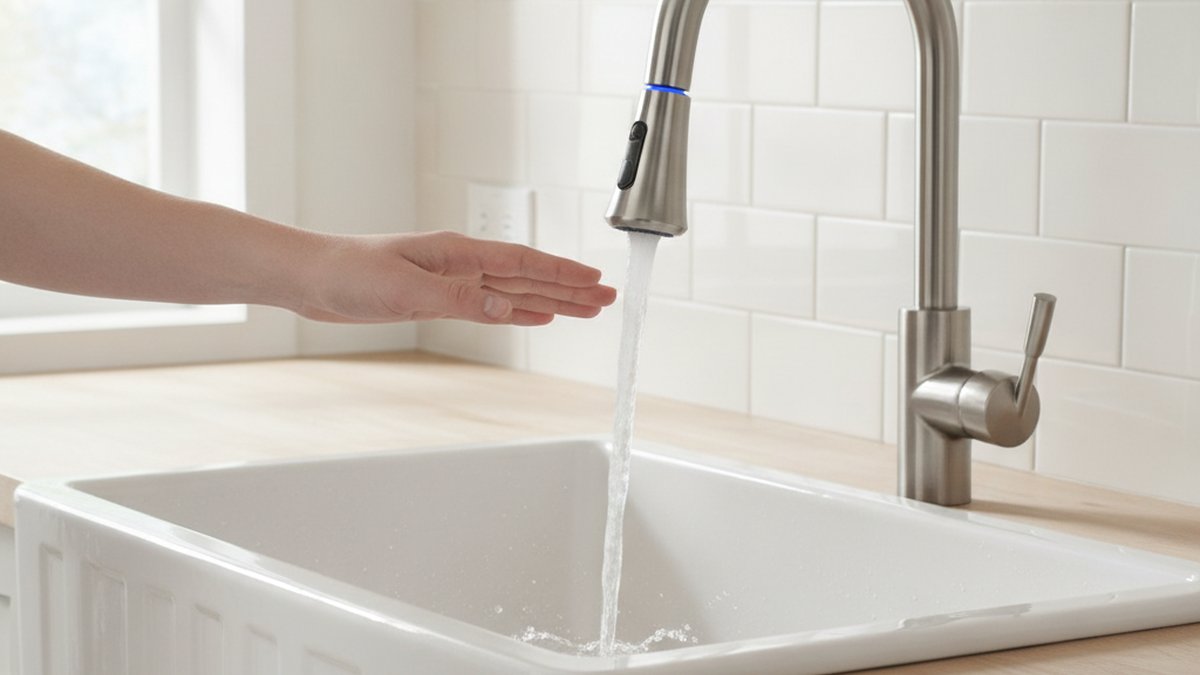
If you’ve been typing touchless faucet rona into your search bar, you’re almost certainly standing in a kitchen or bathroom, tired of smearing grease, raw-chicken juice, or toothpaste all over a shiny handle. Good news: a hands-free faucet solves exactly that, and Rona (the big Canadian home-improvement chain) does carry them. But before you drive over or add one to your cart, it’s worth understanding what you’re actually buying, what the sensor does, and whether the in-store options are the best value. Below, I’ll answer the real questions people ask — the ones that show up in Google’s “People Also Ask” and on Reddit threads — so you can pick the right faucet the first time.
Does Rona actually sell touchless faucets, and what will they cost?
Yes — Rona carries touchless and motion-activated faucets both in-store and on rona.ca, mostly for kitchens, with a smaller selection for bathroom vanities. Expect to pay roughly CAD $180–$600 depending on brand, finish, and whether it’s a pull-down kitchen model or a simpler bathroom sensor tap.
Rona’s lineup leans on the big North American names. You’ll typically see Moen (often with their “MotionSense” wave-to-start technology), Delta (with “Touch2O” and “VoiceIQ” options), Pfister, and Kohler. In-store stock varies by location and season, so the online catalog usually shows more models than any single warehouse. If you want a specific finish — matte black, champagne bronze, or spot-resist stainless — checking rona.ca first and reserving for pickup saves a wasted trip.
One thing to keep in mind: the shelf price is only part of the story. Touchless faucets need power, and most battery-powered units go through 4–6 AA batteries every 1–2 years. A few premium models offer an AC adapter so you can plug into an outlet under the sink instead. Neither is a dealbreaker, but it’s a real cost and convenience factor worth checking on the box before you buy.
What’s the difference between “touchless,” “touch,” and “motion-sense” faucets?
A touchless faucet turns water on and off when an infrared sensor detects your hand or an object — you never make contact. A touch faucet still requires a tap anywhere on the spout or handle to start flow. “Motion-sense” is just a brand-friendly synonym for touchless. They solve slightly different problems, so pick based on how messy your hands usually are.
- Touchless (hands-free): Best when your hands are genuinely dirty — think raw meat, garden soil, bread dough, or paint. You wave under the spout and water flows. Zero contact means zero cross-contamination.
- Touch (tap-to-activate): Great for reducing wear on the handle and for quick on/off, but you still touch the faucet with a wrist or forearm. Slightly fewer false triggers than a sensor.
- Manual with a pull-down sprayer: The classic. No batteries, nothing to fail electronically, but you handle the lever every time.
Most shoppers searching for a touchless faucet rona option really want the fully hands-free version — the true no-contact sensor. Just double-check the product title: some listings say “touch” and it’s easy to grab the wrong technology in a hurry.
Touchless faucet at Rona vs. buying an Arcora online — which is the better deal?
For pure convenience and instant pickup, Rona wins; for price, warranty length, and finish selection, ordering an Arcora touchless faucet online usually wins. If you can wait 3–7 days for shipping, the online route typically saves you CAD $50–$150 for a comparable spec.
Here’s an honest side-by-side of the trade-offs so you can decide based on your situation, not marketing:
| Factor | Touchless faucet at Rona (Moen/Delta/Kohler) | Arcora touchless faucet (online) |
|---|---|---|
| Typical price | CAD $180–$600 | CAD $130–$300 |
| Availability | Same-day in-store pickup | Ships in 3–7 days |
| Body material | Brass or brass/zinc mix | Lead-free solid brass |
| Power | Battery, some AC-adapter | Battery (AA), plug-in on select models |
| Finishes | Stainless, matte black, bronze | Brushed nickel, matte black, brushed gold, chrome |
| Warranty | Limited lifetime (varies by brand) | Manufacturer warranty on parts + finish |
| Return/handling | Easy in-store returns | Mail-in returns |
The real takeaway: if you need it today or you want to hold it in your hands first, Rona is a solid choice. If you care most about getting the most sensor for your dollar — and you like the idea of a longer finish warranty and a lead-free solid-brass body — compare the Rona shelf price against an online option before you commit. Faucet technology is fairly standardized now; the infrared sensor in a mid-priced Arcora works the same way as one in a premium name-brand unit.
Which touchless faucet is best for hard water and a busy family kitchen?
For hard water and heavy daily use, choose a touchless faucet with a solid-brass body, a silicone or rubber-nozzle aerator (so you can wipe off mineral buildup with your thumb), and a ceramic-disc valve. These three features handle the two things that kill faucets in hard-water homes: scale clogging and valve wear.
Hard water is the number-one reason a perfectly good faucet starts spitting, dribbling, or losing pressure. The minerals build up inside the aerator and around the sensor’s flow path. A rubber-tipped aerator lets you rub the deposits off in seconds; a metal-mesh aerator forces you to unscrew and soak it. If your area has very hard water, you’ll be doing this cleaning routine often, so pick the easy-clean design on purpose. When buildup does happen, a gentle descaler goes a long way — our guide on the best hard water stain remover for taps walks through how to clean the finish without scratching it.
Flow rate matters too. Most modern North American kitchen faucets run at 1.8 gallons per minute (GPM), and a touchless model shouldn’t be dramatically different. If you’re unsure whether your setup is delivering the right amount of water, our breakdown of the standard kitchen faucet flow rate explains what’s normal and when a low number points to a clog rather than a design choice. For a busy family kitchen, look for a pull-down spray head with a hands-free sensor at the top of the spout — you get the no-touch start plus the reach to fill big pots and rinse the sink.
What finish holds up best around a sink?
Brushed/spot-resist finishes (brushed nickel, brushed gold) hide water spots and fingerprints far better than polished chrome, which is why they’re the smart default for a hard-working kitchen. Matte black looks fantastic but shows dried mineral spots more readily, so keep a microfiber cloth handy. If you love the drama of black, our guide to the matte black modern faucet covers how to keep it looking sharp. And if you specifically want a warm metallic tone with hands-free convenience, the best gold touchless kitchen faucet roundup is the natural next read.
How do you install a touchless faucet — is it a DIY job?
Yes, installing a touchless faucet is a realistic weekend DIY project for most homeowners — plan on 45–90 minutes. The plumbing connections are identical to a standard faucet; the only extra steps are mounting the small control box (the brain) under the sink and connecting the sensor cable and power supply.
Here’s the general sequence, so you know what you’re getting into before you buy:
- Shut off the water. Close both hot and cold supply valves under the sink and open the old faucet to release pressure.
- Remove the old faucet. Disconnect the supply lines and unscrew the mounting nuts. A basin wrench makes this far easier in tight cabinets.
- Set the new faucet. Drop it through the sink hole, secure the mounting hardware, and hand-tighten the deck plate if your model uses one.
- Connect supply lines. Hot to hot, cold to cold. Don’t overtighten — snug plus a quarter turn.
- Mount the control box and battery pack. These stick or screw to the cabinet wall. Route the thin sensor and valve cables so they don’t kink.
- Power it up and test. Insert batteries (or plug in the AC adapter), turn the water back on, and wave under the spout to confirm the sensor triggers.
The one part people underestimate is cable management inside the cabinet. Keep the control box off the cabinet floor in case of a small leak, and leave a little slack so you can slide it out later for battery changes. If your existing shut-off valves are old and stiff, that’s often the trickiest part — not the faucet itself.
What if the sensor keeps turning on by itself?
A touchless faucet that triggers randomly is almost always reacting to something reflective moving in the sensor’s field — a swinging dish towel, a pot lid, or even bright sunlight bouncing off the sink. Move the object or adjust the faucet’s sensitivity setting (many models have a range mode you set by holding a button). If it still misbehaves after that, the sensor cable may be loose at the control box.
What should you look for on the spec sheet before you buy?
Focus on five things: valve type, body material, sensor reliability, power source, and certification. Everything else is styling. Nail these five and you’ll get a faucet that lasts a decade instead of two years.
- Ceramic-disc valve: The gold standard for drip-free performance. Avoid cheaper rubber-washer valves that wear out fast.
- Lead-free solid brass body: Heavier and more durable than zinc-alloy or plastic, and safer for drinking water.
- Reliable infrared sensor with adjustable range: Look for a documented response time and a sensitivity setting to cut false triggers.
- Battery + AC option: Battery installs anywhere; a plug-in adapter means you never hunt for AAs mid-dishes.
- Certification (cUPC / NSF / WaterSense): These confirm the faucet meets North American plumbing, drinking-water safety, and water-efficiency standards — important in Canada, where cUPC listing is typically required.
That certification line matters more than most shoppers realize. A faucet sold at Rona for the Canadian market will be cUPC-listed and meet lead-content limits under CSA/NSF standards. If you buy online, confirm the same certifications appear on the listing — a legitimate manufacturer will state them plainly. Arcora faucets are tested to these North American standards and carry a manufacturer warranty covering both the working parts and the finish, which is exactly the kind of paper trail you want backing an electronic faucet.
FAQ
Are touchless faucets worth it, or are they just a gimmick?
They’re genuinely worth it if you cook a lot, have kids, or hate cleaning grimy handles. The hands-free start prevents cross-contamination and keeps the faucet cleaner. If your kitchen is low-traffic and you’re on a tight budget, a quality manual pull-down faucet may serve you just as well.
Do touchless faucets still work if the power or batteries die?
Yes. Nearly every touchless faucet has a manual handle for temperature and volume, and most keep basic manual operation even when the batteries are dead — you just lose the hands-free sensor until you swap in fresh AAs. This fail-safe is standard, but confirm it on the model you choose.
How long do the batteries in a touchless faucet last?
In a typical household, a set of AA batteries lasts about 1–2 years. Heavy use shortens that. If you’d rather never think about it, choose a model with an AC adapter that plugs into an outlet under the sink, or buy lithium AAs, which hold up better than alkaline.
Can I get the exact same touchless faucet cheaper than at Rona?
Often, yes. The infrared sensor technology is standardized, so a mid-priced online brand like Arcora delivers the same hands-free function as premium in-store names, usually for CAD $50–$150 less. The trade-off is waiting for shipping instead of same-day pickup and using mail-in rather than in-store returns.
Does a touchless faucet need a special sink or extra plumbing?
No. It uses the same standard hot and cold supply lines and standard sink mounting holes as any regular faucet. The only extra is a small control box and battery pack that mount inside the cabinet — no new plumbing, no electrician required.
Which finish is easiest to keep clean on a touchless faucet?
Brushed or “spot-resist” finishes — brushed nickel and brushed gold — hide water spots and fingerprints best. Polished chrome shows every droplet, and matte black, while stylish, reveals dried mineral spots in hard-water homes, so it needs a quick wipe more often.
Author note: This guide was written by the Arcora fixtures team, drawing on hands-on testing of touchless kitchen and bathroom faucets across a range of North American water conditions. Arcora designs and manufactures faucets built to cUPC and lead-free standards, backed by a manufacturer warranty on parts and finish. Our goal is to help you pick the right fixture once — not to upsell you on features you won’t use.