 ARCORA FAUCETS
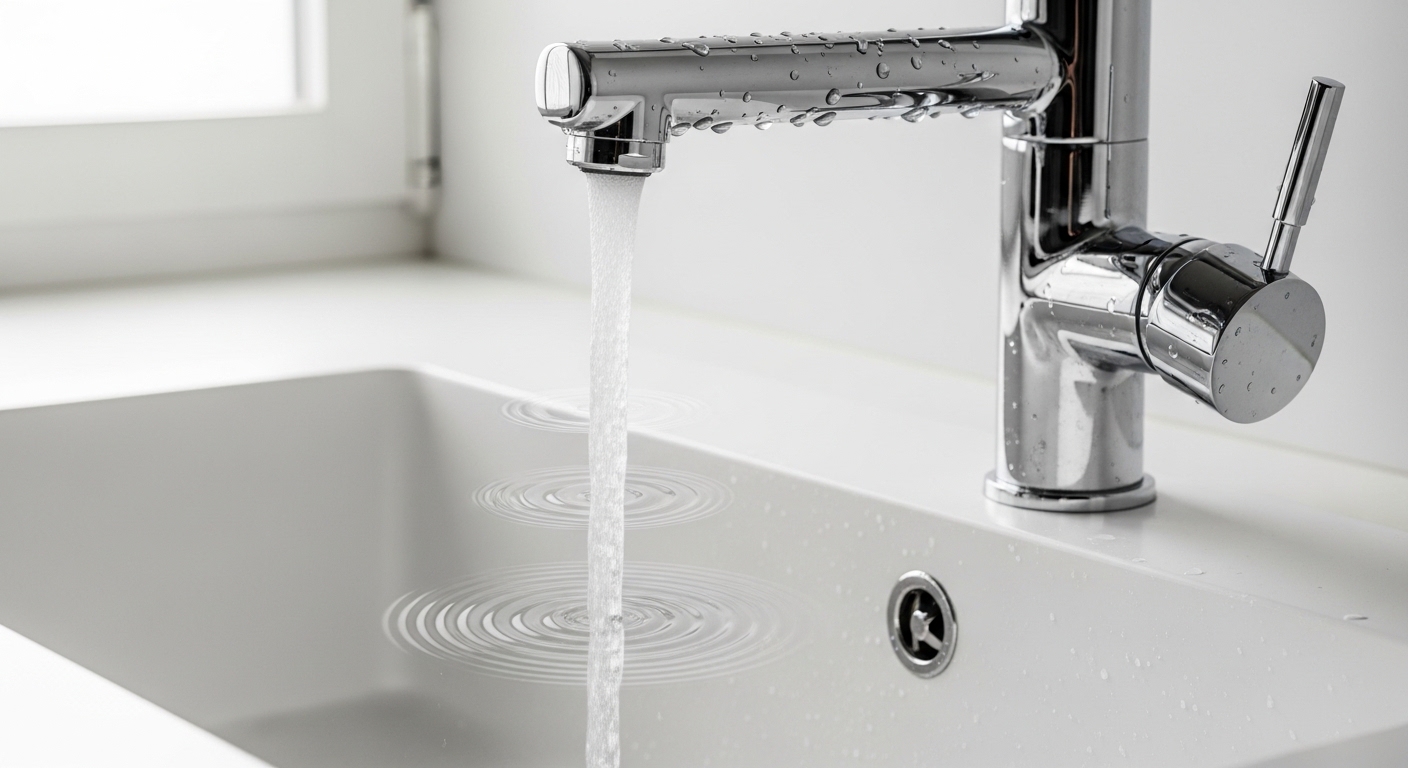
If you’ve ever turned on the tap and wondered why does faucet make noise — that screech, hum, rattle, or machine-gun knocking — the short version is that water flow is being disturbed somewhere it shouldn’t be. Air pockets, excessive pressure, a degraded internal part, or a partly blocked aerator force water to move turbulently, and turbulence is what your ears pick up as noise. The good news: in the vast majority of homes the cause is cheap and fixable without a plumber. Below I’ll walk you through exactly how to identify the sound you’re hearing, what’s causing it, and the specific fix for each — in plain English, with the actual part names so you know what to ask for at the hardware store.
What does the noise actually mean? (Match your sound to the cause)
The fastest way to diagnose a noisy faucet is to name the sound, because each type of noise points to a different culprit. A high-pitched squeal usually means a worn washer or cartridge; a banging or hammering sound is almost always trapped air or a pressure problem; a low hum or vibration points to high water pressure or a loose aerator. Here’s the full cheat sheet.
| Sound you hear | Most likely cause | Typical fix | DIY difficulty |
|---|---|---|---|
| Squeal / whistle / screech | Worn rubber washer, stiff stem, or scaled-up aerator | Replace washer or cartridge; clean aerator | Easy |
| Bang / hammer / knock when you shut it off | Water hammer — trapped air or no air chamber cushion | Drain the system; install hammer arrestor | Easy–Medium |
| Hum or vibration while running | Water pressure too high or loose washer in the valve | Adjust pressure regulator; tighten or replace washer | Easy–Medium |
| Rattle or chatter | Loose aerator, loose mounting nut, or pipe not secured | Tighten aerator and supply connections | Easy |
| Gurgle / sputter / spitting | Air in the line or a clogged aerator | Flush lines; clean aerator screen | Easy |
Notice how often the aerator shows up. That little screw-on tip at the end of your spout is the single most common — and most overlooked — source of faucet noise. So that’s where we’ll start.
Why is my faucet whistling or screeching when I turn it on?
A whistling or screeching faucet is almost always caused by water being forced through a restriction — usually a clogged aerator or a worn-out washer. Water that should flow smoothly gets squeezed through a narrow gap, vibrates, and produces that sharp tea-kettle whistle. The fix is cheap.
Start with the aerator, because it takes five minutes and costs nothing:
- Unscrew the aerator from the spout tip by hand (turn clockwise as you look up at it). If it’s stuck, wrap it in a cloth and use pliers gently.
- Pull apart the screen and rubber washer inside. You’ll likely see white or green mineral crust — that’s limescale.
- Soak the parts in white vinegar for 1–2 hours, then scrub with an old toothbrush and rinse.
- Reassemble and test. No more whistle? Done.
If the whistle persists with the aerator removed, the noise is coming from inside the valve — meaning a worn washer (in older compression faucets) or a worn cartridge (in modern single-handle faucets). Replacing a cartridge sounds intimidating but is genuinely a 20-minute job once you’ve shut off the supply valves under the sink. If your handle also feels loose or wobbly while it screeches, the cartridge or mounting hardware is the prime suspect — our walkthrough on a loose Moen gooseneck kitchen faucet handle covers that exact repair step by step. And if mineral buildup is your recurring villain, the techniques in our guide to removing limescale from faucets naturally will keep that whistle from coming back.
Why does my faucet bang or hammer when I shut it off?
That loud bang or knocking when you close the tap is called water hammer, and it happens when fast-moving water slams to a stop and the shockwave reverberates through your pipes. It’s caused by trapped air, missing or waterlogged air chambers, or water pressure that’s too high. It won’t usually break anything overnight, but over months it can loosen joints and stress connections — so it’s worth fixing.
Try these in order, cheapest first:
- Drain the air chambers. Shut off your home’s main water valve, then open every faucet (highest floor first, then lowest) and let them fully drain. Close them and turn the main back on. This re-cushions the air chambers built into many homes’ plumbing and resolves hammer surprisingly often.
- Check your water pressure. Screw a $10 pressure gauge onto an outdoor spigot or laundry tap. Residential pressure should be 40–60 psi. Above 80 psi you’ll get noise, hammer, and premature wear on every fixture in the house.
- Install a water hammer arrestor. If draining doesn’t work, a screw-on arrestor at the noisy fixture’s supply line absorbs the shock. They cost $10–$20 and install in minutes.
If the banging shows up alongside a drop in flow, you may be chasing two related issues at once — high pressure can mask or worsen pressure-balance problems. Our deep dive on why tap low water pressure suddenly gets worse explains how pressure regulators and clogs interact, which is useful context when you’re tuning the whole system.
Why does my faucet hum or vibrate while the water is running?
A faucet that hums or makes the whole sink vibrate while running is the classic symptom of water pressure that’s too high, or a loose washer fluttering inside the valve. The humming is the washer or cartridge resonating against the rush of water — like blowing across a bottle top.
First, rule out pressure with the gauge test above. If you’re above 60 psi, your home likely needs its pressure-reducing valve (PRV) adjusted — it’s usually located where the main line enters the house, near the meter. Turning the adjustment screw counterclockwise lowers pressure; make small quarter-turns and re-measure.
If pressure is normal but the hum continues, the washer inside the valve has come loose or worn unevenly. On a compression faucet, that means removing the stem and replacing the washer with the exact size match (bring the old one to the store). On a cartridge faucet, replace the cartridge. This is the same family of fix you’d use for a dripping fixture — and if your faucet is humming and dripping, tackle both at once using our guide on fixing a leaking bathtub faucet quick and easy, since the internal parts overlap.
Why does only my hot water faucet make noise?
If the noise only happens on the hot side, the cause is usually your water heater or thermal expansion — not the faucet itself. Sediment in the water heater tank, a heat trap nipple, or expanding hot water pushing back through the lines creates rumbling, ticking, or whistling that’s only audible when you draw hot water.
A few quick checks:
- Flush your water heater. Sediment buildup makes water boil and crackle against the tank bottom. Most manufacturers recommend flushing the tank once a year.
- Check the temperature setting. Water above 140°F (60°C) is more prone to noise and is a scald risk; 120°F is the recommended setting.
- Listen for ticking after you shut off hot water. That’s normal pipe expansion and contraction — annoying but harmless.
If the hot-side noise traces back to the faucet’s valve specifically, a temperature-sensitive cartridge may be sticking. Anti-siphon and check valves can also chatter when worn; if you’ve isolated the noise to one of those, our step-by-step on replacing anti-siphon faucet valves shows the swap.
How do I stop my faucet from making noise — step by step?
To stop a noisy faucet, work from the easiest, most common cause to the rarest: clean the aerator, verify water pressure, then inspect the washer or cartridge. Here’s the sequence that solves the large majority of cases.
- Clean or replace the aerator (5 min). Unscrew, soak in vinegar, scrub, reassemble. Solves whistling, sputtering, and rattling.
- Tighten everything (5 min). Hand-tighten the aerator, then check the supply line connections and mounting nut under the sink. A loose connection vibrates audibly.
- Test water pressure (10 min). Use a gauge. If it’s over 60–80 psi, adjust the PRV. This stops hum, hammer, and vibration.
- Drain the lines (15 min). Shut the main, open all faucets, drain, refill. Clears trapped air causing gurgles and hammer.
- Replace the washer or cartridge (20–30 min). Shut off the under-sink valves, disassemble, swap the worn part, reassemble. Solves squealing and humming from inside the valve.
If you’ve gone through all five and the noise remains — especially a deep banging throughout the house — the issue is likely in your main plumbing (loose pipe straps, a failing PRV, or undersized air chambers) and that’s the point to call a licensed plumber.
What tools and parts will I need?
- White vinegar and an old toothbrush (aerator cleaning)
- Adjustable wrench and/or channel-lock pliers
- A water pressure gauge ($8–$15)
- Replacement washers, O-rings, or a manufacturer-matched cartridge
- Plumber’s grease and a soft cloth to protect finishes
- A water hammer arrestor (only if hammer persists)
FAQ
Is a noisy faucet dangerous or just annoying?
Most faucet noise is harmless and purely annoying — a whistle or hum won’t damage anything. The exception is water hammer (banging), which over time can loosen pipe joints and stress connections, and very high water pressure, which wears out every fixture and appliance faster. If you hear hammering or measure pressure above 80 psi, fix it sooner rather than later.
Why does my faucet make noise only when I first turn it on?
A noise that appears briefly when you first open the tap and then fades is almost always trapped air clearing the line, or a sticky washer flexing into position. If it’s a quick sputter or gurgle, run the faucet for 30 seconds a few times; if it’s a squeal that fades, the washer or cartridge is starting to wear and will eventually need replacing.
Can a clogged aerator really cause that much noise?
Yes — it’s the number one cause we see. As limescale and debris build up on the aerator screen, water is forced through a shrinking opening at higher velocity, which creates whistling, hissing, and sputtering. Cleaning it takes five minutes and costs nothing, which is why it should always be your first step. A clean or upgraded aerator like a quick-connect sink aerator also restores smooth flow.
Why is my new faucet noisier than my old one?
A brand-new faucet that’s noisy usually has air still trapped in the lines from installation, an over-tightened or debris-caught aerator, or a flow rate mismatched to your home’s high pressure. Flush the lines, remove and rinse the aerator (installation debris is common), and check your pressure. If it persists, confirm the supply lines aren’t kinked behind the cabinet.
When should I just replace the faucet instead of repairing it?
Replace rather than repair when the faucet is more than 10–15 years old, when replacement cartridges are discontinued, when the body is corroded or cracked, or when you’ve already replaced the cartridge and washers and the noise continues. At that point a new quality faucet often costs little more than repeated repairs — and modern ceramic-disc valves run far quieter than old compression stems.
Does hard water make faucet noise worse?
Definitely. Hard water deposits limescale on aerators, screens, and valve seats, which restricts flow and amplifies whistling and sputtering over time. If you have hard water, clean your aerators every few months and consider a whole-home softener — it protects every fixture, not just the noisy one.
A note from our team
This guide was written and reviewed by the Arcora product and technical team, drawing on hands-on testing of faucet cartridges, aerators, and valve assemblies in our own workshop. Arcora designs and manufactures kitchen and bathroom faucets engineered with low-noise ceramic-disc cartridges and tested to meet cUPC and ADA standards, and we back our faucets with a limited lifetime warranty on finish and function. We’ve diagnosed thousands of “why is my faucet making noise” questions from real customers, and the troubleshooting order above reflects what actually solves them most often. When in doubt, start cheap and simple — and if a repair is beyond comfortable DIY, bring in a licensed plumber.