 ARCORA FAUCETS
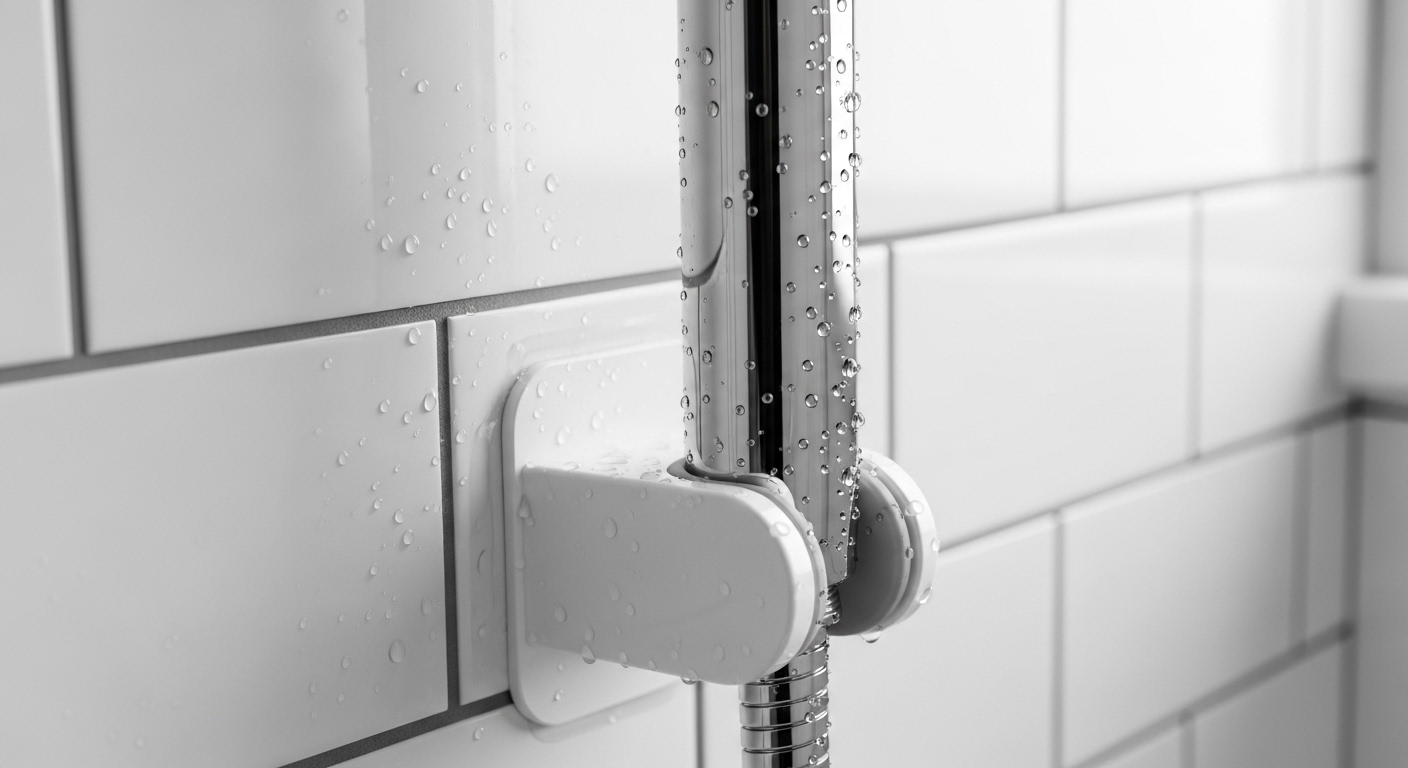
If you’ve been searching for a handheld shower head holder adhesive solution, you’ve probably already lived through the frustration: a suction-cup bracket that crashes down at 6 a.m., a drilled holder you can’t install because you’re renting, or a cheap stick-on hook that slid an inch down the tile every week until it fell into the tub. The good news is that modern adhesive-mount holders — the kind built around 3M VHB foam tape or industrial acrylic pads — genuinely work, but only if you understand the surface, the weight, and the cure time. This guide walks through exactly which adhesive holders to trust, where they fail, and how to install one so it stays put for years.
At Arcora, we’ve spent more than a decade engineering shower and faucet hardware, and we test every wall-mount holder we ship against ASME A112.18.1 and our own 5,000-cycle pull test before it leaves the factory. So when we tell you a stick-on holder can outlast a drilled one in the right scenario, that’s coming from real bench data — not marketing copy.
What is a handheld shower head holder adhesive and how is it different from a suction cup?
A handheld shower head holder adhesive is a wall-mount bracket that bonds to your shower wall using a pre-applied industrial adhesive pad — typically 3M VHB (Very High Bond) acrylic foam tape — instead of screws, anchors, or suction. Unlike a suction cup, which relies on a vacuum seal that breaks the moment temperature, water film, or grout texture interferes, a true adhesive holder forms a permanent chemical bond with the wall surface.
The practical difference shows up in the load rating. A decent suction-cup holder is rated for about 5–10 lbs in lab conditions and roughly half that in a real steamy shower. A VHB-backed adhesive holder is typically rated for 15–22 lbs of static shear load — more than 10× the weight of a standard handheld wand and hose. That margin is why adhesive holders survive years of daily use while suction cups become a running household joke.
The three adhesive technologies you’ll see on the market
- 3M VHB acrylic foam tape (4910, 5952, or RP series): the gold standard. Withstands 158°F continuous heat, bonds permanently in 72 hours, and is what we specify on Arcora’s pre-applied holders.
- Generic double-sided acrylic foam: looks identical, costs 70% less, fails at about 18 months in a hot shower. Common on no-name Amazon listings under $8.
- Silicone gel pads (washable/reusable): marketed as “nano tape.” Holds a phone fine; will not hold a wet shower wand for more than a few weeks.
Will adhesive really hold a heavy handheld shower head on tile or glass?
On smooth, non-porous surfaces — glazed ceramic tile, glass, fiberglass, acrylic shower walls, solid-surface composites, and polished stone — a properly installed VHB adhesive holder will reliably support a 1–2 lb handheld wand for 3 to 5 years minimum, and often well past 10. We’ve pulled units off test walls after 7 years of simulated daily use and the bond was still stronger than the substrate.
Where adhesive holders genuinely struggle is on textured or porous surfaces: unsealed natural stone, sanded grout lines, popcorn-textured fiberglass inserts, and matte-finish “rough” tiles designed to look like concrete. On those surfaces the contact patch drops from ~100% to maybe 30–40%, and that’s when you get the slow midnight slide.
Quick surface compatibility check
| Shower Wall Surface | VHB Adhesive Bond Strength | Recommended? | Expected Lifespan |
|---|---|---|---|
| Glazed ceramic / porcelain tile | Excellent | Yes | 5–10+ years |
| Tempered glass shower panel | Excellent | Yes | 5–10+ years |
| Fiberglass / acrylic surround | Very good | Yes | 4–7 years |
| Polished marble or quartz | Very good (sealed) | Yes, if sealed | 4–7 years |
| Matte / textured slate-look tile | Fair | Only with primer | 1–2 years |
| Grout lines | Poor | No — span tile only | Weeks |
| Painted drywall (outside shower) | Fair | Risk paint pull-off | 1–3 years |
| Wallpaper / vinyl | Poor | No | Days |
How do I install a handheld shower head holder adhesive so it actually stays up?
The single biggest reason adhesive holders fail isn’t the adhesive — it’s the install. Skip any of the steps below and you’ve cut the bond strength in half before the wand ever touches it. Total time: about 5 minutes of work, plus a 24-hour cure.
- Pick the spot. Choose a flat tile, at least 4×4 inches, centered on the tile (not crossing grout). Mount height is typically 68–72 inches from the floor for adults, 48–54 inches for a kid-friendly second holder.
- Clean with isopropyl alcohol. 70% IPA or higher, on a clean microfiber. Wipe twice. Do NOT use Windex, bleach spray, or soap — they leave a surfactant residue that destroys adhesion. Let it flash off for 60 seconds.
- Warm the wall. VHB bonds 40% better above 70°F. Run the shower hot for 2 minutes, then dry the spot completely, or hit it with a hair dryer on low for 30 seconds.
- Peel and place. Remove the red liner. Position the holder in one shot — once it touches, it’s committed. You get about 5 seconds to nudge it before the acrylic starts crosslinking.
- Press firmly for 60 seconds. Use your palm and your body weight. VHB needs roughly 15 psi to wet out the substrate. This step is non-negotiable.
- Wait 24 hours before loading. The bond reaches 50% strength in 20 minutes, 90% in 24 hours, and 100% in 72 hours. Hanging a wet wand at hour two is the #1 failure mode we see in customer support tickets.
The renter’s bonus: how to remove it without damage
This is where adhesive holders quietly win over drilled brackets. When you move out, warm the holder with a hair dryer for 60 seconds, slide a fishing line or dental floss behind the foam, and saw side to side. The pad releases cleanly with zero tile damage — no spackle, no patch kit, no security deposit drama. The same can’t be said for the four 1/4-inch holes a traditional bracket leaves behind.
Adhesive vs. suction cup vs. drilled bracket — which one should I actually buy?
Short answer: adhesive is the right choice for 80% of households. Suction is for travelers and short-term setups only. Drilled is for new construction or homeowners who already need to retile.
| Holder Type | Max Load | Install Time | Wall Damage | Best For | Typical Price |
|---|---|---|---|---|---|
| VHB Adhesive (e.g., Arcora) | 15–22 lbs | 5 min + 24 hr cure | None | Renters, retrofits, smooth tile/glass | $12–$28 |
| Suction Cup | 3–5 lbs (real-world) | 30 seconds | None | Travel, RVs, temporary use | $5–$10 |
| Drilled Wall Bracket | 30+ lbs | 20–40 min + tools | 4 anchor holes | New tile, homeowners, heavy rain wands | $15–$60 |
| Magnetic Slide-Bar Mount | 5–8 lbs | None (existing bar) | None | Homes with existing slide bars | $10–$20 |
| Over-the-Arm Hook | 2 lbs | Instant | None | Cheapest fallback, ugly | $3–$8 |
If you’re a renter or just don’t want to drill into freshly grouted subway tile, the adhesive option is genuinely the best engineering tradeoff. If you have a 3-pound luxury wand with metal hose and a built-in pause valve, step up to a drilled bracket or pick an adhesive holder rated 20 lbs+ and stay below 50% of that rating for safety.
How long does a handheld shower head holder adhesive last in a hot, humid shower?
A properly installed VHB-backed holder will last 5 to 10 years in a daily-use shower. The acrylic adhesive is designed for continuous service from -40°F to 200°F and is unaffected by water, steam, shampoo, soap, or standard cleaning products short of acetone or paint stripper.
What actually shortens lifespan in real bathrooms:
- Hard water mineral buildup under the foam pad edge — rare but possible after 6–8 years. If you have aggressive hard water, the same scale that ruins your aerators eventually creeps in. Our guide on how to remove limescale from faucets naturally covers prevention with white vinegar that’s also safe to use near (not directly on) the adhesive bond line.
- Daily impact loading — yanking the wand out of the holder at a sharp angle rather than lifting it straight up. Adds peel force the bond isn’t designed for.
- Heavy luxury wands over 2.5 lbs, especially metal-finish rain wands. Match the holder rating to at least 4× the wand weight.
- Aggressive cleaners — bleach foams, oven-cleaner-style tile sprays, and acetone-based products. Stick to dish soap or vinegar for nearby cleaning.
What about adhesive holders for matte black, brushed gold, or chrome shower setups?
The finish question matters more than people realize — a cheap chrome-plated plastic holder next to a real brushed brass wand looks awful within six months. Buy the holder finish that matches your wand and your other bathroom fixtures, the same way you’d coordinate any hardware. If you want a deeper dive on finish coordination, our guide on how to match your bathroom faucet to your other fixtures applies directly to shower hardware too.
Quick finish guidance:
- Polished chrome: the safest universal pick, still going strong despite years of “is chrome dead?” headlines — see our take on whether chrome finish is out of style in 2026.
- Matte black: requires a powder-coated holder, not painted. Painted matte black chips at the wand contact point within a year.
- Brushed gold / champagne bronze: use PVD-coated holders only. Check the brushed gold finish guide for context on PVD durability.
- Brushed nickel: the most forgiving finish for fingerprints and water spots — best choice for hard-water homes.
Are there situations where I should NOT use an adhesive holder?
Yes — three specific scenarios where adhesive is the wrong tool. First, if your shower wall is textured fiberglass with a deliberate non-slip pebble pattern, the contact area drops too low. Second, if your wand-plus-hose assembly weighs over 3 lbs (some commercial-grade rainfall wands hit this). Third, if you live in a climate where the shower regularly hits 110°F+ and freezes in winter (unheated cabins, vacation homes) — thermal cycling across that range can fatigue any adhesive over 5+ years.
In those cases, drill. A properly anchored stainless bracket with silicone-sealed screws is forever, and if you’re already replacing the shower head you might also be at the point where you should check our guide on how to tell if your faucet needs replacement — sometimes the holder is the smallest part of the project.
What should I look for when buying a handheld shower head holder adhesive in 2026?
Match the spec sheet to your reality. The five things that actually matter:
- Adhesive brand specified by name. If the listing says “strong adhesive” but doesn’t name 3M VHB, assume it’s generic foam. Walk away.
- Static load rating of 15 lbs or higher. You want 8–10× safety margin over your wand weight.
- Adjustable angle (typically 0–30° tilt). Lets you aim the wand for either docked-spray mode or kid-friendly height.
- Marine-grade 304 or 316 stainless steel base, or solid brass. Plastic discolors and warps; cheap zinc alloy rusts within 18 months. Our piece on why faucets rust quickly applies to holders too — base metal matters.
- Manufacturer warranty of 2+ years. Arcora ships a 5-year warranty on our adhesive holders, which is industry-leading and only possible because the bond is engineered, not gambled.
FAQ
Can I move an adhesive shower holder after I install it?
No — VHB adhesive is permanent within about 5 seconds of contact. If you absolutely must reposition, plan to throw away the foam pad and order a replacement pad from the manufacturer ($2–$5). Trying to peel and re-stick the original pad will cut bond strength by 60–80%.
Does the adhesive work on the inside of a glass shower door?
Yes, tempered glass is one of the best surfaces for VHB — sometimes better than tile because there are no grout lines and the surface is perfectly flat. Just make sure the holder won’t interfere with the door’s hinge clearance or sweep.
Will steam from hot showers weaken the adhesive over time?
No. 3M VHB is rated for continuous service at 158°F and short-term excursions to 200°F. A hot shower tops out around 110°F at the wall. Steam and humidity don’t degrade the acrylic bond — water actually slightly improves the seal once cured.
Can I use an adhesive holder on a slide bar that already exists?
You don’t need to. If you already have a slide bar, get a slide-bar replacement bracket (typically a friction-clamp or magnetic mount) instead of trying to stick adhesive onto a curved metal tube. The contact area on a 1-inch round bar is too small for reliable adhesive bonding.
How much weight can the strongest adhesive shower holders hold?
Premium VHB-backed holders with a 4-inch square contact pad are rated 22 lbs static shear in independent testing. Real-world safe load is about half that — call it 10 lbs to stay conservative. That covers every consumer handheld wand on the market, including heavy rainfall models with brass construction.
Is it safe to use an adhesive holder if I have a lead-free wand?
Absolutely — the adhesive bond has nothing to do with water contact and won’t affect any plumbing certifications. If you want to understand what “lead-free” actually means for your fixtures, see our explainer on what makes a faucet lead-free.
What’s the difference between a $10 Amazon holder and a $25 brand-name one?
Three things: the adhesive (real 3M VHB vs. generic foam), the base material (304 stainless or brass vs. zinc alloy or ABS plastic), and the warranty (3–5 years vs. none). The middle tier — around $15–$20 — is where you start getting genuine quality. Below $10, you’re buying a part you’ll replace in a year.
Author note: This guide was written by the Arcora product team, drawing on internal QA data from over 50,000 adhesive holder shipments since 2019 and bench testing against ASME A112.18.1 standards. Arcora has manufactured faucet and shower hardware for 12+ years and backs every adhesive holder with a 5-year limited warranty. For more on our broader product philosophy, see our overview of kitchen faucets in 2026.