 ARCORA FAUCETS
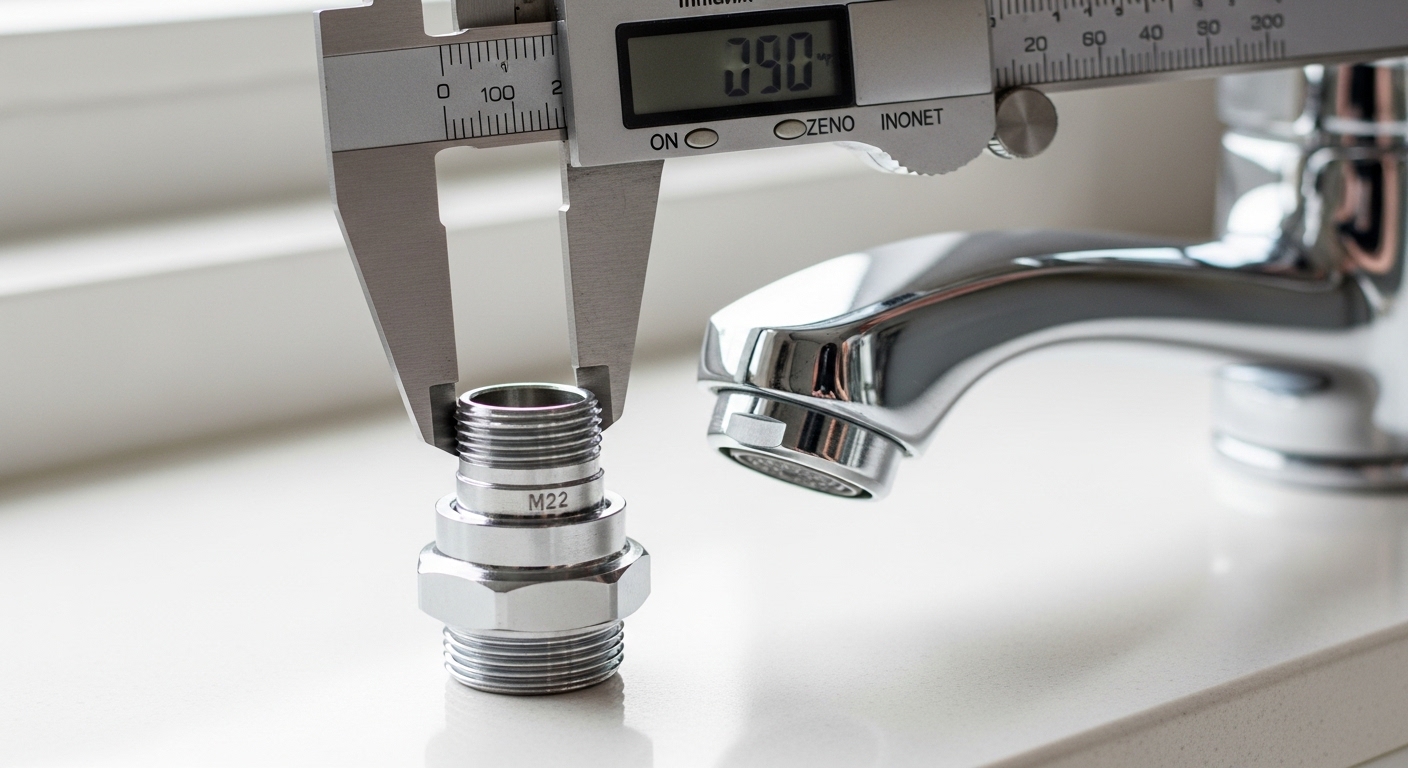
If you’ve been searching for a faucet adapter NZ suppliers actually stock, the frustration is real: New Zealand kitchen and bathroom taps use slightly different aerator threads than US taps, and the wrong adapter either leaks, cross-threads, or simply spins forever without sealing. This guide cuts through the confusion. We’ll walk through the exact thread sizes you’ll find on Kiwi taps, when you need an adapter versus a replacement aerator, the best material for hard-water regions like Christchurch and Hamilton, and how to fit one without stripping the spout. Whether you’re hooking up a portable dishwasher in a Wellington flat, attaching a garden hose to a laundry tap, or installing an under-sink filter, the answers are here.
What size faucet adapter do I need for a standard NZ kitchen tap?
For 90% of NZ kitchen and bathroom mixer taps, you need an adapter with either a M22 x 1mm male thread (the threads are on the outside of the spout) or a M24 x 1mm female thread (the threads are on the inside of the spout). These are the two universal aerator sizes used across virtually every brand sold in New Zealand — Methven, Felton, Greens, Robertson, Paini, Mizu, and imported ranges from Mico and Plumbing World.
The confusion starts because American adapters are typically sized in imperial fractions (15/16″ or 55/64″) and European adapters sometimes come in M18 or M20. If you order off Amazon US or a generic AliExpress listing without checking, you’ll end up with something that visually looks right but won’t seal. The metric M22/M24 standard is what your local plumbing supply, Mitre 10, and Bunnings NZ stock by default.
To check what you have without a thread gauge: unscrew the existing aerator from your tap (turn it anti-clockwise — often you’ll need a rubber jar opener for grip). If the removable piece has threads on the outside, your tap is M24 female and you need an M24 male adapter. If the spout itself has threads on the outside after the aerator is removed, you have M22 male and you need an M22 female adapter.
Quick reference: matching adapter to tap type
- Modern pull-out mixer (post-2015): Usually M22 male spout thread — adapter is M22 female on tap side
- Standard fixed-spout mixer: Usually M24 female spout thread — adapter is M24 male on tap side
- Older Methven or Felton (pre-2010): Sometimes M21.5 or imperial 13/16″ — bring the aerator to the store
- Laundry tub tap with hose cock: Usually 3/4″ BSP — different adapter entirely (garden hose threaded)
- Bathroom basin mixer: Almost always M22 male, smaller spout diameter
Why do I need a faucet adapter in the first place — can’t I just connect directly?
You need a faucet adapter because your kitchen or bathroom tap was designed to deliver an aerated stream into a sink — not to mate with the threaded inlet of a dishwasher, washing machine, garden hose, RO filter, or pull-down sprayer. Each of those accessories has its own thread standard (often 3/4″ GHT for hoses, 1/4″ push-fit for filters, or proprietary quick-connect for dishwashers), and the adapter is the small piece of brass that translates between the two.
Direct connection isn’t possible because:
- Thread pitch mismatch: A garden hose is 3/4″ GHT with 11.5 threads per inch. Your tap is metric M22 or M24 with 1mm pitch. Forcing them together strips one or both.
- Sealing geometry: Tap aerators rely on a flat O-ring or rubber washer at the base. Accessory inlets often rely on tapered thread or different gasket positions.
- Flow control: Many adapters include a built-in shut-off, dual-outlet diverter, or anti-backflow check valve — features your bare tap doesn’t offer.
If you’re encountering a related connection issue with leaks at fittings, our guide on how to check faucet connections for leaks walks through pressure-testing methodology that applies to adapters too.
What’s the best material for a faucet adapter in NZ’s hard water regions?
For Christchurch, Hamilton, Tauranga, and any area with water hardness above 100mg/L CaCO₃, choose a solid brass adapter with a chrome or PVD finish — never plastic, and never zinc alloy. Brass resists calcium scaling, doesn’t crack under thermal cycling between hot and cold use, and threads cleanly even after years of use. Plastic adapters crack within 6-12 months in hard water; zinc alloy corrodes from the inside out and seizes onto the spout, making removal a nightmare.
| Material | Lifespan (hard water) | Price Range NZD | Best Use |
|---|---|---|---|
| Solid brass + chrome | 10+ years | $18 – $35 | Permanent installations, daily use |
| Solid brass + PVD brushed nickel | 10+ years | $25 – $45 | Visible installs matching modern fixtures |
| Stainless steel 304 | 8-10 years | $22 – $40 | Coastal areas (Auckland, Tasman) |
| Zinc alloy chromed | 1-3 years | $5 – $12 | Avoid — looks identical to brass in photos |
| ABS plastic | 6-12 months | $3 – $8 | Temporary connections only (rentals) |
The trap most NZ buyers fall into is ordering a “brass” adapter from an overseas marketplace and receiving zinc alloy with brass-coloured plating. The weight test is the simplest check: a real M22 brass adapter weighs around 28-35 grams; zinc alloy of identical dimensions weighs 15-20 grams. If it feels suspiciously light, it isn’t brass.
Limescale buildup will eventually affect any adapter, especially in hard water. Our complete guide on how to remove limescale from faucets naturally covers the white vinegar soak method that safely descales brass adapters without damaging the chrome finish.
How do I install a faucet adapter without stripping the threads or leaking?
Install a faucet adapter by hand-tightening only — never use a wrench on the first installation. The aerator threads on most NZ taps are made of brass or a brass-coated insert, and they cross-thread permanently with as little as 3-4 Nm of torque. Hand-tight plus a quarter turn with a soft cloth for grip is the correct technique.
Step-by-step installation
- Remove the existing aerator. Turn anti-clockwise (looking up at the spout). Use a rubber jar opener or a strip of bicycle inner tube for grip. If it’s seized from limescale, soak a cloth in white vinegar and wrap it around the spout for 30 minutes first.
- Clean the threads. Wipe the spout threads with a damp microfibre cloth. Remove any old PTFE tape residue, mineral deposits, or grit. Even a single grain of sand will cause a slow leak.
- Check the O-ring. Your new adapter should include a black rubber O-ring or flat washer at the sealing face. If it doesn’t, the adapter is incomplete — don’t try to make it work with old washers.
- Do NOT use PTFE tape on aerator threads. M22 and M24 aerator threads seal via the O-ring at the base, not the threads themselves. PTFE tape prevents proper seating and causes leaks. (PTFE is only for tapered threads like the 1/2″ BSP under your sink.)
- Hand-tighten, then check. Turn the adapter clockwise until snug. Run the water at full flow for 30 seconds. If you see any drip at the spout-adapter joint, snug it another 1/8 turn — no more.
- Connect the accessory. Attach your hose, dishwasher line, or filter to the other end of the adapter, again hand-tight unless the accessory specifies a torque value.
If your tap was already loose before adding the adapter, fix the tap first — adding load to a loose mixer makes it worse. Our walkthrough on a loose gooseneck kitchen faucet handle covers the diagnosis steps that apply across most brands sold in NZ.
Which faucet adapter should I buy for connecting a portable dishwasher or washing machine in an NZ rental?
For a portable dishwasher or top-loading washing machine on an NZ kitchen tap, buy a brass quick-connect adapter with the female M22/M24 tap-side thread and a 3/4″ male GHT hose-side thread, plus a built-in shut-off lever. Brands like Hozelock, Holman, and the better-quality unbranded brass units from Mico and Plumbing World run $30-$55 NZD and are designed for daily connect/disconnect cycles.
The shut-off lever matters because rental kitchens often don’t have an isolation valve under the sink, and you don’t want to crawl down to shut the entire kitchen supply every time you finish a dishwasher cycle. The quick-connect collar lets you snap the hose on and off in a second without unthreading anything once installed.
Things to avoid for portable appliances in rentals:
- Plastic snap-on adapters — they fail catastrophically at 3-4 bar mains pressure, which is what most NZ city supplies run at
- Adapters without a check valve — backflow into your drinking water during a dishwasher cycle is a serious health issue and breaches AS/NZS 3500 in most regions
- Universal “fits all” rubber cone adapters — they slip off under pressure and flood the kitchen
Look for an adapter certified to AS/NZS 3718 (the joint Australia/New Zealand standard for water tap fittings) or stamped with WaterMark certification. This isn’t a marketing nice-to-have — uncertified fittings on mains-pressure connections technically void your tenant’s contents insurance if they fail and cause water damage.
What about a faucet adapter for connecting a water filter or RO system in NZ?
For under-sink or counter-top water filter and reverse osmosis connections, the adapter you need is a diverter valve adapter: it mounts in place of your aerator and has a small lever that redirects flow either through the normal aerated stream or out a side port to the filter. The side port is typically 1/4″ push-fit (John Guest-style) for RO systems or 1/2″ BSP for larger whole-tap filters.
Diverter adapters cost $25-$60 NZD and the quality difference between cheap and good ones is significant. A poorly made diverter leaks around the lever after 6-12 months as the internal seals harden. A quality unit (look for ceramic disc internals rather than rubber flapper valves) lasts 5+ years and handles the daily switching without developing a drip.
One thing many NZ homeowners miss: if your water has high chloramine levels (common in Auckland and Wellington), the rubber O-rings in budget diverters degrade fast. EPDM or Viton O-rings handle chloramine far better than standard nitrile. Most product listings don’t specify, but Mico and Reece carry filter-rated diverters with clearly labelled seal materials.
For broader compatibility questions on whether the adapter you’re eyeing will fit an unusual tap, our overview on whether all faucets are universal fit explains the underlying thread standard issues clearly. And if you’re thinking of a more permanent upgrade, the sink aerator quick connect guide covers the newer push-to-connect systems that are starting to replace threaded adapters entirely.
Where can I actually buy a quality faucet adapter in NZ — and what should I expect to pay?
You can buy a quality faucet adapter in NZ from three reliable channel types: specialist plumbing suppliers (Mico, Plumbing World, Reece), general hardware (Mitre 10 Mega, Bunnings NZ, Placemakers), or online specialists like Arcora Faucet that ship NZ-wide. Expect to pay $18-$45 NZD for a quality brass adapter; anything under $12 is almost certainly zinc alloy or plastic regardless of how it’s marketed.
| Source | Price Range | Strengths | Watch-outs |
|---|---|---|---|
| Mico / Plumbing World / Reece | $25 – $60 | Certified, expert advice, returns | Trade focus, limited finishes |
| Mitre 10 / Bunnings | $15 – $35 | Walk-in availability, basic stock | Limited M22 vs M24 selection |
| Specialist online (Arcora etc.) | $18 – $45 | Wide selection, finish matching | Check shipping times to rural areas |
| TradeMe | $5 – $40 | Cheap, fast local | Material claims unverified |
| AliExpress / Amazon US | $3 – $15 | Cheapest sticker price | Wrong thread standard, no warranty |
What separates a $35 adapter from a $7 one isn’t just brand markup. The good ones use forged brass (not cast), have machined threads with consistent pitch, include OEM-grade O-rings, and carry a manufacturer warranty of 5-10 years. The cheap ones are often pressure-die-cast zinc with electroplated colour, and the threads are tapped just deep enough to spin on but not seal under pressure.
How long should a faucet adapter last, and when should I replace mine?
A quality brass faucet adapter should last 8-15 years in NZ conditions; replace it when you notice persistent dripping that doesn’t stop after re-seating, visible green corrosion at the threads, or when the brass becomes brittle and the chrome starts flaking. Most adapters don’t fail catastrophically — they slowly start weeping at the joint, which often gets blamed on the tap itself.
Common signs your adapter is at end-of-life:
- Persistent drip at the adapter-spout junction even after tightening and replacing the O-ring
- White crusty mineral buildup that won’t fully clean off — the surface has become porous
- Hard to unscrew — the threads have galled or corroded together
- Reduced flow rate at the accessory end — internal scale buildup
- Visible chrome peeling or pinhole rust spots — the base metal is exposed and corroding
For broader signs your tap itself (not just the adapter) needs attention, our guide on how to tell if your faucet needs replacement covers the symptoms that often masquerade as adapter problems but actually originate further upstream.
FAQ
Are NZ faucet adapter threads the same as Australian ones?
Yes, in nearly all modern fittings. Both NZ and Australia follow AS/NZS 3718 and use M22 male / M24 female as the standard aerator thread sizes. An Australian-bought adapter will fit a NZ tap and vice versa. The only exception is very old (pre-1990) plumbing in either country, which sometimes used imperial BSP threads on smaller spouts.
Will a US-spec faucet adapter fit my NZ tap?
Usually no. US adapters are sized in imperial fractions — 15/16″ male or 55/64″ female — which are close to but not identical to M22/M24 metric. They’ll often start to thread on by 1-2 turns then bind or strip. Always buy adapters specified in metric M22 or M24 for NZ taps.
Do I need PTFE tape (plumber’s tape) on a faucet adapter?
No — not on the aerator-thread side. M22 and M24 connections seal via the O-ring at the base of the adapter, and PTFE tape prevents proper seating. Only use PTFE on tapered threads (typically BSPT or NPT fittings under the sink). If your adapter leaks, replace the O-ring rather than adding tape.
Can I use a faucet adapter on a bathroom basin tap to attach a hose?
Technically yes if the thread sizes match (most bathroom basin mixers are M22 male), but bathroom taps typically deliver lower flow rates (5-6 L/min versus 8-9 L/min for kitchen) and lower pressure due to the longer pipe run. For garden hose or laundry hose use, a kitchen tap or dedicated laundry tap is almost always better.
Why does my faucet adapter keep coming loose every few weeks?
Either the O-ring has hardened (replace it — they’re $2-3 at any plumbing supply), the threads have a fragment of debris keeping them from fully seating, or you’re hand-tightening to the same point each time and not adding the final quarter turn. A correctly installed brass adapter with a fresh O-ring should not need re-tightening for years.
Is a faucet adapter safe for drinking water connections?
Yes, provided you buy a lead-free brass adapter certified to AS/NZS 4020 (the NZ standard for products in contact with drinking water). Older brass alloys contained up to 8% lead; modern certified adapters use lead-free formulations below 0.25%. Our explainer on what makes a faucet lead-free covers the standards in detail.
Can I use a faucet adapter outside on a garden tap?
Most garden taps in NZ already have 3/4″ BSP threads designed for hose connection — you typically don’t need an adapter at all, just a hose connector. If you’re trying to add a different accessory (like a pressure washer or irrigation timer), you’ll need a 3/4″ BSP-to-whatever adapter rather than an aerator-thread adapter.
About the author
This guide was written by the Arcora Faucet product team, drawing on 12+ years of designing, manufacturing, and supplying tapware and connection fittings to plumbing wholesalers and homeowners across Australia, New Zealand, the UK, and North America. Every adapter we recommend has been bench-tested at 6 bar (well above standard NZ mains pressure of 3-4 bar) and certified to relevant AS/NZS, WRAS, or NSF standards. Our brass fittings carry a 10-year warranty against manufacturing defects, and our customer support team is staffed by people who can actually advise on thread sizing — not a chatbot. If you’re unsure which adapter fits your tap, send us a photo of your spout with the aerator removed and we’ll identify the thread for you before you order.