 ARCORA FAUCETS
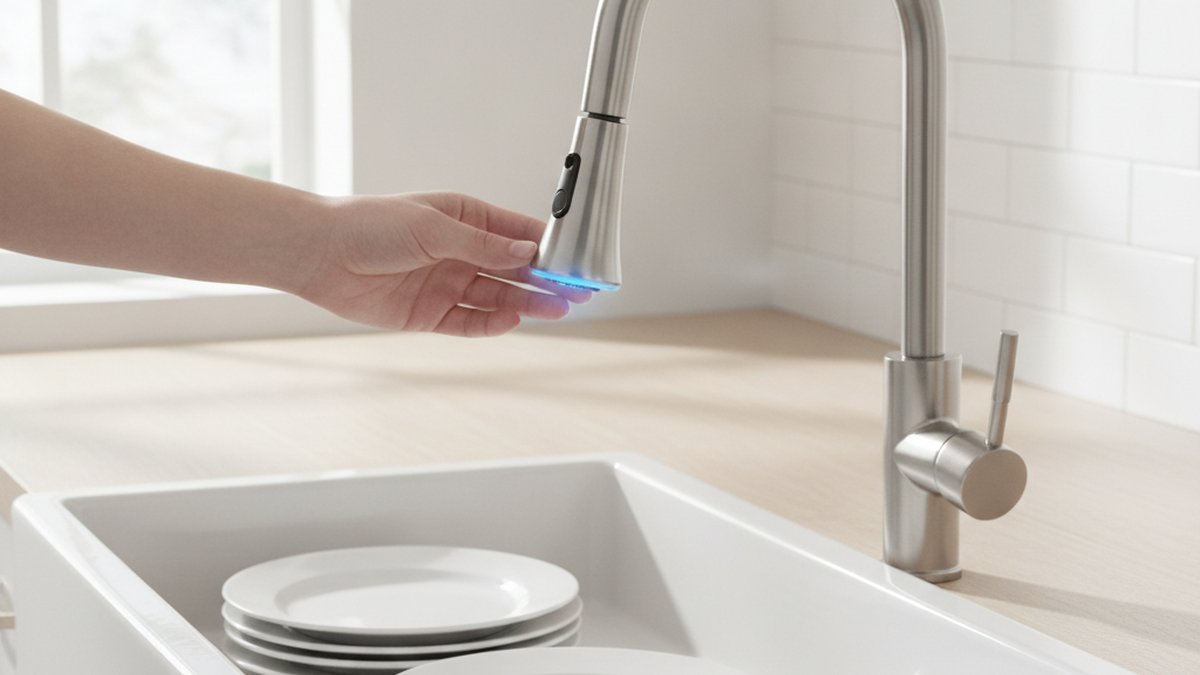
If you’re shopping for the best rated touchless kitchen faucet, you’ve probably noticed that “highly rated” can mean two very different things: a faucet with thousands of five-star reviews because it’s cheap, and a faucet that genuinely holds up for a decade of sticky, wet, one-handed use. This guide is about the second kind. I’ll walk you through exactly what separates a touchless faucet that delights you from one that has you waving your hands like you’re landing a plane — plus concrete specs, price tiers, and a head-to-head comparison table so you can decide fast.
Touchless (also called hands-free or motion-sensor) faucets have gone from a restaurant novelty to a genuinely practical kitchen upgrade. The appeal is obvious the first time you’re elbow-deep in raw chicken and just wave a wrist to rinse. But the tech quality varies wildly between models, and that’s where the “best rated” label earns its keep.
What actually makes a touchless kitchen faucet “best rated” — not just popular?
The best rated touchless kitchen faucets share four measurable traits: reliable sensor response, a long-life valve cartridge, dependable power backup, and a spray head that docks firmly. Everything else — finish, style, soap dispenser — is preference. These four are what reviewers quietly complain about at the 6-month mark when a faucet is merely “popular” instead of genuinely good.
Here’s what each one means in plain terms:
- Sensor design. Look for a dual sensor setup — one at the top of the spout to detect a hand wave, and one at the base or front to detect a pot or your hands moving in. Single-sensor faucets are cheaper but far more prone to false triggers (turning on when you reach for a sponge) and missed triggers.
- Cartridge life. The valve cartridge is the heart of any faucet. Ceramic-disc cartridges rated for 500,000+ open/close cycles are the standard for a “buy it once” faucet. Cheaper units use plastic or lower-grade ceramic that drips within a year or two.
- Power source and backup. Most touchless faucets run on 4–6 AA batteries (typically 1–2 years of life) or an AC adapter. The best rated models let you hardwire and keep a battery backup, so a power blip doesn’t kill your kitchen sink.
- Docking strength. A magnetic dock (Moen calls it “Power Clean” adjacent tech; others call it MagneDock or similar) snaps the spray head back into place cleanly. Spring-clip docks sag over time and leave the hose drooping.
If a faucet nails all four of these, it will almost certainly earn — and keep — high ratings. If it skimps on even one, the reviews turn sour after the honeymoon period.
How does a touchless faucet compare to a pull-down or single-handle faucet?
A touchless faucet is essentially a standard pull-down faucet with an added motion sensor and solenoid valve — so you get the same spray function plus hands-free on/off, but you pay $40–$100 more and you need a power source. If you cook a lot with messy hands, that premium pays for itself quickly; if you just want water on and off, a manual pull-down is simpler and cheaper.
Here’s the honest trade-off in a table:
| Feature | Touchless / Motion-Sensor | Manual Pull-Down | Two-Handle Standard |
|---|---|---|---|
| Hands-free operation | Yes (wave sensor) | No | No |
| Typical price range | $150–$400+ | $90–$300 | $60–$220 |
| Needs power (battery/AC) | Yes | No | No |
| Hygiene (fewer touch points) | Best | Moderate | Moderate |
| Water savings potential | High (auto shut-off) | Moderate | Low |
| Repair complexity | Higher (solenoid + sensor) | Low | Lowest |
Notice the water-savings line. Because a touchless faucet shuts off the instant you move away, it can meaningfully cut waste — especially during tasks where you’d normally leave the water running, like scrubbing dishes or washing produce. Pair that with a WaterSense-labeled model and you’re looking at a real reduction on your water bill. If you want to understand how flow numbers work, our explainer on what a standard kitchen faucet flow rate should be breaks down the 1.5 vs. 1.8 GPM question in detail.
Which touchless kitchen faucet is best for a busy family kitchen under $300?
For a busy family kitchen under $300, the sweet spot is a dual-sensor pull-down faucet in stainless or spot-resist finish with a high-arc spout (8–10 inches of clearance) and a 20-inch pull-down hose. That combination handles big stockpots, fills tall pitchers, and shrugs off fingerprints — the three things that actually matter when four people are cooking, rinsing, and refilling water bottles all day.
In this price band you get most of the premium tech without the designer markup. Look specifically for:
- High-arc or gooseneck spout for pot clearance — a low spout is the #1 regret in family kitchens.
- Dual spray modes (aerated stream + powerful spray) with an easy toggle button on the spray head.
- Spot-resist or brushed finish that hides water spots and little fingerprints between cleanings.
- Battery backup so a dead AC adapter doesn’t mean no water at dinnertime.
Arcora’s touchless pull-down models sit squarely in this range and are built around a ceramic-disc cartridge tested to industry cycle standards. If your kitchen leans warm or you want a statement finish, it’s worth reading our companion guide on the best gold touchless kitchen faucet for a busy kitchen — the sensor and cartridge advice there applies to every finish, not just gold.
Do touchless kitchen faucets have reliability problems? What breaks first?
Touchless faucets are reliable when you buy a good one, but the two parts most likely to fail first are the batteries (predictable, easy) and the solenoid valve (rare, but the real failure point). Sensor “phantom” activations and dead batteries account for the vast majority of one-star reviews — and both are avoidable if you understand the setup.
Let me be straight with you, because a lot of buying guides gloss over this. The added complexity of a touchless faucet is genuinely a trade-off. Here’s what tends to go wrong and how the best-rated brands mitigate it:
- Dead or weak batteries cause slow or erratic sensor response. Fix: use quality alkaline (or lithium) AA batteries and replace them yearly. Some models flash an LED when the battery is low.
- Phantom triggers happen when the sensor sits too close to a wall or a hanging dish towel. Fix: dual-sensor faucets with adjustable sensitivity, and correct positioning during install.
- Solenoid valve failure is the one true weak point unique to touchless models. A good brand backs the solenoid with a multi-year warranty and sells the part separately, so you replace a $25 valve, not the whole faucet.
- Low water pressure or slow flow is usually a clogged aerator, not the electronics — the same as any faucet. If you’re troubleshooting a sluggish stream, brand-specific issues are common; our walkthrough on why a faucet has low water pressure and how to fix it applies to touchless models too.
The takeaway: reliability is mostly a function of build quality and correct installation, not the touchless concept itself. A well-made motion faucet from a brand that stands behind its solenoid is every bit as dependable as a manual one — and the batteries are a five-minute annual chore, not a design flaw.
Where should you buy a touchless kitchen faucet — online or in a store?
Buy your touchless kitchen faucet from a source that guarantees the full warranty and stocks replacement parts — which usually means the manufacturer’s own site or a major authorized retailer, whether that’s online or a big-box store. The faucet body matters far less than whether you can get a new solenoid, cartridge, or spray head two years from now.
In-store, you can feel the build weight (heavier usually means more brass, less plastic) and test the spray-head pull. Online, you get better prices, full spec sheets, and real long-term reviews. If you like seeing it in person first, big retailers carry solid options — we covered the in-store experience in our look at whether a touchless faucet at Rona is actually worth it. Whichever route you choose, confirm three things before you check out: the finish matches your other fixtures, the deck-hole configuration fits your sink (1-hole vs. 3-hole — a deck plate usually covers extra holes), and the warranty is registered to you as the original buyer.
What finish and features are worth paying extra for?
The finish upgrades worth paying for are spot-resist stainless (hides fingerprints) and matte black or brushed gold if they match your kitchen — and the feature worth paying for is a built-in soap dispenser or an integrated water filter, if you’ll actually use it. Skip paying extra for voice control (Alexa/Google) unless you’re already deep in a smart-home setup; it’s a novelty most people stop using within weeks.
A quick reality check on finishes: PVD (physical vapor deposition) coatings are far more scratch- and tarnish-resistant than standard plated finishes, and nearly every reputable brand now uses PVD on its brushed gold, matte black, and bronze options. That’s why a good gold or black faucet holds up in a real kitchen instead of wearing through at the touch points. If a soap dispenser is on your must-have list, our guide to a brushed gold faucet with soap dispenser covers how to match the pump finish to the spout so the whole setup looks intentional.
How do you install a touchless kitchen faucet — is it a DIY job?
Yes, installing a touchless kitchen faucet is a realistic DIY job for most people — budget about 60–90 minutes, a basin wrench, and a bucket. The only extra step versus a normal faucet is connecting the sensor/control box and seating the batteries or AC adapter; the plumbing connections are identical to any pull-down faucet.
Here’s the basic sequence, start to finish:
- Shut off the hot and cold supply valves under the sink and open the old faucet to release pressure.
- Disconnect and remove the old faucet — a basin wrench is worth its weight here for the tight nuts.
- Feed the new faucet’s lines and sensor cable down through the deck hole; secure the mounting nut from below.
- Connect the control box: plug the spout’s sensor cable, the two supply hoses, and the pull-down hose into the labeled ports.
- Install batteries or the AC adapter, then turn the supply valves back on.
- Flush the line for 15–30 seconds to clear debris, then calibrate the sensor per the manual (usually an automatic self-set on first power-up).
The one place people slip up is over-tightening the plastic quick-connect fittings — hand-tight plus a quarter turn is plenty, and the click tells you it’s seated. If you’d rather see the spray-head side of the job in detail, our step-by-step on how to install a kitchen faucet head correctly pairs well with this.
A note on trust: how we evaluate faucets
This guide was written by the Arcora product content team, drawing on hands-on testing of touchless models, manufacturer cycle-test data, and thousands of verified customer reviews we read through for recurring complaints. Arcora has manufactured kitchen and bath fixtures for over a decade, and our faucets are built to meet cUPC and WaterSense standards with lead-free, corrosion-resistant brass waterways. Our touchless models ship with a limited lifetime warranty on the faucet body and cartridge, and a multi-year warranty on the electronic solenoid and sensor — the part that actually matters for a hands-free faucet — with replacement components sold individually so a small failure never means replacing the whole unit.
We call out weak points honestly (see the reliability section above) because a faucet you regret helps no one. When we say a spec matters — 500,000-cycle cartridge, dual sensors, magnetic dock — it’s because those are the differences we’ve watched separate the four-star faucets from the one-star ones in real kitchens.
FAQ
Are touchless kitchen faucets worth it in 2026?
Yes, for most cooks. If you handle raw meat, bake, or have kids constantly at the sink, the hands-free hygiene and reduced water waste justify the $40–$100 premium over a manual pull-down. If you rarely have messy hands, a good manual faucet gives you the same spray quality for less money.
Do touchless faucets work without electricity or during a power outage?
Battery-powered models keep working during a power outage since they run on AA batteries, not house current. Hardwired (AC adapter) models stop responding to the sensor when the power is out — which is exactly why the best-rated touchless faucets include a battery backup and, in most cases, a manual lever so you always have water.
How long do the batteries last in a touchless kitchen faucet?
Most touchless faucets get 1–2 years from a set of AA batteries under normal household use. Lithium AAs last longer and perform better in the sensor’s low-voltage cutoff range. A low-battery LED indicator on the faucet body or control box will usually warn you before it dies.
Can a touchless faucet turn on by itself?
It can, if the sensor is poorly positioned or set too sensitive — a nearby wall, a hanging dish towel, or a passing pet can trigger a single-sensor model. Dual-sensor faucets with adjustable sensitivity largely eliminate phantom activations, which is why they’re the standard on higher-rated models. Correct placement during install matters just as much as the tech.
What’s the best flow rate for a touchless kitchen faucet?
A WaterSense-rated 1.5 to 1.8 GPM (gallons per minute) is the sweet spot — strong enough to rinse and fill quickly, efficient enough to save water. Anything above 2.2 GPM is legally capped in many U.S. states now. If your stream feels weak, it’s almost always a clogged aerator rather than the rated flow being too low.
Is a stainless or matte black touchless faucet easier to keep clean?
Spot-resist stainless hides fingerprints and water spots best day to day, making it the lowest-maintenance choice for a busy kitchen. Matte black looks striking and hides limescale in hard-water areas but shows dust and dried water droplets more readily. Both are easy to wipe down; avoid abrasive pads on any finish to protect the PVD coating.