 ARCORA FAUCETS
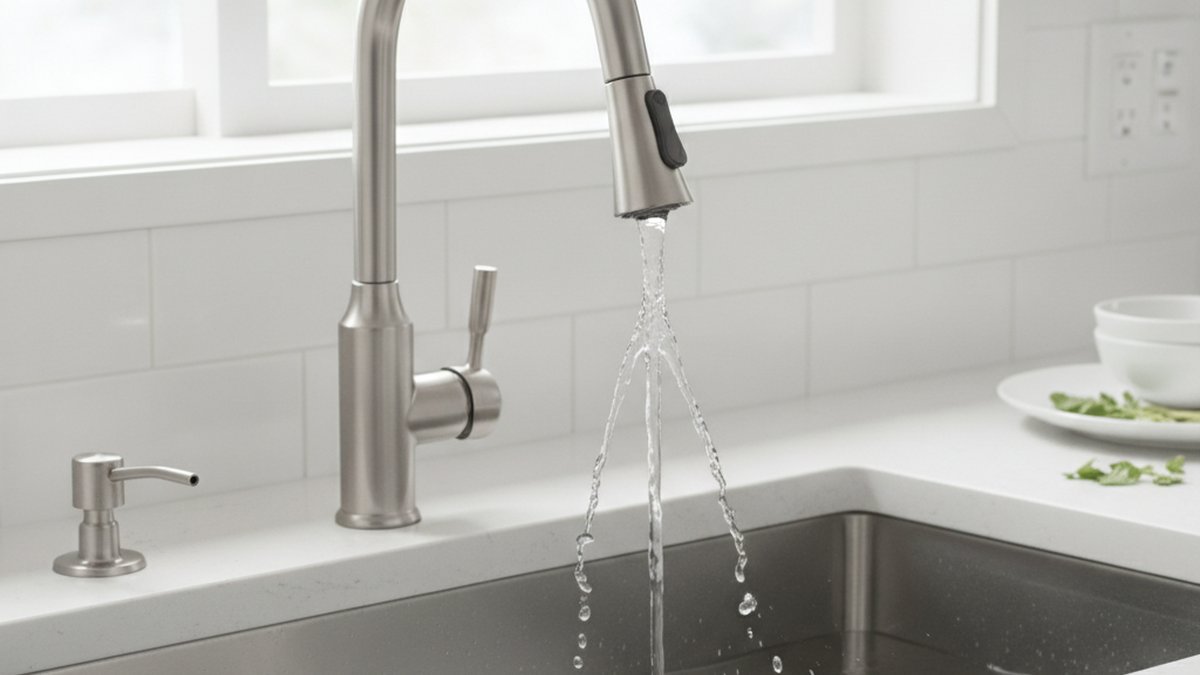
If you’re dealing with vigo faucet low water pressure, start with the cheapest, most likely culprit before you touch anything expensive: mineral scale and debris trapped in the aerator or spray head. Vigo makes solid stainless-steel and brass kitchen and bathroom faucets, and a weak trickle rarely means the valve or cartridge inside has failed. Far more often, hard-water sediment, PTFE tape shavings from installation, or a supply valve that got bumped half-closed is choking the flow. This guide walks you through the exact order to check things — fastest and cheapest fixes first — so you don’t waste an afternoon (or a plumber’s call-out fee) chasing the wrong problem.
What’s the #1 cause of low water pressure on a Vigo faucet?
A clogged aerator. Nine times out of ten, that little screw-on tip where the water exits is packed with mineral crust and grit, and cleaning or replacing it fixes the problem completely. The aerator’s job is to mix air into the stream and screen out debris — so it’s the first place sediment collects, especially if you’re on hard water or your home has older galvanized pipes.
Here’s how to confirm it in 30 seconds: turn the faucet on, then unscrew the aerator by hand (it’s at the very end of the spout). If the flow suddenly jumps to full force with the aerator off, you’ve found your problem — clean or swap the aerator and you’re done. If the flow is still weak with the aerator removed, the blockage is further upstream (spray head, valves, or supply line), and you keep reading.
Most Vigo aerators unthread counterclockwise by hand. If it’s cemented on by scale, wrap the finish in a cloth or a strip of masking tape to protect it, then use pliers gently. Soak the removed aerator in white vinegar for 20–30 minutes, scrub the tiny screen with an old toothbrush, and rinse. If the screen is torn or the plastic housing is cracked, don’t fight it — a replacement aerator costs a few dollars. If yours is fused solid, our step-by-step guide on faucet aerator removal when it’s stuck shows the exact tools and tricks that won’t damage the finish, and this walkthrough of the faucet aerator internal parts helps you reassemble the little stack of washers and screens in the right order.
How do I fix low pressure on my Vigo pull-down or pull-out spray head?
Detach the spray head from the hose and check for debris in the outlet screen and the quick-connect coupling. Vigo’s pull-down kitchen faucets (like the popular Edison, Aylesbury, and Zurich models) have a spray face with dozens of tiny rubber or silicone nozzles that catch sediment, plus an inline screen where the head snaps onto the hose. Both clog.
Do this:
- Unscrew the spray head from the braided hose (usually a knurled collar you can turn by hand). Water will drip, so have a towel ready.
- Look inside the coupling for a small mesh screen or a rubber washer with a screen molded in. Rinse out any grit and mineral flakes.
- On the spray face itself, run a finger or a soft brush over the rubber nozzles — dried scale rubs right off and reopens the holes.
- Reattach, then test in both stream and spray modes. If only spray mode is weak, the diverter inside the head is the issue and the head may need replacing.
If pressure is fine at the spout but the head barely dribbles when extended, suspect a kinked or worn pull-down hose inside the cabinet, or a weak spring return pinching the hose. The technique for reseating a spray head is nearly identical to installing a new one — see our guide on how to install a kitchen faucet head correctly if you end up replacing yours.
Why is my Vigo faucet suddenly low pressure after installation?
If the low pressure started the day you installed it, the two usual suspects are shut-off valves that aren’t fully open and PTFE (plumber’s) tape shavings clogging the aerator or cartridge. Brand-new faucets almost never arrive with a factory defect that limits flow — the problem is nearly always in the install.
Check these in order:
- Shut-off valves: Reach under the sink and turn both the hot and cold angle-stop valves fully counterclockwise. A valve left half-open is the single most common “new faucet, low pressure” cause. Turn them all the way open.
- Supply line kinks: The braided flex lines can kink behind the basin during install. Straighten any sharp bends.
- Tape debris: If you wrapped connections with too much PTFE tape, shreds can break loose and jam the aerator. Remove and rinse the aerator again.
- Protective inserts: Some faucets ship with a plastic flow restrictor or a bright-colored protective plug in the spray head — make sure you removed any packaging insert.
One more Vigo-specific note: many of their pull-down models include a factory flow restrictor and an aerator rated around 1.8 GPM to meet WaterSense and California/EPA efficiency rules. That’s normal, not a defect — it’s not “broken,” it’s designed to save water. If you want to understand what a healthy number looks like, our explainer on standard kitchen faucet flow rate covers what’s normal versus genuinely too low.
Is it the faucet or is it my house? How to tell in 2 minutes
Test a different fixture. If every faucet, the shower, and the toilet fill are all weak, the problem is your home’s water pressure — not the Vigo faucet. If only the Vigo runs weak while everything else is strong, the problem is at the faucet itself (aerator, spray head, cartridge, or its supply valves).
Here’s a quick decision table to pinpoint it:
| Symptom | Most likely cause | Fix | Cost / time |
|---|---|---|---|
| Only this faucet is weak; flow jumps when aerator removed | Clogged aerator | Clean or replace aerator | $0–$8 · 15 min |
| Spout is fine, spray head dribbles | Clogged/worn spray head or diverter | Clean or replace head | $0–$30 · 20 min |
| Weak on both hot and cold, aerator clean | Half-closed shut-off valves | Open valves fully | $0 · 2 min |
| Weak on one side only (just hot OR just cold) | Clogged supply line or that valve | Flush line / open valve | $0–$15 · 20 min |
| Weak everywhere in the house | Home pressure / PRV / main valve | Check pressure regulator, call utility | Varies |
| Weak + sputtering air, older faucet | Failing cartridge | Replace cartridge (Vigo warranty) | $0–$40 · 30 min |
The “one side only” test is underrated. Turn the faucet to full hot, note the flow, then full cold. If one temperature is noticeably weaker, you’ve isolated the problem to that supply line or its angle stop — no need to touch the aerator at all.
How do I check the shut-off valves and supply lines under the sink?
Look under the sink for two small oval or football-shaped handles on the water lines feeding the faucet — those are the angle-stop shut-off valves. Turn both fully counterclockwise (open). Then feel the braided supply lines for kinks and make sure nothing stored in the cabinet is crushing them.
If opening the valves doesn’t help, flush the supply lines to clear grit:
- Close both shut-off valves.
- Disconnect the braided line at the faucet end and aim it into a bucket.
- Briefly crack the valve open — a strong burst means the line and valve are clear; a weak dribble means the valve or the line is the restriction.
- Reconnect, hand-tight plus a quarter turn with a wrench, and test.
Old angle stops can seize or silt up internally, quietly throttling flow for years. If a valve feels gritty, won’t fully open, or weeps, replacing it is a straightforward job. And if you spot moisture while you’re down there, don’t ignore it — a slow drip at the connection is a classic early warning. Our guide on a kitchen sink supply line leaking covers how to stop it fast and whether to replace the line while you’re at it.
Could a bad cartridge cause low pressure?
Yes, but it’s usually the last thing to blame. A worn or scale-clogged cartridge typically shows up as weak flow combined with temperature problems (can’t get fully hot or cold), sputtering, or a handle that’s suddenly stiff or loose. If you’ve cleaned the aerator and spray head, confirmed the valves are open, and one specific faucet is still weak — especially an older one — the cartridge is the likely offender.
Good news: Vigo backs its faucets with a limited lifetime warranty on the finish and function for the original owner, and cartridges are a covered wear part on most models. Before you buy anything, contact Vigo support with your model number — they frequently ship replacement cartridges and aerators free. Swapping a cartridge is a 30-minute job with an Allen key and a cartridge puller; just shut off the water first and note the orientation as it comes out.
Does hard water cause Vigo faucet low water pressure over time?
Absolutely — hard water is the slow, steady killer of faucet flow. Dissolved calcium and magnesium precipitate out as limescale inside the aerator, spray nozzles, cartridge, and even the spout channel. It builds gradually, so you may not notice until the stream has quietly dropped by half over a year or two.
If you’re on hard water, build these habits:
- Soak the aerator in white vinegar every 3–6 months — it dissolves scale without scratching the finish.
- Wipe the spray nozzles weekly; the rubber tips release built-up scale with a finger rub.
- Consider a point-of-use filter or a whole-home softener if you’re constantly re-cleaning fixtures. Even a simple inline filter helps.
- Avoid acidic descalers on brushed/matte finishes beyond short vinegar soaks — stick to what the manual approves.
This same scale problem plagues showers, by the way. If your shower is fading along with your faucet, the fix logic is identical, and our companion guide on low pressure in a shower head walks through descaling a shower head the same way you’d descale an aerator.
How much water pressure should a Vigo faucet have?
Most Vigo kitchen faucets are engineered to perform at a residential supply pressure between 45 and 75 PSI, with a flow rate around 1.8 GPM at the aerator (some bathroom models are 1.2 GPM to meet stricter standards). If your home pressure sits below about 40 PSI, even a perfectly clean faucet will feel weak — that’s a house problem, not a faucet defect. You can buy a $10 gauge that screws onto a hose bibb to check your actual PSI in under a minute.
Step-by-step: the fastest fix order for a weak Vigo faucet
Work this list top to bottom and stop as soon as the flow comes back. Each step is cheaper and faster than the one below it.
- Test another faucet — rule out whole-house pressure (2 min).
- Unscrew and soak the aerator in vinegar; scrub and rinse (15 min).
- Detach and clean the spray head and its inline screen (15 min).
- Open both shut-off valves fully under the sink (2 min).
- Check the hot side vs cold side separately to isolate a bad line (2 min).
- Flush the supply lines into a bucket to clear grit (15 min).
- Replace the cartridge (warranty part) if all else is clean (30 min).
FAQ
Why does my Vigo faucet have low pressure only on hot water?
If only hot is weak, the restriction is on the hot side specifically — usually a half-closed hot shut-off valve, a kinked hot supply line, or sediment from your water heater tank collecting in the hot line. Flush the hot supply line into a bucket and fully open the hot angle stop. Sediment-heavy water heaters can shed grit that clogs faucets, so if it recurs, have the heater flushed.
Can a new Vigo faucet come with low water pressure out of the box?
Rarely a true defect. New Vigo faucets ship with a WaterSense-compliant aerator (about 1.8 GPM) and sometimes a flow restrictor, which is normal and not “low pressure.” Genuine install-related weak flow is almost always half-open shut-off valves, kinked flex lines, or PTFE tape shavings jamming the aerator. Recheck those before assuming the faucet is faulty.
How do I clean a Vigo aerator without damaging the finish?
Unscrew it by hand if possible; if you need pliers, wrap the aerator in masking tape or a cloth first to protect the coating. Soak it in plain white vinegar for 20–30 minutes, brush the screen with a soft toothbrush, rinse, and reinstall. Skip harsh chemical descalers on brushed nickel, matte black, or gold finishes — a short vinegar soak is safe and effective.
Will replacing the cartridge fix my Vigo faucet’s weak flow?
Only if you’ve already ruled out the aerator, spray head, and valves. A failing cartridge usually pairs weak flow with temperature trouble, sputtering, or a stiff handle. If a clean, open system still runs weak on one faucet — especially an older one — replace the cartridge. Contact Vigo with your model number first; cartridges are typically covered under their limited lifetime warranty.
Is low pressure a sign my Vigo faucet needs full replacement?
Almost never. Low pressure is a maintenance issue (scale, debris, valves) or a cheap wear part (aerator, cartridge), not a reason to replace the whole faucet. Consider a full replacement only if the spout body is cracked, the finish is failing, or a discontinued model has no available cartridge — and even then, the fix is usually a $5–$40 part, not a new faucet.
Author note: This guide was written by the Arcora Faucet product team, drawing on hands-on bench testing of pull-down kitchen and bathroom faucets and years of fielding real customer repair questions. Arcora designs and manufactures kitchen and bathroom faucets built to ASME A112.18.1/CSA B125.1 and WaterSense standards, backed by a limited lifetime warranty — the same fundamentals that make a Vigo (or any quality brass/stainless faucet) easy to service rather than replace. When in doubt, keep your model number handy and lean on the manufacturer’s warranty before spending a dollar.