 ARCORA FAUCETS
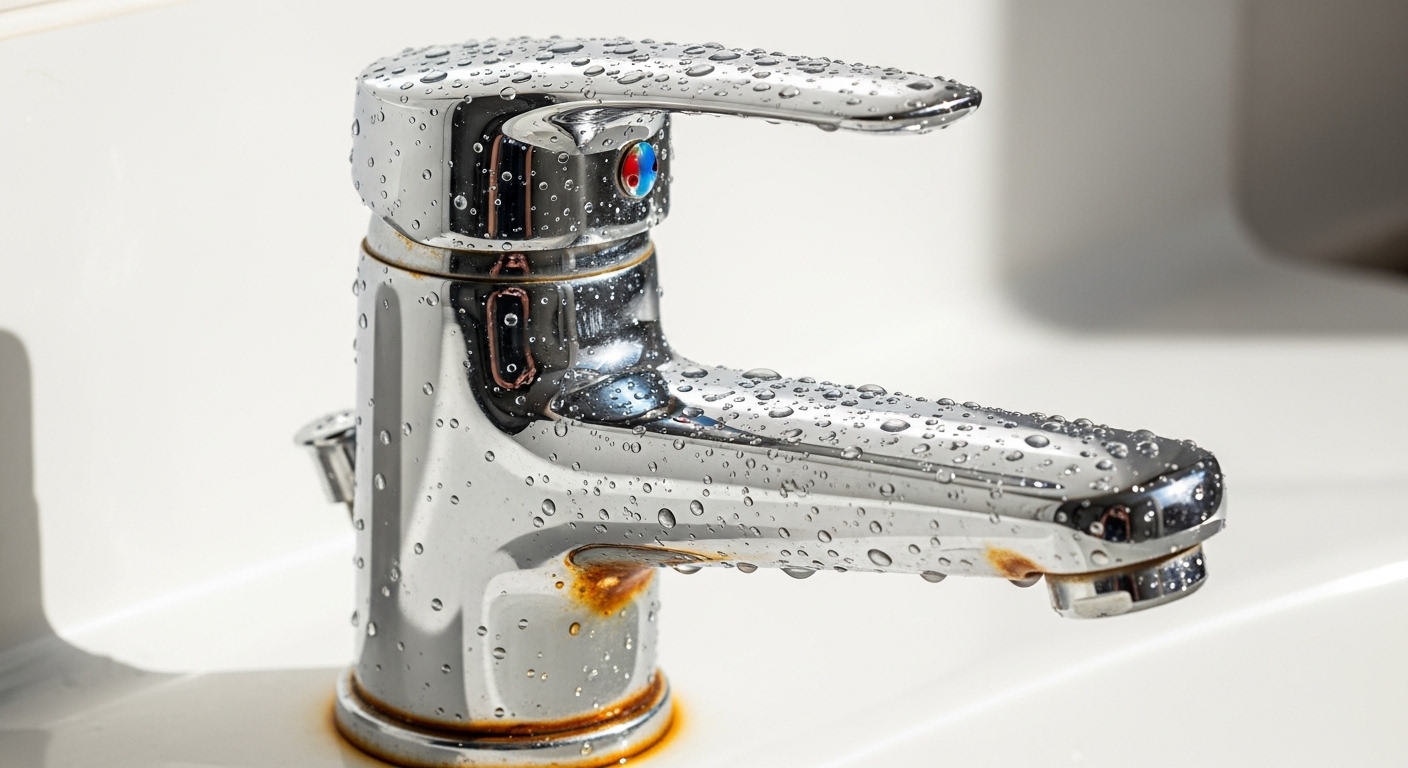
If you’re staring at a rusted faucet and wondering whether you need a plumber, a new fixture, or just a good scrub, here’s the honest truth: nine times out of ten it’s cosmetic and you can fix it at home for a few dollars. Most bathroom and kitchen faucets are made of brass or stainless steel with a chrome, nickel, or PVD finish — none of those actually rust. What you’re usually seeing is orange or brown staining from iron in your water, or corrosion creeping out from a cheaper steel component underneath. This guide walks you through telling the difference, cleaning it off without wrecking the finish, and knowing exactly when the faucet is past saving.
Is My Faucet Actually Rusting, or Is It Just Hard-Water Stains?
Most of the time it’s staining, not true rust. Real rust is iron oxide — it only forms on iron or steel, and it flakes, pits, and eats into the metal. If your faucet is chrome, brushed nickel, or matte black over brass, the base metal physically cannot rust. What looks like rust is usually iron and mineral deposits from your water settling on the surface, or corrosion bleeding out from a low-grade steel screw, spring, or mounting nut hidden inside.
Here’s a quick field test: wipe the discolored spot with a cloth soaked in white vinegar. If the orange color lifts off and the finish underneath looks clean and shiny, it was a stain — you’re done. If you feel roughness, pitting, or flaking metal that won’t wipe away, that’s genuine corrosion in the material itself, and no amount of scrubbing brings that back.
The color gives you clues too. Bright orange usually points to iron in your water supply. A dull reddish-brown crust that’s rough to the touch is more likely actual rust from a steel part. A whitish-green tint on brass or copper is a different animal entirely — that’s tarnish or verdigris, not rust, and it cleans up the same gentle way.
How Do You Get Rust Off a Faucet Without Ruining the Finish?
Use the mildest thing that works first — white vinegar or a baking-soda paste — and never reach for steel wool or bleach on a finished faucet. Acidic cleaners dissolve rust and mineral deposits, while a soft paste lets you lift stains with gentle friction that won’t scratch chrome or nickel. Aggressive abrasives and harsh chemicals strip the protective coating, and once that’s gone the corrosion comes back faster and worse.
Here’s the step-by-step I use, from gentlest to strongest:
- White vinegar soak. Soak a paper towel or microfiber cloth in plain white vinegar and wrap it around the rusted area. Leave it 15–30 minutes so the acid can break down the iron oxide, then wipe. For faucet handles or aerator tips, submerge them in a small cup of vinegar.
- Baking soda paste. Mix baking soda with a little water into a toothpaste consistency, spread it on, wait 10 minutes, then scrub gently with an old soft toothbrush. The mild abrasion plus the reaction with any leftover acid lifts stubborn spots.
- Lemon and salt. For a natural option, sprinkle salt on a cut lemon and rub — the citric acid and mild grit work like a two-in-one on light rust.
- Rinse and dry completely. Rinse with clean water and buff dry with a soft towel. Standing water is what started this, so drying is not optional.
What to keep away from your faucet: steel wool, green scouring pads, bleach, and any “rust remover” containing hydrochloric or oxalic acid on a decorative finish. Those are for bare metal and cast iron, not the thin PVD or chrome plating on a modern faucet. If you want the full breakdown on protecting the finish while you clean, our guide on how to remove hard water stains on a faucet without wrecking the finish covers the same techniques in more detail for mineral buildup.
What’s the Best Way to Clean a Rusted Faucet Aerator or Handle?
Unscrew the part and soak it in vinegar overnight — small removable pieces clean up far better off the faucet than on it. The aerator (the screw-on tip where water comes out) and the handles are where rust and mineral gunk collect most, because water pools there and sits. Taking them off lets the vinegar reach every thread and screen.
To pull the aerator, twist it counterclockwise by hand or with tape-wrapped pliers so you don’t scratch it. If it’s seized from corrosion and won’t budge, don’t force it — our walkthrough on faucet aerator removal when it’s stuck shows how to free it without snapping the threads. Once it’s off, drop it in vinegar for a few hours, brush out the tiny screen, rinse, and reinstall. A clogged, rust-flecked aerator is also the number-one reason for weak or sputtering flow, so cleaning it often fixes two problems at once.
For handles, the same soak works, but check the set screw underneath — that little screw is frequently plain steel and the true source of the “rust” streaking down your beautiful faucet. Replacing a corroded set screw with a stainless or brass one for a couple of dollars stops the stain from ever coming back.
Why Does a Faucet Rust in the First Place?
Faucets rust because water, oxygen, and a corrodible metal part sit together with no drying in between — usually thanks to hard water, cheap internal components, or a stripped finish. Understanding the cause tells you whether cleaning will hold or whether you’re fighting a losing battle. Here are the real culprits:
- Iron in your water supply. Well water and older municipal lines can carry dissolved iron that oxidizes and stains everything it touches orange — sinks, tubs, and faucets alike. This is staining, not the faucet failing.
- Hard water. High mineral content leaves deposits that trap moisture against the finish and give corrosion a foothold. It also etches the protective coating over time.
- Low-grade internal parts. Budget faucets use steel screws, springs, mounting nuts, and even steel-cored bodies that corrode from the inside out, then bleed rust to the surface.
- A damaged finish. Once chrome or PVD plating is scratched or worn through — often from abrasive cleaners — the base metal underneath is exposed and can start corroding at that spot.
- Constant moisture. A faucet that never dries, or one near a slow leak, stays wet enough for corrosion to take hold. A dripping or leaking faucet keeps the metal permanently damp, which is one more reason to understand what a leaking faucet really means and fix it early.
Which Cleaning Method Should I Use for My Faucet? (Comparison)
Match the method to how bad the rust is and what your faucet is made of. Light surface staining needs nothing more than vinegar; deep corrosion needs replacement, not chemistry. This table sorts it out:
| Method | Best For | Safe On | Effort / Time | Risk to Finish |
|---|---|---|---|---|
| White vinegar soak | Light iron/mineral staining | Chrome, nickel, stainless, brass | Low / 15–30 min | None |
| Baking soda paste | Moderate surface rust spots | Most finishes (test first) | Medium / 20 min | Very low |
| Lemon + salt | Light rust, natural option | Chrome, stainless | Low / 15 min | Low |
| Commercial rust remover | Heavy rust on bare/utility metal | Unfinished iron/steel only | Medium / varies | High on plated finishes |
| Replace the part/faucet | Pitting, flaking, internal corrosion | Any | High / 1–2 hrs | N/A |
Notice that commercial rust removers sit in the “high risk” column for anything with a decorative finish. Save those for a rusty tool or a cast-iron drain grate — not the faucet on display in your bathroom.
When Should I Just Replace a Rusted Faucet Instead of Cleaning It?
Replace it when the rust is structural — pitting you can feel, metal flaking away, rust in the water itself, or corrosion around the valve that causes leaks. At that point the material has lost integrity, and cleaning only buys you a little cosmetic time before it fails or contaminates your water. A faucet with true internal corrosion is also more likely to seize, crack, or drip, and chasing those repairs costs more than a replacement.
Clear signs it’s time for a new faucet:
- Orange or brown flakes come out with the water — that’s rust from inside the faucet body or pipes.
- The surface is pitted and rough even after cleaning; the plating is gone.
- The handle or valve is seizing up from internal corrosion.
- Rust has caused a leak at the base or under the sink — see our guide on how to fix a leaky faucet at home to confirm whether it’s the valve or the fixture body.
- The faucet is 10–15+ years old and low-grade to begin with.
If you’re replacing, buy the corrosion problem out of your life for good: choose a solid brass or stainless steel faucet body with a PVD (physical vapor deposition) finish. PVD bonds the color to the metal at a molecular level, so it resists corrosion, scratching, and tarnish far better than standard electroplating. It costs a little more upfront but it’s why a quality faucet outlasts a bargain one three times over.
How Do You Stop a Faucet From Rusting Again?
Keep it dry, wipe it down weekly, and treat your water if you have iron or hardness — corrosion needs standing moisture, so denying it that is 90% of prevention. A minute of maintenance beats another afternoon of scrubbing. Do these things and a good faucet will stay spotless for years:
- Wipe it dry after heavy use. A quick pass with a soft cloth removes the water film that feeds staining and corrosion.
- Clean weekly with mild soap and water. Skip abrasive cleaners and anything acidic for routine cleaning — those wear the finish over time.
- Fix drips fast. A leak that keeps the metal wet is an open invitation to rust.
- Install a water softener or iron filter if your water is hard or iron-rich. This protects every fixture in the house, not just one faucet.
- Add a wax coat. A thin layer of car wax or a specialty fixture wax on chrome creates a water-repelling barrier that beads moisture right off.
One more tip: when you buy your next faucet, check the spec sheet for the finish standard. Reputable fixtures are tested to ASME A112.18.1 / CSA B125.1, and finishes are often validated with a salt-spray corrosion test (like ASTM B117). If a listing mentions those, you’re looking at a faucet built to shrug off exactly the problem you’re dealing with now.
FAQ
Can I use Coca-Cola or ketchup to clean a rusted faucet?
Yes, both work in a pinch because they’re mildly acidic — cola contains phosphoric acid and ketchup contains vinegar and tomato acid. Apply, wait 15–20 minutes, then scrub gently and rinse. They’re fine for light rust, but plain white vinegar is cheaper, less messy, and just as effective, so it’s still my first choice.
Does WD-40 remove rust from a faucet?
WD-40 can loosen light surface rust and help free a seized, corroded part, but it’s a lubricant and penetrant, not a true rust dissolver — and it leaves an oily film you’ll have to clean off a food-area faucet. Use it to unstick a rusted-on aerator or handle screw, then finish the cleaning with vinegar. Don’t rely on it as your main rust remover on a bathroom or kitchen fixture.
Is a rusty faucet dangerous or unhealthy to drink from?
Surface rust on the outside of the faucet is harmless. Rust flakes coming out in the water are not a serious health hazard in small amounts — iron isn’t toxic at those levels — but it signals corrosion inside your faucet or pipes, can stain fixtures and laundry, and tastes metallic. If you see rust in the water regularly, replace the faucet and have your plumbing checked.
Why is only the base of my faucet rusting?
The base is where water pools and sits longest, so it’s the first place staining and corrosion appear — and it’s often where a cheap steel mounting nut underneath is corroding and bleeding through. Clean the base with vinegar, dry it thoroughly, and check the mounting hardware under the sink; swapping a rusted steel nut for a brass one usually solves it for good.
Will a stainless steel faucet ever rust?
Genuine stainless steel is highly corrosion-resistant but not 100% rust-proof — it can develop surface “tea staining” or pinpoint rust in very hard, salty, or chlorine-heavy water, especially on lower grades of stainless. The good news is that this staining wipes off easily with vinegar and almost never affects the metal’s integrity. A quality stainless or PVD-coated brass faucet is still your safest bet against rust.
How long does it take to clean rust off a faucet?
Budget about 20–40 minutes for most jobs. Light staining lifts in a 15-minute vinegar wipe; a heavier buildup on the aerator and handles is best left to soak for a few hours or overnight, but your hands-on time is only 10–15 minutes of that. If it’s not clean after two rounds of vinegar and baking soda, the rust is structural and no amount of extra soaking will fix it.
A Note From the Arcora Team
This guide was written by the product and support team at Arcora, where we design and rigorously test kitchen and bathroom faucets built from solid brass and stainless steel with durable PVD and electroplated finishes. Our fixtures are engineered to meet ASME A112.18.1/CSA B125.1 standards and are backed by a limited lifetime warranty on finish and function, because we’ve seen firsthand how much longer a corrosion-resistant faucet lasts in real homes with real hard water. We answer questions like this one every day from customers trying to save a fixture — and just as often, helping them pick a replacement that won’t rust in the first place. If you’re weighing an upgrade, our guides on finishes like the matte black modern faucet can help you choose one that stays looking new.