 ARCORA FAUCETS
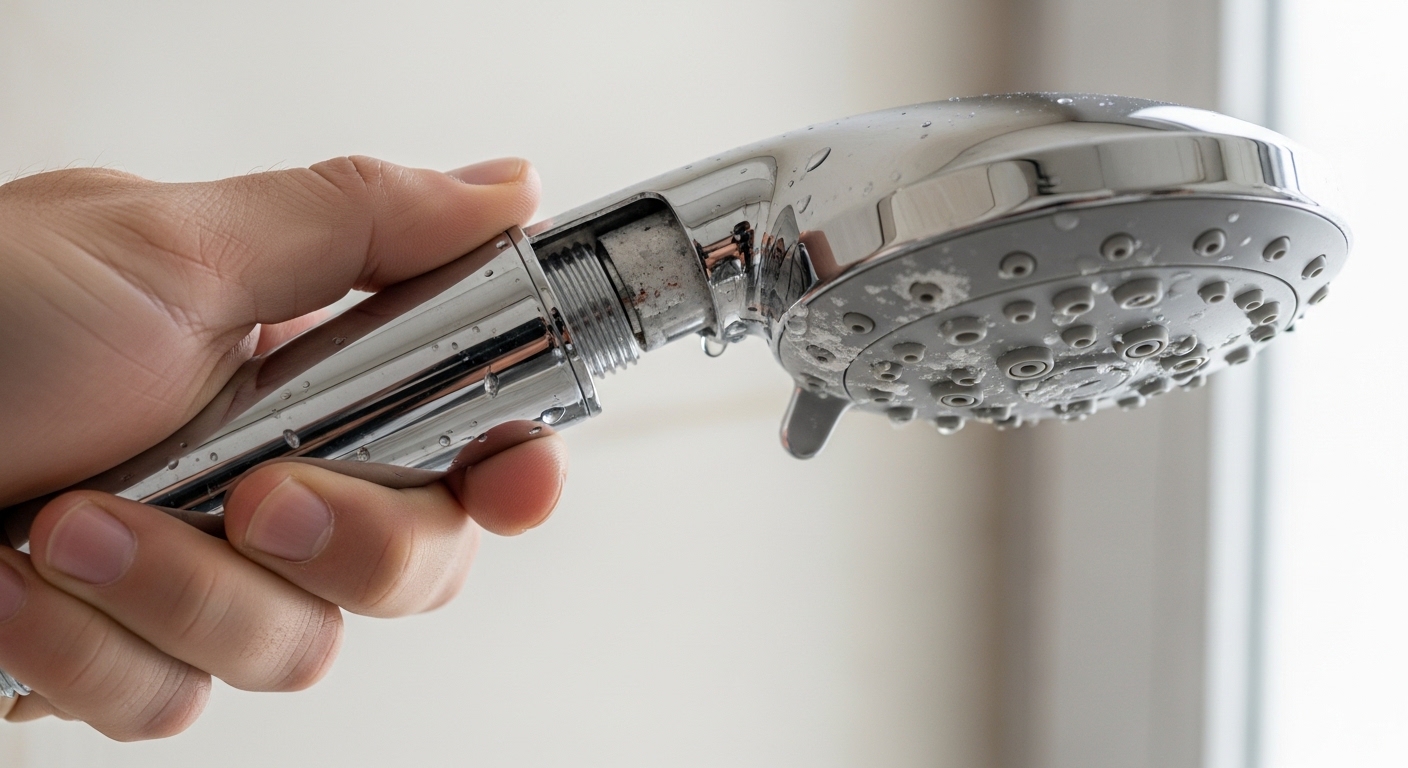
If you’re staring at a sad trickle and wondering about low pressure in shower head how to fix without spending a weekend or a plumber’s call-out fee, here’s the honest truth: the problem is almost always something small, cheap, and reachable with your own two hands. Hard-water minerals, a factory flow restrictor, a gunked-up filter screen, or a valve that isn’t all the way open account for the overwhelming majority of weak showers. Actual pipe or pressure-regulator problems exist, but they’re the exception, not the rule.
Below, I’ll walk you through diagnosing the real cause in order — cheapest and easiest first — then show you exactly how to fix each one. By the end you’ll know whether this is a ten-minute vinegar soak or a genuine plumbing issue worth a call.
Why is my shower head suddenly low pressure when it used to be fine?
A sudden drop in pressure is almost always mineral buildup or a clogged screen — not your home’s water supply. When pressure fades gradually over months, that’s classic hard-water scale slowly plugging the tiny nozzles. When it drops overnight, suspect a dislodged chunk of debris caught in the filter screen, or a valve someone nudged closed.
Water leaves dissolved calcium and magnesium behind every time it dries. Those minerals crystallize inside the shower head’s spray holes and on the internal filter screen. Each hole individually looks fine, but collectively they choke the flow. This is why a head that sprayed hard two years ago now dribbles — nothing “broke,” it just slowly cemented itself shut.
Here’s the quick test: if only your shower is weak but the bathroom sink and tub spout run strong, the problem is in the shower head or its arm, not your house pressure. If everything in the house is weak, that points to a main valve, pressure regulator, or municipal supply issue instead.
How do I fix a clogged shower head with vinegar?
Soak the shower head in undiluted white vinegar for 30–60 minutes (overnight for heavy scale), then scrub the nozzles and rinse. This dissolves the calcium carbonate that’s blocking the spray holes and restores flow without any harsh chemicals or special tools.
You’ve got two ways to do it. The no-removal method: fill a sturdy plastic bag with white vinegar, slip it over the shower head so the whole face is submerged, and secure it with a rubber band or zip tie. Leave it an hour. The thorough method — which I recommend — is to unscrew the head and soak it fully in a bowl.
- Unscrew the shower head from the wall arm by turning counterclockwise. Use a cloth and adjustable wrench if it’s stuck; wrap the cloth to protect the finish.
- Remove the flow restrictor and filter screen from inside the inlet (more on the restrictor below). Note the order they came out.
- Soak everything in warm white vinegar for 30–60 minutes. For a stubborn head, go overnight.
- Scrub the face with an old toothbrush. On silicone rubber nozzles, rub each one with your thumb — the softened scale pops right off.
- Rinse thoroughly, reassemble, and reattach with fresh plumber’s tape on the threads.
If the nozzles are silicone (little soft rubber points you can press), you barely need vinegar — just run your finger firmly across them under running water and the mineral bumps flake away. That’s the same principle behind cleaning a faucet aerator mesh: the tiny screen and holes clog long before the fixture itself wears out, and a quick soak brings back full flow.
Should I remove the flow restrictor to increase shower pressure?
Removing the flow restrictor will noticeably boost pressure, but do it knowing the trade-off: it’s a small plastic disc the manufacturer installs to meet the federal 2.5 GPM (gallons per minute) limit, and pulling it means more water and higher bills. If your low pressure is genuinely frustrating and your supply is otherwise healthy, it’s a legitimate fix — but try cleaning first.
The flow restrictor is a small colored disc (often green, pink, or white) with a narrow center hole, sitting right at the shower head’s inlet behind the filter screen. To remove it, unscrew the head, pop out the screen, and gently pry the disc out with a flathead screwdriver or needle-nose pliers. Keep it in a drawer in case you want it back.
Two important notes. First, in some states (California and Colorado, for example) low-flow standards are stricter — 1.8 GPM — and removing a restrictor technically defeats a water-conservation feature. Second, a restrictor is often the victim, not the villain: minerals collect in its narrow hole first. Cleaning the restrictor frequently restores pressure without removing it at all. Try the soak before you yank it.
| Cause of Low Pressure | How Common | Fix Difficulty | Typical Cost | Time |
|---|---|---|---|---|
| Mineral scale in nozzles | Very common | Easy | $0–3 (vinegar) | 1 hour |
| Clogged filter screen | Common | Easy | $0 | 15 min |
| Flow restrictor (clogged or too tight) | Common | Easy | $0 | 15 min |
| Partially closed shut-off valve | Occasional | Easy | $0 | 5 min |
| Kinked or corroded shower hose (handheld) | Occasional | Easy | $10–25 | 20 min |
| Failing pressure regulator | Rare | Hard | $250–400 (plumber) | Half day |
| Old galvanized pipe corrosion | Rare (older homes) | Hard | $$$ (repipe) | Days |
What if cleaning the shower head didn’t fix the low pressure?
If a thorough cleaning didn’t help, work outward from the head: check the filter screen, the shut-off valves, the shower arm, and finally whole-house pressure. The fix is still usually simple — the clog just moved one step up the line.
Check the filter screen and shower arm
Behind where the head screws on, there’s a small inlet filter screen catching sediment. Pull it and rinse it — if it’s packed with rust flecks or grit, that alone can strangle flow. While the head is off, turn the water on for two seconds. Strong flow straight from the wall arm means the head is the culprit; weak flow from the bare arm means the problem is further upstream in the pipe or valve.
Confirm your shut-off valves are fully open
There’s a main water shut-off where the line enters your home, and sometimes a dedicated shower valve. A valve that’s been bumped or left half-closed after a repair chokes pressure instantly. Turn each one fully counterclockwise (open). This five-second check fixes more “mysterious” pressure drops than people expect.
Inspect the handheld hose
If you have a handheld shower, the flexible hose is a weak point. A kink, a tight bend behind the wall bracket, or internal corrosion in a cheap hose all cut flow. Swap in a good stainless-braided hose — a $15 part — and you may solve it in one move. When you’re replacing hardware anyway, our guide on how to install a shower head handle walks through the connections step by step.
How do I know if it’s my house pressure, not the shower head?
Test another fixture. If your kitchen sink, bathroom faucet, and outside spigot all run strong while only the shower is weak, it’s the shower head — clean or replace it. If every tap in the house is weak, the issue is whole-house pressure, and that’s a different repair.
You can measure it exactly with a $12 water-pressure gauge that screws onto an outdoor spigot or laundry faucet. Healthy residential pressure is 45–60 psi. Below 40 psi feels weak everywhere; above 80 psi is actually too high and stresses your fixtures. If the whole house reads low, likely suspects are:
- A failing pressure-reducing valve (PRV) — the bell-shaped brass valve near your main line. These wear out after 7–12 years and are a plumber job.
- A partially closed main valve — the easy, free fix worth checking first.
- Corroded galvanized pipes — common in homes built before the 1970s; the pipe interior rusts and narrows. This eventually means repiping.
- Municipal supply or a shared well — call your water utility or check your pump if pressure drops at peak-use hours.
One more household clue: if you notice orange staining or scale on fixtures, you likely have hard or iron-rich water accelerating every clog in the system. Our walkthrough on how to remove hard water stains without wrecking the finish uses the same descaling approach that keeps a shower head flowing — treating the cause, not just the symptom.
Is it worth replacing the shower head instead of fixing it?
If your shower head is more than 8–10 years old, cracked, or so scaled that cleaning barely helps, replacing it is the smarter move — a quality head costs $30–80 and installs in ten minutes with no plumber. Newer heads use pressure-compensating nozzles that actually feel stronger at lower flow rates, which is exactly what you want if your home has modest supply pressure.
Look for a “high-pressure” or “pressure-boost” shower head, which uses a smaller chamber and angled nozzles to accelerate the water. If you love drench-style spray, understand the trade-off first — a large rain head naturally feels gentler because it spreads the same flow over a wide face. Our explainer on what a rainfall shower head really means covers why those need decent pressure to shine and which homes they suit.
Installation is genuinely simple: unscrew the old head, clean the wall-arm threads, wrap them clockwise with two or three turns of plumber’s (PTFE) tape, and hand-tighten the new head plus a quarter-turn with a cloth-wrapped wrench. Don’t overtighten — you’ll crack the plastic.
While you’re troubleshooting, if you also notice water dribbling from the tub spout while the shower runs, that’s a separate diverter problem stealing your pressure — our guide on why the tub spout leaks when the shower is on explains the fix, because a bad diverter sends water down instead of up to the head.
A quick word on testing, standards, and warranties
Reputable shower heads are certified to standards like ASME A112.18.1 / CSA B125.1 and carry a WaterSense label when they meet the EPA’s efficiency spec (2.0 GPM or less while still delivering good spray force). Those certifications matter because they confirm the head was flow-tested — not just marketed as “high pressure.” At arcorafaucet, our shower heads and fixtures are pressure-tested before shipping and backed by a limited lifetime warranty on the finish and function, so if a nozzle plate or internal component fails under normal use, it’s covered. Always keep your purchase receipt and register the product; warranty claims on a clogged head are usually free replacement of the affected part.
FAQ
Can low water pressure in a shower damage the shower head?
No — low pressure won’t damage the head itself. The relationship is the reverse: a clogged or scaled head causes the low pressure. The real risk is ignoring the underlying hard water, which continues building scale throughout your plumbing and fixtures over time.
How often should I clean my shower head to prevent low pressure?
In hard-water areas, descale it every 3–4 months; in soft-water areas, once or twice a year is plenty. A quick monthly finger-rub across silicone nozzles takes ten seconds and prevents most buildup before it ever chokes your flow.
Will removing the flow restrictor void my warranty?
It can, depending on the manufacturer, and it may conflict with local water-conservation codes. Check your warranty terms first. A safer path is cleaning the restrictor rather than removing it — mineral buildup in that narrow hole is often the real cause of the weak flow anyway.
Why is only my hot water pressure low in the shower?
If cold runs strong but hot is weak, suspect the water heater’s shut-off valve being partly closed, sediment in the heater tank, or scale in the hot-side supply line. Also check the shower’s mixing valve or cartridge, which can clog on the hot side specifically and needs cleaning or replacement.
Does a bigger shower head give more pressure?
No — a bigger face usually feels like less pressure because it spreads the same gallons-per-minute over more nozzles. For a stronger sensation, choose a compact high-pressure or pressure-compensating head, not a wide rain head, unless your home already has robust supply pressure.
How much does it cost to fix low shower pressure?
Most fixes are free or under $5 — a vinegar soak, a screen rinse, or opening a valve. A replacement hose runs $10–25 and a new high-pressure head $30–80. Only whole-house problems like a failed pressure regulator ($250–400 installed) or corroded piping get expensive, and those are the rare cases.
Author note: This guide was written by the arcorafaucet fixtures team, drawing on hands-on installation and repair experience with hundreds of shower and faucet setups across hard- and soft-water regions. We build, test, and warranty the fixtures we write about, and every troubleshooting step here reflects what we do on real service calls before recommending any paid repair.