 ARCORA FAUCETS
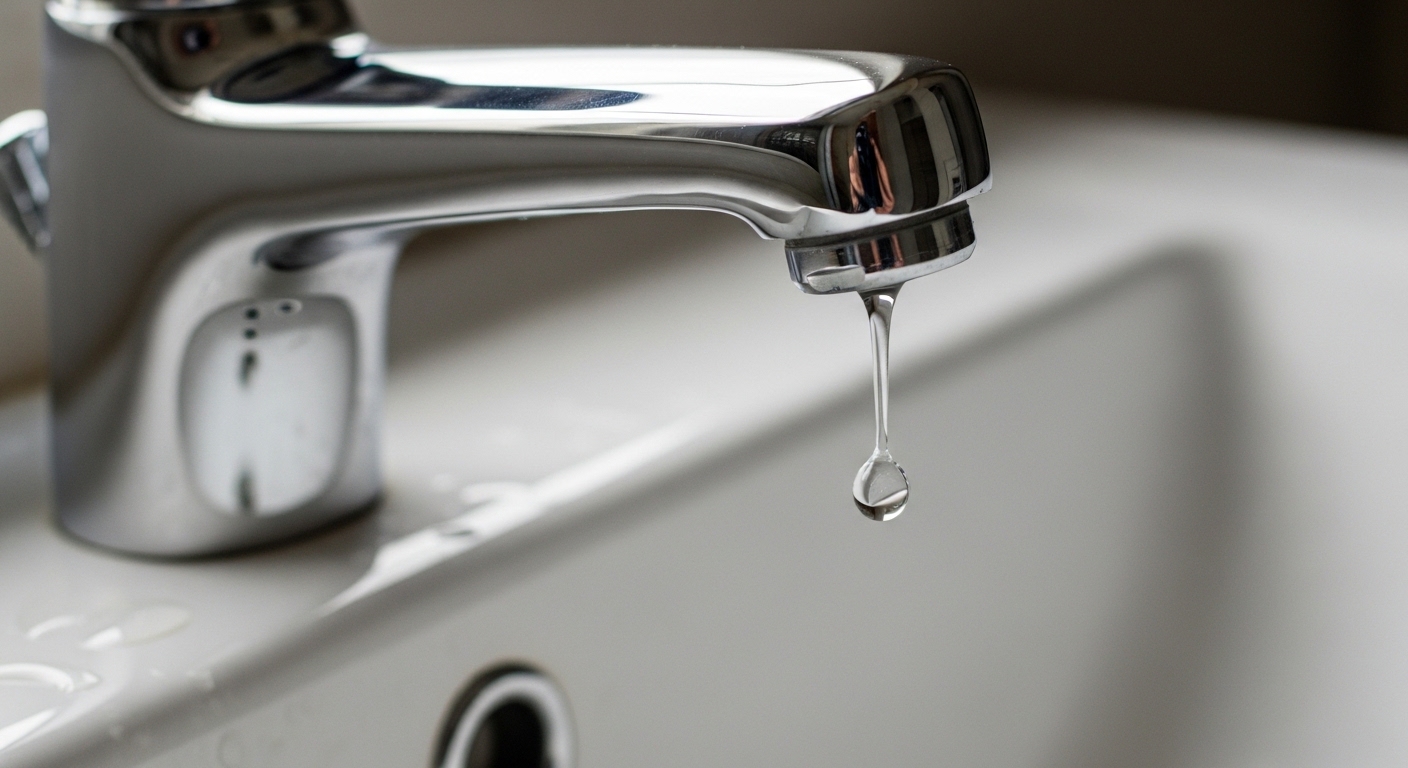
If you searched for the leaking faucet meaning, you’re probably standing over a tap that won’t stop dripping and wondering whether it’s a big deal or a five-dollar part. Here’s the honest answer: a “leaking faucet” simply describes water coming out of a faucet when the handle is off, or oozing out of a spot it was never meant to — around the handle, under the base, or from the connections below the sink. It’s a symptom, not a diagnosis. The real question is where it’s leaking from, because that tells you exactly which worn part is to blame and how to fix it.
Below I’ll break down what the term actually covers, the different types of leaks and what each one means, how urgent it is, what it costs, and how to stop it yourself — in plain language, with real numbers.
What does “leaking faucet” actually mean in plumbing terms?
In plumbing terms, a leaking faucet means the faucet is failing to fully shut off or fully seal, so water passes through or around an internal part that’s supposed to be watertight. A faucet is basically a controlled valve: when you close the handle, a moving part presses against a stationary seat to block the water. When any part of that seal wears down, water sneaks past — and you get a leak.
The word “leak” gets used loosely, so it helps to split it into two situations that mean very different things:
- A drip from the spout — water comes out the end of the faucet even though the handle is fully off. This is the classic “dripping tap.” It almost always means a worn washer, cartridge, or valve seat inside.
- A seep or leak that isn’t from the spout — water pooling around the handle base, weeping from the neck when the water runs, or dripping from the pipes underneath the sink. This points to a bad O-ring, a loose packing nut, or a failed supply-line connection.
Both are “leaking faucets,” but the fix is different for each. Knowing which one you have is 90% of solving it.
Why is my faucet leaking — what are the actual causes?
A faucet leaks because one of a handful of small sealing parts has worn out, corroded, or come loose. Faucets are simple machines, so the list of real culprits is short. Here’s what’s usually behind each type of leak:
| Where it leaks | Most likely cause | What it means | Typical fix |
|---|---|---|---|
| Drip from the spout tip | Worn rubber washer or damaged valve seat (compression faucets) | The seal that blocks water is no longer flat/tight | Replace washer; sand or replace seat |
| Drip from spout (single-handle) | Worn or cracked cartridge | The internal cartridge no longer seals | Swap the cartridge |
| Water around the handle base | Failed O-ring or loose packing nut | The seal around the moving stem has failed | Replace O-ring; tighten/repack nut |
| Puddle under the sink | Loose or corroded supply line / valve connection | A threaded joint or hose has failed | Tighten fitting or replace supply hose |
| Weeping where spout meets base | Worn spout O-rings (on swivel spouts) | The rotating seal is worn | Replace the spout O-ring set |
A few things speed all of this up. Hard water is the biggest one — mineral deposits build up on the valve seat and cartridge, scratching the smooth surfaces that need to seal, so faucets in hard-water homes leak years sooner. High water pressure (above about 80 psi) hammers on the internal seals. And plain old age: rubber washers and O-rings dry out and crack after several years of use. If your faucet is over 8–10 years old, worn seals are the safe bet.
If mineral buildup is a running theme in your home, it’s worth learning how to remove hard water stains on a faucet without wrecking the finish — the same deposits that spot the outside are grinding away at the seals inside.
Is a leaking faucet actually a big deal, or can I ignore it?
It’s a bigger deal than it looks, and no, you shouldn’t ignore it — but it’s rarely an emergency. A single slow drip feels harmless, but the numbers add up fast. The EPA estimates that a faucet dripping once per second wastes more than 3,000 gallons a year — enough water to take over 180 showers. Multiply that across a household with a couple of drippy taps and you’re paying real money to water your drain.
Beyond the water bill, there are three reasons to fix it sooner rather than later:
- Damage spreads. A leak under the sink or around the base soaks the cabinet, the countertop seam, or the wall. Over months that means swollen particleboard, mold, and a repair that’s suddenly hundreds of dollars instead of five.
- It gets worse, not better. A worn seat or cartridge keeps eroding. A tiny drip today is a steady stream in a few months, and the constant flow can corrode the valve body so badly you have to replace the whole faucet.
- That dripping sound. A leaky bathroom faucet at 2 a.m. is its own kind of misery.
The good news: because the parts are cheap and the fix is usually 20–40 minutes, there’s almost no reason to let it sit. You’re not looking at a big project.
How much does it cost to fix a leaking faucet?
A DIY faucet repair usually costs between $2 and $25 in parts; calling a plumber runs $100 to $350 depending on your area and the problem. The gap is big because the parts are genuinely cheap — you’re mostly paying a pro for the trip and the 30 minutes of labor.
| Fix | DIY parts cost | Plumber cost (parts + labor) | Difficulty |
|---|---|---|---|
| Replace rubber washer | $2–$5 | $100–$200 | Easy |
| Replace O-rings | $3–$8 | $100–$200 | Easy |
| Replace cartridge | $10–$25 | $150–$300 | Moderate |
| Replace supply line | $8–$15 | $120–$250 | Easy |
| Replace whole faucet | $60–$300+ | $250–$500+ | Moderate |
For most leaks, buying a $5 repair kit that matches your faucet brand is the smart move. Keep in mind that many quality faucets carry a limited lifetime warranty on parts and finish — brands like Moen, Delta, Kohler, and Arcora will often send you a free replacement cartridge or O-ring kit if you register or call with your model number. Before you buy anything, check whether your faucet is still under warranty; it can turn a $20 job into a free one.
How do I fix a leaking faucet myself — step by step?
You fix a leaking faucet by shutting off the water, opening up the faucet, and replacing whichever worn seal is causing the leak — usually a washer, O-ring, or cartridge. Here’s the general process that works for the vast majority of bathroom and kitchen faucets:
- Shut off the water. Turn the two shutoff valves under the sink clockwise until they stop. Then open the faucet to release pressure and confirm the water’s off.
- Plug the drain. Drop in a stopper or a rag so small screws and O-rings can’t disappear down the drain.
- Remove the handle. Pry off the decorative cap on top, remove the screw underneath, and pull the handle off. A little penetrating oil helps if it’s stuck.
- Pull out the guts. Depending on your faucet, you’ll expose either a cartridge (single-handle and most modern faucets), a stem with a washer (older two-handle compression faucets), or a ceramic disc. Note how it’s oriented before you remove it — take a phone photo.
- Inspect and replace the worn part. Look for a flattened or cracked washer, a stretched or nicked O-ring, or a scored cartridge. Bring the old part to the hardware store or match your model number to buy the exact replacement.
- Clean before reassembling. Wipe mineral buildup off the valve seat and threads. If the seat is pitted, either sand it smooth with a seat-dressing tool or replace it.
- Reassemble and test. Put everything back in reverse order, turn the water on slowly, and watch for drips. Run it hot and cold, handle open and closed.
That’s the whole job. If you have a specific brand, it’s worth following a brand guide — the internals differ. For example, our walkthrough on how to fix a leaky Moen faucet at home without a plumber covers the cartridge-puller trick that trips up a lot of first-timers, and it applies to most single-handle designs.
One more tip: while you have the faucet apart, it’s the perfect time to deal with weak flow. If the water sputters or runs slow, the aerator is probably clogged with the same minerals causing your leak — here’s how to handle faucet aerator removal when it’s stuck.
What’s the difference between a spout drip and a leak around the handle?
A spout drip means the shut-off seal inside has failed; a leak around the handle or base means an external seal — an O-ring or packing — has failed. They feel similar but point to different parts, so diagnosing correctly saves you from replacing the wrong thing.
Spout drips happen when the water is off. The handle is closed, but water still escapes the end of the spout. That’s a washer, cartridge, or valve-seat problem — the internal gate isn’t fully closing. This is the leak people most often mean when they say “dripping tap.”
Handle and base leaks usually only show up when the water is running. You turn the faucet on and water weeps out around the handle stem or pools at the base where the faucet meets the sink. That’s an O-ring or packing-nut issue — the seal around the moving parts has worn, so pressurized water finds its way out sideways. Sometimes just tightening the packing nut a quarter turn stops it; other times you replace the O-ring.
If your leak is on a tub or shower rather than a sink, the logic still holds but the parts live behind the wall. A classic case is a tub spout that leaks when the shower is on — that’s a worn diverter, not a spout washer, and it’s a different fix worth reading up on before you start.
When should I just replace the faucet instead of repairing it?
Replace the faucet instead of repairing it when the leaks keep coming back, the valve body is corroded, replacement parts are discontinued, or the faucet is more than 12–15 years old. At that point you’re throwing good money after bad — you fix one seal and another fails a month later.
Here’s a quick decision guide:
- Repair it if it’s a single, clear leak on a faucet under ~10 years old with parts still available. A $5 washer beats a $150 faucet every time.
- Replace it if you’ve already repaired it twice, the base is cracked or corroded, the finish is peeling, or you can’t find the cartridge for your model.
- Replace it (bonus reasons) if you want a newer finish, better water efficiency, or a pull-down sprayer you don’t currently have. A leak is a good excuse to upgrade a faucet you already disliked.
If you land on replacement, this is your chance to fix pressure and flow complaints too. And if the leak was really a symptom of low pressure elsewhere in the house, our guide on how to fix low pressure in a shower head is a good companion read, since the same mineral and valve issues often affect the whole bathroom.
A note on prevention: how do I stop faucets from leaking in the first place?
You can’t stop wear entirely, but you can slow it way down. The three biggest levers are water quality, water pressure, and using quality parts:
- Tame hard water. Mineral scale is the #1 killer of faucet seals. A water softener or even regular descaling of aerators and cartridges buys you years.
- Check your water pressure. If it’s over 80 psi, install a pressure-reducing valve. High pressure blows out washers and O-rings early.
- Don’t over-tighten handles. Cranking a faucet shut hard doesn’t stop a drip — it grinds the washer and valve seat, which causes the next drip. Snug is enough.
- Buy quality faucets with ceramic-disc valves. Ceramic-disc cartridges last far longer than old rubber-washer compression valves and are the reason modern faucets drip less.
FAQ
Does a leaking faucet mean I need a new one?
Not usually. Most leaks are a worn washer, O-ring, or cartridge — a $2–$25 part and a 30-minute fix. Only replace the whole faucet if the leaks keep returning, the body is corroded, or parts for your model are discontinued.
Can a leaking faucet raise my water bill a lot?
Yes, more than people expect. A faucet dripping once per second wastes over 3,000 gallons a year. A faster drip or a running leak can waste tens of thousands of gallons, which shows up as a noticeable bump on your monthly bill.
Why does my faucet drip only sometimes, not constantly?
Intermittent drips usually mean a valve seat or cartridge that seals inconsistently — often because a tiny piece of mineral debris is caught between the seal and the seat, or because the seal is worn in one spot. Temperature and pressure changes make it come and go. It’s still a worn-part problem and will get steadier over time.
Is it safe to use a faucet while it’s leaking?
It’s safe to use in the short term — the water is fine and there’s no health risk. The concern is waste and slow damage to your cabinet or valve. Use it, but plan to fix it within a week or two rather than letting it run for months.
My faucet leaks from the base when I turn it on — what does that mean?
That points to a worn spout O-ring or a loose mounting, not a spout washer. On a swivel faucet, the O-rings that seal the rotating spout dry out and let water escape at the base when the water is pressurized. Replacing the O-ring set usually fixes it completely.
How long should a faucet last before it starts leaking?
A quality faucet with ceramic-disc valves typically runs 15–20 years before serious leaks, while older rubber-washer compression faucets often start dripping in 5–10 years. Hard water and high pressure shorten both. Regular light maintenance can push a good faucet well past 20 years.
The bottom line
The leaking faucet meaning is straightforward once you stop thinking of “leak” as one thing: it’s water escaping a seal that’s worn out, and the location of the leak tells you which cheap part to replace. A spout drip is an internal seal — washer or cartridge. A handle or base leak is an external seal — O-ring or packing. An under-sink puddle is a loose supply connection. In nearly every case it’s a DIY fix under $25 that saves thousands of gallons a year and protects your cabinet from water damage. Fix it in the next week or two, and don’t over-tighten the handle in the meantime.
Author note: This guide was written by the Arcora fixtures team, drawing on hands-on faucet repair and product testing. Arcora designs and manufactures kitchen and bathroom faucets built to cUPC/NSF standards with ceramic-disc cartridges and a limited lifetime warranty on finish and function. When in doubt about your specific model, keep your model number handy and contact the manufacturer — a warranty claim can get you the exact replacement part for free.