 ARCORA FAUCETS
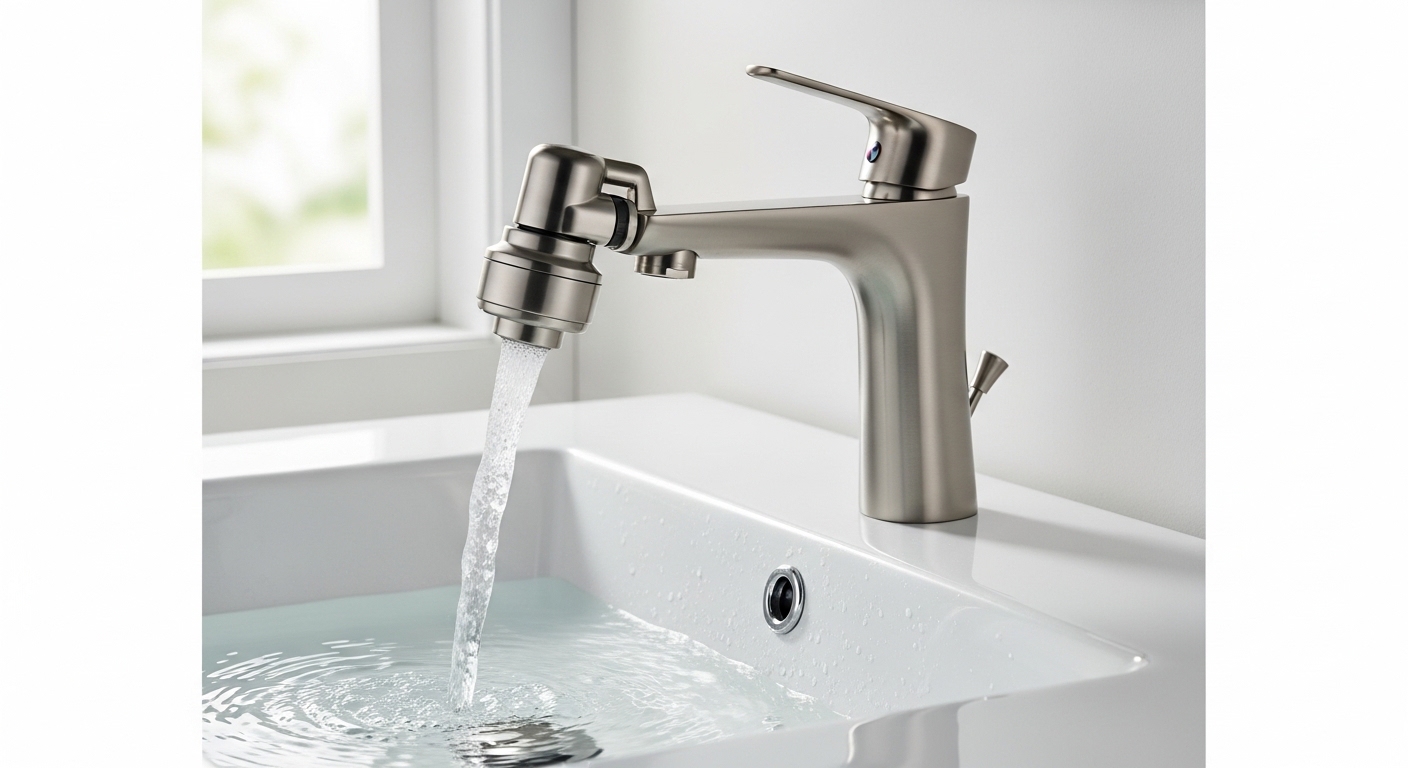
If you’ve ever wondered whether a faucet water filter bathroom sink setup is actually necessary — or just another gadget — the honest answer is: it depends on your water, your plumbing age, and what you use the sink for. Bathroom taps get used for brushing teeth, rinsing contact lenses, washing your face, and filling a glass at 2 a.m. Those are all mouth-and-eye contact points, so water quality genuinely matters here, even though people obsess over kitchen filters and forget the bathroom entirely.
Below, I’ll walk you through exactly what these filters do, the different types, what they cost, how to install one in about 15 minutes, and how to know if your specific bathroom even needs one. No fluff — just what an experienced fixtures person would tell a friend.
Do you really need a water filter on a bathroom sink, or is it overkill?
You need one if your water smells like chlorine, tastes metallic, leaves crusty white or rusty stains, or if your home was built before 1986 (higher lead-solder risk). If your water is already clean municipal or tested-safe well water and you only use the bathroom tap to wash your hands, it’s optional.
Here’s the practical test. Fill a clear glass from your bathroom tap and let it sit for two minutes. If you smell a swimming-pool chlorine odor, see tiny floating particles, or notice a cloudy tint that doesn’t clear, a filter will make a real, noticeable difference. Many people brush their teeth and rinse with bathroom water twice a day, every day — that’s roughly 700 mouth-contact events a year, so it’s not a trivial fixture.
Where it matters most:
- Older homes (pre-1986): lead solder and galvanized pipes can leach lead — a certified lead-reduction filter is genuinely worth it.
- Hard-water regions: a sediment/scale filter reduces the mineral crust that wrecks your faucet finish and aerator.
- Chlorine-heavy municipal supply: a carbon filter removes the taste and smell within seconds.
- Households with kids or elderly members: anyone who swallows bathroom water while brushing benefits from reduced contaminants.
If your bathroom sink already suffers from mineral buildup, a filter helps upstream — but you’ll still want to know how to remove hard water stains on a faucet without wrecking the finish, because a filter prevents new buildup but won’t undo what’s already baked onto the chrome.
What types of faucet water filters can you put on a bathroom sink?
There are three main types that fit a bathroom sink: faucet-mounted filters that clip onto the spout, inline undersink filters that install on the supply line, and aerator-style filters that replace your existing aerator. Faucet-mounted and aerator styles are the cheapest and easiest; undersink inline units filter more and stay hidden.
Each solves a slightly different problem. A faucet-mounted unit is the classic clip-on you can install with your hands in five minutes. An aerator filter is the most discreet — it’s a slim cartridge that threads in where your aerator normally goes, so nothing bulky sits on your spout. An inline undersink filter connects to the flexible supply hose under the vanity and filters every drop before it reaches the tap, which is ideal if you hate visible attachments on a nice faucet.
| Filter Type | Typical Price | Install Difficulty | Best For | Cartridge Life |
|---|---|---|---|---|
| Faucet-mounted (clip-on) | $20–$45 | Very easy (5 min, no tools) | Renters, quick chlorine/sediment fix | 2–3 months |
| Aerator-style filter | $15–$35 | Easy (threads into spout) | Discreet look, standard threaded spouts | 1–3 months |
| Inline undersink | $35–$90 | Moderate (connect to supply line) | Hidden setup, higher flow, more capacity | 6–12 months |
One compatibility note: faucet-mounted and aerator filters only fit spouts with standard external or internal threads. If your faucet has a hidden or non-standard aerator, check the thread type first — the same sizing knowledge you’d use when dealing with faucet aerator removal when it’s stuck applies directly here, because the filter threads into that exact spot.
What’s the difference between a bathroom filter and a kitchen filter?
The core filtration media is often similar (activated carbon, sometimes ion-exchange resin), but bathroom units are usually smaller, lower-flow, and cheaper because you don’t need to filter high volumes for cooking or filling pots. Bathroom filters prioritize taste, chlorine, and sediment reduction over the heavy multi-stage systems kitchens use. Don’t overspend on a giant kitchen-grade system for a tap you mostly use to brush your teeth.
What does a bathroom sink faucet filter actually remove?
A good carbon-based faucet filter reduces chlorine, chlorine taste and odor, sediment, rust particles, and some VOCs; better certified models also reduce lead, mercury, and cysts like Giardia. It does not soften water, remove dissolved minerals (hardness), or fully purify like reverse osmosis.
This is the part people get wrong. A basic filter is not a water softener and won’t stop hard-water scale on its own — it reduces particulate and chemical contaminants, not dissolved calcium and magnesium. If your main complaint is chalky mineral buildup, you want a filter rated for scale/sediment specifically, or a separate softening approach. Here’s what each media type typically handles:
- Activated carbon: chlorine, taste, odor, some VOCs and organic chemicals.
- KDF media: heavy metals like lead and mercury, plus bacterial control.
- Sediment/mesh pre-filter: rust, sand, and grit that clogs your aerator.
- Ion-exchange resin: some lead reduction and limited hardness improvement.
Always look for the certification. A filter that claims “removes lead” means little without NSF/ANSI 42 (aesthetic — chlorine, taste, odor) or NSF/ANSI 53 (health — lead, cysts, VOCs) certification printed on the box. If it’s not certified, treat the marketing claims as hopeful, not proven.
How do you install a faucet water filter on a bathroom sink?
For a faucet-mounted or aerator filter: unscrew your existing aerator, thread on the filter (using the included adapter if needed), hand-tighten, and run water for 5 minutes to flush the cartridge. It takes about 10–15 minutes with no plumber and usually no tools beyond maybe a rag for grip.
Here’s the step-by-step I give people:
- Turn off the tap and unscrew the existing aerator counter-clockwise (a rubber glove or cloth gives you grip if it’s stuck).
- Check your thread type — male (external) or female (internal) — and pick the matching adapter from the kit.
- Thread the filter on hand-tight. Don’t over-torque; you’ll crack the plastic housing.
- Flush the cartridge by running cold water for 5 minutes to clear carbon fines (the water may look gray at first — that’s normal).
- Check for drips around the connection; add plumber’s tape to the threads if you see any weeping.
For an inline undersink filter, you’ll shut off the angle stop under the vanity, disconnect the supply hose, install the filter housing inline, and reconnect — still very doable as a DIY job. If you’re comfortable doing something like changing a bathroom faucet yourself without a plumber, an inline filter is easily within your skill range since it’s the same supply-line work.
Will a faucet filter reduce my water pressure?
A little, yes — most quality bathroom filters drop flow slightly because water passes through dense carbon media, but a well-designed unit keeps it barely noticeable. If pressure tanks dramatically, your cartridge is either clogged (time to replace) or you bought an undersized filter for your flow rate. A near-empty trickle usually means the cartridge needs changing, not that the filter is broken.
How much does a bathroom faucet filter cost to run per year?
Expect $30–$120 per year total, including the unit and replacement cartridges. A $25 faucet-mounted filter with cartridges changed every 2–3 months costs roughly $60–$90/year; an inline undersink unit with a 6–12 month cartridge often works out cheaper per gallon over time. The real ongoing cost is cartridges, not the housing.
Don’t skip cartridge changes to save money — that’s the single biggest mistake. An expired carbon cartridge stops adsorbing contaminants and can actually harbor bacteria, dumping them back into your water. Set a phone reminder or use a filter with a built-in change indicator. A $12 cartridge on schedule beats a $40 one you leave in for a year.
| Setup | Upfront Cost | Annual Cartridge Cost | Effective Cost/Year (Yr 1) |
|---|---|---|---|
| Faucet-mounted | $25 | $40–$60 | $65–$85 |
| Aerator-style | $20 | $30–$50 | $50–$70 |
| Inline undersink | $70 | $25–$40 | $95–$110 |
Does a filter protect the faucet itself and its finish?
Yes — by trapping sediment and reducing chlorine, a filter cuts down on the grit and aggressive chemistry that pit, clog, and dull faucet finishes over time. It won’t stop mineral scale on its own, but it protects the aerator, cartridge valve, and any pull-out sprayer from grit-related wear.
This matters more than people realize, especially on premium finishes. Chlorine and sediment accelerate wear on brushed nickel, matte black, and champagne bronze coatings. If you’ve invested in a nice fixture — say a matte black modern faucet or a brushed nickel 4-inch bathroom faucet — cleaner water genuinely extends how long the finish looks new and keeps the internal cartridge from clogging with grit. A filter is cheap insurance for a fixture that costs 5–10× as much.
What should you look for when buying one?
Prioritize NSF certification, cartridge cost and availability, thread compatibility with your spout, and flow rate. Buy the type that matches your priority: discretion (aerator/undersink), lowest price (faucet-mounted), or highest capacity (undersink). Ignore vague “purifies water” claims with no certification number.
My quick buying checklist:
- Certification: NSF/ANSI 42 at minimum; 53 if you want verified lead/health claims.
- Cartridge availability: confirm replacements are cheap and easy to reorder — a filter with rare cartridges is a dead end.
- Thread fit: measure or check your aerator thread before buying; get one with multiple adapters if unsure.
- Flow rate: 0.5 GPM is fine for a bathroom; you don’t need kitchen-level flow.
- Warranty: look for at least a 1-year warranty on the housing.
FAQ
Can I put a water filter on any bathroom faucet?
Almost any faucet with a standard threaded aerator can take a faucet-mounted or aerator-style filter. The exceptions are pull-out sprayers and some designer spouts with hidden or non-standard aerators — for those, an inline undersink filter is the reliable choice because it connects to the supply line instead of the spout.
Is bathroom sink water safe to drink without a filter?
In most U.S. homes on treated municipal supply, bathroom tap water meets the same safety standard as the kitchen tap since it’s usually the same cold line. The concern is older plumbing with lead solder or galvanized pipe, and chlorine taste. A certified filter addresses both. If you’re unsure, get a home water test before assuming it’s unsafe.
How often should I replace the filter cartridge?
Follow the manufacturer’s rating, but as a rule: faucet-mounted and aerator cartridges every 2–3 months, inline undersink cartridges every 6–12 months. Change sooner if flow drops noticeably or the water taste returns — those are signs the media is saturated.
Will a faucet filter fix hard water stains?
Not directly. Standard filters reduce sediment and chlorine, not dissolved calcium and magnesium that cause hard-water scale. A sediment-rated filter slows new buildup, but for existing spotting you’ll still need to clean the fixture, and for true hardness you’d need a softener. Pair a filter with regular cleaning for the best-looking sink.
Does a bathroom faucet filter remove fluoride?
Most standard carbon faucet filters do not remove fluoride. Fluoride removal requires specialized media like activated alumina or a reverse-osmosis system, which is rare in simple bathroom filters. If fluoride reduction is your goal, look specifically for a filter certified for fluoride reduction — don’t assume a general carbon filter does it.
Can I install one myself, or do I need a plumber?
Faucet-mounted and aerator filters are pure DIY — no tools, about 10 minutes. Inline undersink filters take about 30 minutes and only require shutting off the angle stop and connecting to the supply hose. A plumber is almost never necessary for a bathroom filter unless your shutoff valves are seized or corroded.
Author note: This guide was written by the Arcora fixtures team, drawing on years of hands-on experience installing, testing, and troubleshooting bathroom faucets and accessories. We evaluate filters the same way we evaluate every fixture — by fit, real-world flow, and durability, not marketing claims.
About Arcora: Arcora designs and sells bathroom and kitchen faucets, shower systems, and accessories built to recognized performance and safety standards, and we back our fixtures with warranty support. When we recommend a filter category, we’re looking for the same NSF/ANSI certification, tested flow performance, and warranty coverage we’d want on our own faucets. Explore more at www.arcorafaucet.com.