 ARCORA FAUCETS
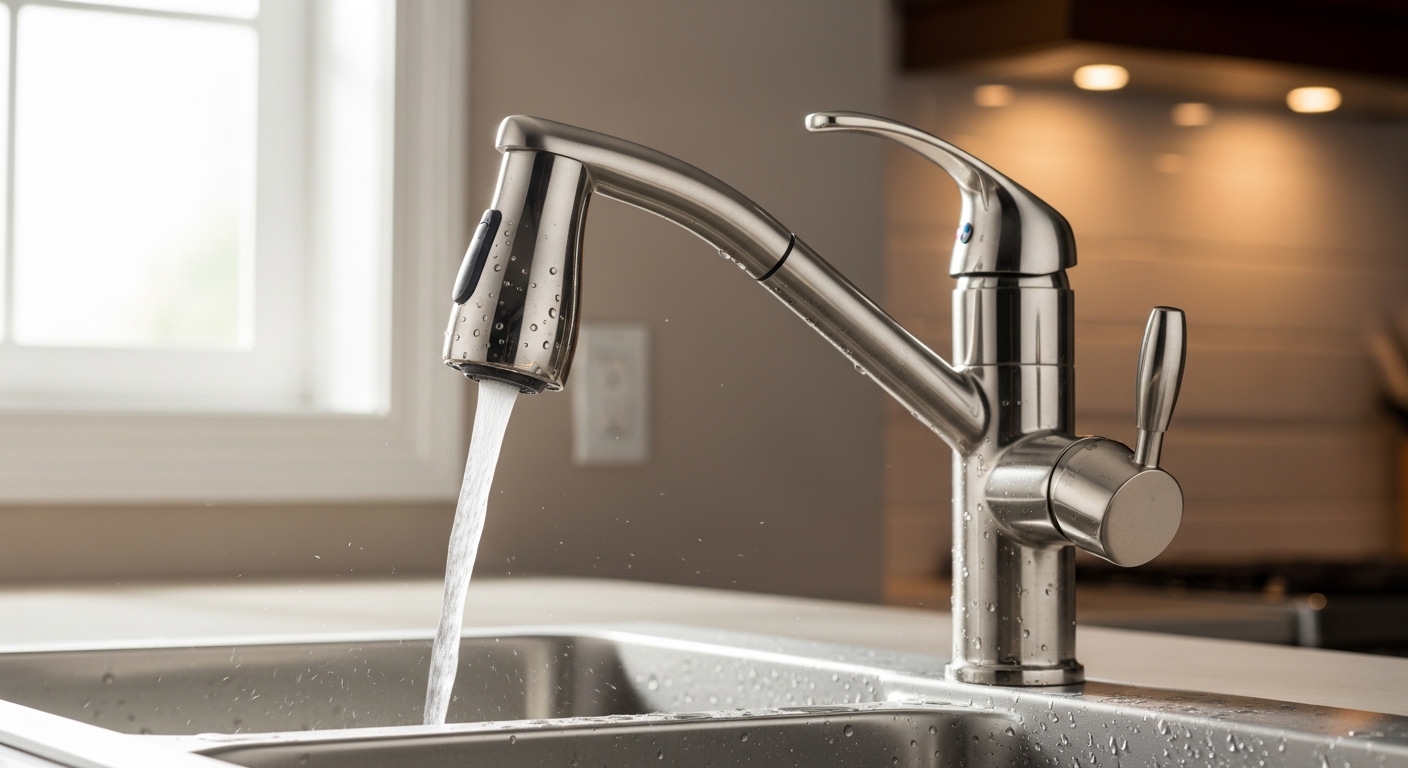
If you’re shopping for a polished nickel kitchen faucet with pull out spray, you’re really asking two questions at once: is polished nickel the right finish for a busy kitchen, and does a pull-out sprayer actually beat a pull-down or a side spray? The short answer is that polished nickel gives you a softer, slightly golden shine that looks more expensive than chrome and forgives fingerprints better than most people expect, while a pull-out spray head gives you a longer reach and a more natural grip for filling pots and rinsing the far corners of a deep sink. Below, we’ll get specific about price, durability, hard-water behavior, installation, and how to tell a genuinely good one from a shiny disappointment.
What Exactly Is a Polished Nickel Kitchen Faucet With Pull Out Spray?
It’s a faucet with two defining features: a polished nickel finish (bright, reflective nickel plating with a warm, faintly champagne undertone) and a pull-out spray head — a spout where the sprayer itself is the end of a horizontal spout and pulls straight toward you on a flexible hose. That’s different from a pull-down, where the wand pulls vertically down into the sink from a tall gooseneck.
Polished nickel sits between chrome and champagne bronze on the warmth scale. Chrome is cool and blue-white; polished nickel is warmer and a touch darker, so it pairs beautifully with white marble, warm woods, brass cabinet hardware, and cream cabinetry. Because the finish is a real nickel layer over brass, it’s genuinely durable — not a spray-on color coat. If you’ve read our guide to whether a polished nickel bathroom faucet under $150 is worth buying, the same finish logic applies in the kitchen, just under heavier daily use.
Pull-out vs. pull-down: which spray style should you get?
Get a pull-out if you have a low-clearance window behind the sink, a smaller sink, or you fill a lot of tall pots on the counter. Get a pull-down if you have a deep single-bowl sink and want a dramatic high-arc look. Pull-out spouts sit lower and pull horizontally, which many people find more ergonomic for directing water, while pull-downs give you more vertical rinsing room. For a deeper dive into single-handle pull-out ergonomics, see our breakdown of the best pull-out kitchen faucet single-handle setup for a busy home.
How Much Should You Pay for a Good One in 2026?
Budget $180–$450 for a quality polished nickel pull-out faucet, with the $200–$320 range hitting the best value. Below about $150, you’re usually looking at a painted or PVD-tinted “nickel-look” finish over a zinc or plastic body, which can flake or dull within a couple of years. Above $450, you’re paying for designer branding and heavier solid-brass construction — nice, but rarely necessary for a great daily faucet.
| Price Tier | What You Typically Get | Body Material | Best For |
|---|---|---|---|
| Under $150 | Nickel-look finish, short hose, plastic spray head | Zinc alloy / plastic | Rentals, short-term use |
| $180–$320 | True nickel plating, ceramic disc valve, 20″+ hose, metal spray head | Brass or heavy stainless | Most home kitchens (best value) |
| $350–$450 | Solid brass, magnetic dock, premium spray patterns, lifetime warranty | Solid brass | Renovations, heavy daily cooking |
| $450+ | Designer branding, artisan detailing | Solid brass | Luxury / statement kitchens |
The single biggest predictor of longevity isn’t price — it’s whether the valve is a ceramic disc cartridge and whether the finish is real electroplated nickel. Ask (or check the spec sheet) for both before you buy.
Does Polished Nickel Show Water Spots and Fingerprints?
Yes, but less than chrome and far less dramatically than you’d fear. Polished nickel’s warm tone means water spots and fingerprints show up as soft, low-contrast marks rather than the harsh white streaks you get on cool chrome. In a home with hard water, you’ll still see mineral spotting if you never wipe the faucet — that’s true of every shiny finish — but nickel’s warmth genuinely camouflages daily smudges better.
The maintenance routine is simple: a quick wipe with a soft microfiber cloth after washing dishes, and an occasional buff with a damp cloth and a drop of dish soap. Avoid anything abrasive or acidic. If you already have chalky buildup, don’t scrub — our guide on how to remove hard water stains without wrecking the finish walks through the safe way to dissolve mineral deposits without scratching the nickel plating.
- Do: wipe dry after use, use mild soap and warm water, buff with microfiber.
- Do: dissolve stubborn mineral spots with a diluted vinegar-dampened cloth (never soak the aerator in vinegar longer than 15 minutes).
- Don’t: use bleach, ammonia, abrasive pads, or anything gritty — they micro-scratch the shine.
- Don’t: let citrus, coffee, or wine sit on the finish; wipe spills promptly.
Will a Pull-Out Spray Reach My Deep or Double-Bowl Sink?
For most standard sinks, yes — a good pull-out hose extends 20 to 30 inches, which easily covers a 33-inch double-bowl sink from a center-mounted faucet. The number that matters is the hose length combined with the spout reach (how far the spout sticks out over the sink before you even pull the head out). If your sink is unusually wide or you have a farmhouse basin, look for a hose of at least 24 inches.
Spout reach is the quiet hero here. A spout that reaches 8–9 inches out lets the stream land in the center of the bowl instead of the back edge, which matters a lot for double-bowl and deep sinks. If reach is your main concern, our guide to choosing a long spout reach kitchen faucet for a deep or double-bowl sink explains exactly how to measure and what numbers to look for.
How high should the spout be?
Measure the clearance above your sink — especially if there’s a window or shelf behind it. Pull-out faucets are naturally shorter than pull-downs, usually 8–14 inches tall, which is exactly why they’re the smart pick under a low window. A pull-out lets you get a tall stockpot under the spray head by simply pulling the wand out to the counter, so you’re not limited by the fixed spout height the way you are with some pull-downs.
How Do You Install a Polished Nickel Pull-Out Faucet Yourself?
Most single-handle pull-out kitchen faucets install in 45–90 minutes with basic tools, no plumber required, as long as your existing setup matches the new faucet’s hole configuration. The typical faucet needs one hole; if your sink or countertop has three or four holes, use the included deck plate (escutcheon) to cover the extras.
- Shut off the hot and cold supply valves under the sink and open the old faucet to relieve pressure.
- Disconnect the supply lines and remove the old faucet’s mounting nuts from below.
- Clean the deck, then feed the new faucet’s supply lines and hose down through the mounting hole.
- Secure the mounting nut from underneath, keeping the faucet straight and centered.
- Connect the hot and cold supply lines, then attach the pull-out hose to the quick-connect fitting and clip on the counterweight.
- Turn the water back on slowly, remove the aerator, and run water for 15 seconds to flush debris before checking for leaks.
Confused about how many holes you actually have or need? Read our explainer on what hole size is needed for a faucet before you order, so you’re not surprised at the sink. The counterweight step is the one people skip — it’s what pulls the hose back into the dock, so don’t leave it in the box.
Polished Nickel vs. Brushed Nickel vs. Chrome: Which Finish Wins?
Choose polished nickel for a warm, high-shine, slightly upscale look; brushed nickel for a matte, fingerprint-hiding, low-maintenance finish; and chrome for the brightest, coolest, and usually cheapest option. None is objectively “best” — it comes down to your kitchen’s palette and how much you’re willing to wipe.
| Finish | Look | Hides Spots? | Best Paired With |
|---|---|---|---|
| Polished Nickel | Warm, mirror-bright | Moderate (warmth softens marks) | Marble, warm wood, brass hardware, white cabinets |
| Brushed Nickel | Matte, satin | Very well | Stainless appliances, transitional kitchens |
| Chrome | Cool, bright, blue-white | Poorly (harsh streaks) | Modern, budget, contemporary kitchens |
| Champagne Bronze | Warm gold | Moderate | Bold, warm, statement kitchens |
One practical tip: match your faucet finish to the majority of the metal already in the room — cabinet pulls, appliance handles, light fixtures. Polished nickel plays best where there’s already warmth (brass, gold, wood). In a cool, all-stainless kitchen, brushed nickel or chrome usually blends more naturally.
Does a Pull-Out Spray Waste Water — or Can It Save It?
A pull-out spray head doesn’t inherently use more water; the flow rate is set by the aerator, not the sprayer. In the U.S., kitchen faucets are federally capped at 2.2 gallons per minute (GPM), and many efficient models run at 1.5–1.8 GPM. The spray setting actually helps you rinse faster with less running time because the aerated spray pattern covers more surface area than a single stream.
If cutting your water bill matters, look for a WaterSense-labeled faucet or one rated at 1.5 GPM. That said, you don’t want it so low that filling a pot takes forever — 1.5–1.8 GPM is the sweet spot for a kitchen. We break down the trade-offs in our guide to what’s considered a low-flow kitchen faucet and whether you should get one.
What Should You Look For on the Spec Sheet Before Buying?
Before you check out, verify five things: valve type, finish process, body material, hose length, and warranty. Those five separate a faucet that lasts a decade from one that drips in eighteen months.
- Ceramic disc cartridge — the valve should be ceramic disc, not rubber-washer, for smooth, drip-free operation over years of use.
- Electroplated nickel finish — confirm it’s plated over brass, not painted or “coated” over zinc/plastic.
- Brass or heavy stainless body — avoid all-plastic bodies; they’re lighter, cheaper, and less durable.
- Hose 20″+ with a smooth-retract counterweight or magnetic dock — a weak dock means a droopy spray head over time.
- Warranty and certifications — look for a limited lifetime warranty plus cUPC/NSF certification and a lead-free (compliant with NSF/ANSI 372) waterway.
A magnetic docking system is worth paying a little more for: it snaps the spray head back into place firmly, so it never sags or dangles the way older counterweight-only designs do after a few years.
The Bottom Line: Who Should Buy One?
Buy a polished nickel kitchen faucet with pull out spray if you want a warm, high-end look that hides daily smudges better than chrome, you cook enough to appreciate a longer-reaching sprayer, and you have — or can cover — the right hole configuration. Skip it only if your kitchen is strictly cool-toned and all-stainless, in which case brushed nickel or chrome will blend more seamlessly. For most warm, transitional, or classic kitchens, polished nickel with a quality pull-out head is one of the most satisfying upgrades you can make for the money.
FAQ
Is polished nickel good for a kitchen faucet?
Yes. Polished nickel is a durable, electroplated finish over brass that resists corrosion and, thanks to its warm undertone, hides fingerprints and water spots better than cool chrome. It’s an excellent choice for kitchens with warm cabinetry, marble, or brass accents, and it holds up well to daily use as long as you avoid abrasive cleaners.
What’s the difference between a pull-out and a pull-down kitchen faucet?
A pull-out faucet’s spray head pulls horizontally toward you from a lower, straighter spout, while a pull-down faucet’s wand pulls vertically down from a tall gooseneck arc. Pull-outs are better for low windows, smaller sinks, and filling tall pots on the counter; pull-downs give more vertical rinsing room in deep single-bowl sinks.
How much does a good polished nickel pull-out faucet cost?
Expect $180–$450, with the $200–$320 range offering the best value. That tier typically gets you real nickel plating, a ceramic disc valve, a 20-inch-plus hose, and a metal spray head. Below $150, you’re usually buying a nickel-look coating over a plastic or zinc body that can flake or dull within a couple of years.
Does polished nickel tarnish or turn yellow over time?
Quality electroplated polished nickel does not tarnish or dramatically yellow under normal kitchen use. It has a naturally warm tone from day one, which some people mistake for yellowing. Keep it wiped dry and free of harsh chemicals and it will hold its shine for many years; cheap painted imitations, however, can discolor.
Can I install a pull-out kitchen faucet without a plumber?
Most people can install one in under 90 minutes with an adjustable wrench, a basin wrench, and plumber’s tape. Shut off the water, remove the old faucet, mount the new one, connect the supply lines and pull-out hose, attach the counterweight, and flush the line before checking for leaks. If your countertop has more holes than the new faucet needs, use the included deck plate to cover them.
What GPM should a kitchen faucet with a pull-out spray have?
Aim for 1.5–1.8 GPM for the best balance of water savings and practical performance. The U.S. federal maximum is 2.2 GPM, and WaterSense-labeled models run at or below 1.5 GPM. The pull-out spray pattern helps you rinse faster with less running time, so a slightly lower flow rate rarely feels underpowered in daily cooking.
About This Guide
Author’s note: This guide was written by the arcorafaucet product team, who spend their days testing faucet valves, finishes, and spray heads for real-world durability. We evaluate finishes for spot resistance, cycle-test ceramic cartridges, and measure hose retraction over thousands of pulls. About arcorafaucet: arcorafaucet designs and sells kitchen and bathroom fixtures built to cUPC/NSF standards, lead-free compliant per NSF/ANSI 372, and backed by our limited lifetime warranty against manufacturing defects in materials and finish. Every faucet we recommend is judged the same way we’d judge one for our own kitchen.