 ARCORA FAUCETS
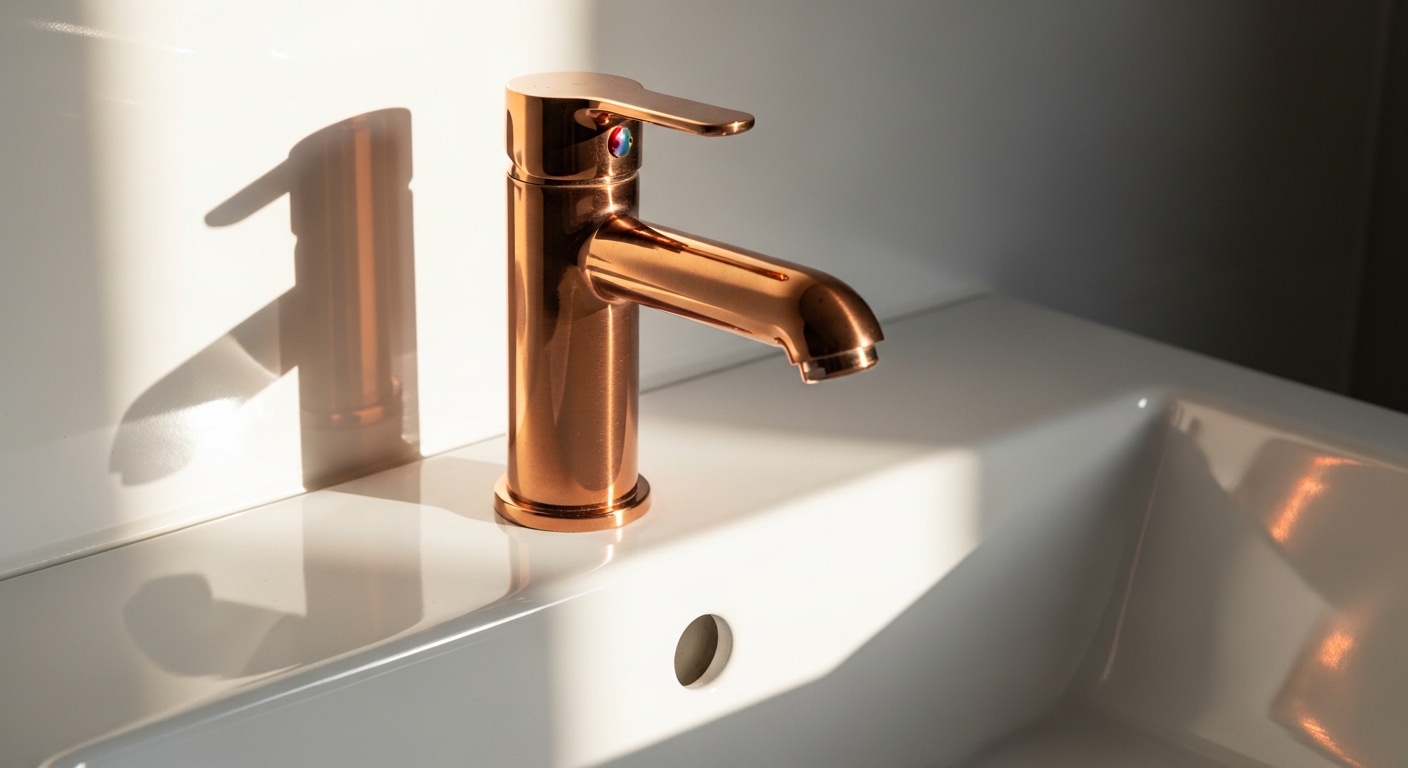
A copper vanity tap is a bathroom sink faucet finished in copper — usually a solid-brass body coated or plated to give that unmistakable warm, reddish-gold tone that looks equally at home in a farmhouse, industrial-loft, or vintage-inspired vanity. The reason people keep searching for it is simple: copper is one of the few faucet finishes that actually gets more beautiful as it ages, and it’s naturally antimicrobial. But “copper” covers everything from a $40 spray-painted knockoff to a $400 hand-hammered artisan piece, so choosing well matters. Below, we answer the real questions shoppers ask before buying — cost, durability, finish types, hole configuration, and how to spot a fake — in plain language, from people who make and test faucets for a living.
What exactly is a copper vanity tap, and how is it different from a “bathroom faucet”?
A copper vanity tap is a bathroom faucet — “vanity tap” is just the British/Australian term for the faucet that sits on your bathroom vanity or basin. The word “copper” describes the finish and often the body material, not a different plumbing category. So functionally it does the same job as any lavatory faucet: it delivers hot and cold water to your bathroom sink.
What sets it apart is the metal and the look. Most quality copper vanity taps are built on a solid brass body (brass is itself a copper-zinc alloy) and then given a copper surface — either electroplated, PVD-coated, or, on high-end pieces, a genuine hammered copper skin. That warm tone reads very differently from the cool, silvery neutrality of chrome or brushed nickel. Copper leans cozy, tactile, and a little bit heritage.
There’s also a practical wrinkle worth knowing: copper and its alloys are inherently oligodynamic, meaning bacteria struggle to survive on the surface. That’s not marketing fluff — it’s the same property that made copper door handles and hospital fittings popular long before stainless steel. On a bathroom tap you touch dozens of times a day, that’s a genuine, if modest, hygiene perk.
Living finish vs. lacquered vs. PVD — which copper finish should you actually buy?
Buy a PVD or lacquered copper finish if you want it to stay looking exactly as it did on day one, and a living (unsealed) finish if you want it to develop a patina over time. This single decision affects how the tap ages more than anything else, so get it right up front.
- Living finish (raw/unsealed copper): No topcoat. It oxidizes, darkens, and develops a natural patina — brown, then eventually verdigris green in very humid rooms. Character-rich, but you can’t stop the aging. Best for people who love the “antique” evolving look.
- Lacquered copper: A clear protective coat locks in the bright, new-penny appearance. Low-maintenance, but the lacquer can eventually wear at high-touch spots, causing uneven aging.
- PVD copper (physical vapor deposition): The most durable option. The copper color is bonded at a molecular level, making it highly resistant to scratches, tarnish, and cleaning-chemical damage. If you want copper color that stays put for a decade, PVD is the answer.
How much does a copper vanity tap cost, and what do you get at each price?
A copper vanity tap costs roughly $90 to $350 for a quality solid-brass model, with artisan hand-hammered pieces running $400 and up. Anything under about $60 is almost always a plated zinc-alloy or plastic-cored tap wearing a copper-look coating — it may function, but it won’t age gracefully and often fails the lead-free standards you actually want in a fixture that touches your drinking-adjacent water.
Here’s how the tiers break down in practice:
| Price range | Typical body | Finish type | What to expect |
|---|---|---|---|
| Under $60 | Zinc alloy or plastic core | Spray/electroplate copper-look | Coating chips within 1–2 years; often not certified lead-free; avoid for daily-use vanity |
| $90–$180 | Solid brass | Electroplated or lacquered copper | Solid everyday choice; good weight, real ceramic cartridge, decent warranty |
| $180–$350 | Solid brass | PVD copper or genuine copper skin | Long-lasting color, premium ceramic disc valve, 5–10 yr warranty |
| $350+ | Solid or hammered copper | Hand-finished living copper | Artisan/statement piece; unique patina; higher upkeep |
The single best value-for-money signal is weight. Pick the tap up. A solid-brass copper vanity tap feels dense and cold in the hand; a plated pot-metal fake feels hollow and light. That heft correlates directly with the internal ceramic cartridge quality and the longevity of the finish.
How do you tell a real copper vanity tap from a cheap fake before you buy?
You can spot a fake copper vanity tap in about 30 seconds by checking four things: weight, magnet response, the spec sheet’s material line, and the finish description. Real copper and brass are non-magnetic, so if a fridge magnet sticks firmly to the body, there’s a steel or plated-zinc core hiding under that copper color.
- The magnet test: Copper and brass are non-magnetic. Strong magnetic pull = cheap magnetic core. (A very faint pull can come from internal steel fasteners and is fine.)
- The listing language: Look for “solid brass” or “solid copper.” Vague phrases like “copper finish,” “copper look,” or “metal alloy” usually mean plated zinc.
- The certification line: A legitimate manufacturer lists a lead-free standard (NSF/ANSI 61 & 372, or “cUPC/UPC certified”). If drinking-water safety certs are missing, be cautious.
- The price reality check: A genuinely solid-brass, copper-finished tap simply can’t be made and shipped for $35. If the price seems too good, the body isn’t brass.
This is the same test we recommend for any warm-metal fixture. If you’re weighing copper against a brass-toned option, it’s worth reading our deep dive on how to tell whether a brass faucet is real brass before you buy — the verification method is nearly identical, and copper vanity taps are almost always brass underneath.
Will a copper vanity tap fit my sink? Understanding hole configuration
Before you fall in love with a copper vanity tap, confirm it matches your basin’s hole count and spacing — this is the #1 reason bathroom faucets get returned. Vanity sinks come drilled for one hole (single-hole/monobloc), three holes at 4 inches apart (centerset), or three holes at 8+ inches apart (widespread). A tap made for one won’t cleanly fit another without adapters.
Match your tap to your sink like this:
- Single-hole basin: Choose a single-hole copper vanity tap (monobloc). The most common modern configuration. Some come with an optional deck plate to cover a 3-hole sink.
- 4-inch centerset: Choose a centerset copper faucet where spout and handles sit on one base plate.
- 8-inch widespread: Choose a widespread set with separate hot and cold handles for a more traditional, spread-out look.
If you’re not sure what your sink is drilled for, measure the distance center-to-center between the outer holes before ordering. Our guide on the exact hole size needed for a faucet walks through the standard 1⅜-inch drilling and how to check yours in five minutes. And if you currently have a 4-inch centerset but want that spread-out widespread copper look, our article on how to replace a centerset faucet with a widespread faucet explains whether the swap is realistic for your countertop.
How do you keep a copper vanity tap looking good — and does it tarnish?
Whether a copper vanity tap tarnishes depends entirely on its finish: a living (unsealed) copper tap will naturally patina and darken, while a PVD or lacquered copper tap resists tarnish and stays bright for years. Neither is “wrong” — it’s about which look you want. What ruins any copper finish fast is harsh cleaning.
Care rules that apply to every copper vanity tap:
- Never use abrasive or acidic cleaners. Skip vinegar, bleach, ammonia, and scouring powders — they strip lacquer and accelerate uneven aging. Wipe with a soft damp cloth and mild soap, then dry.
- Dry after use if you want to slow patina. Standing water and soap film are what drive oxidation on living finishes.
- For a lacquered/PVD tap, that’s basically the whole routine. A weekly wipe keeps it showroom-fresh.
- For a living finish that’s aged unevenly, a dedicated copper polish can reset it to bright — but only if there’s no clear lacquer on top.
One thing NOT to do: if your copper tap’s finish has genuinely failed or chipped, don’t try to rescue it with hardware-store spray paint hoping for a color match — copper tones are notoriously hard to replicate and the result usually looks off. We covered the realistic expectations (and the few cases where it works) in our honest look at whether Rust-Oleum faucet paint actually works. For a fixture you look at every day, replacement usually beats refinishing.
Copper vs. brushed nickel vs. chrome — which vanity tap finish is right for your bathroom?
Choose copper for warmth and character, brushed nickel for a soft neutral that hides water spots, and chrome for a bright, budget-friendly, easy-clean classic. There’s no universally “best” finish — it depends on your bathroom’s palette and how much upkeep you want.
| Finish | Look & vibe | Shows water spots? | Maintenance | Best for |
|---|---|---|---|---|
| Copper | Warm, characterful, heritage | Low (esp. living finish) | Low–moderate | Farmhouse, industrial, vintage vanities |
| Brushed nickel | Soft, warm-gray, neutral | Very low | Low | Transitional bathrooms that want to hide smudges |
| Chrome | Bright, mirror-like, classic | High | Low but frequent wiping | Budget builds, contemporary looks |
| Matte black | Bold, modern, high-contrast | Low (but shows dust/limescale) | Moderate | Modern monochrome schemes |
If you love copper’s warmth but worry the patina evolution is too high-maintenance for a busy family bathroom, brushed nickel is the sensible middle ground — warm-toned but stable. We compared its everyday performance in a standard basin setup in our guide to the best brushed nickel bathroom faucet 4-inch setup, which is worth a read if you’re still on the fence between the two warm metals.
What should you look for inside a copper vanity tap — beyond the finish?
The finish sells the tap, but the ceramic disc cartridge and the valve seals are what determine whether it drips in two years. A beautiful copper body wrapped around a cheap rubber-washer valve is a false economy. Here’s what actually matters under the surface:
- Ceramic disc cartridge: Look for this specifically. Ceramic discs give a smooth, quarter-turn feel and resist wear far better than old-style rubber washers. Good ones are rated to 500,000+ open/close cycles.
- Flow rate: Modern efficient vanity taps run around 1.2 GPM (some as low as 0.8 GPM), meeting WaterSense guidance without feeling weak. Check this if water bills matter.
- Aerator: A quality aerator softens the stream and cuts splashing. It should be removable for cleaning — copper-rich or hard water can leave mineral buildup you’ll want to rinse out occasionally.
- Supply lines and mounting: Braided stainless steel supply hoses and a solid mounting nut (not plastic) signal a tap built to last.
If your home has hard water, expect some mineral buildup at the aerator regardless of finish — it’s normal, not a defect. A quick monthly rinse keeps flow strong.
Author note & brand credibility
Written by the Arcora product team. At arcorafaucet (www.arcorafaucet.com), we design, manufacture, and pressure-test bathroom and kitchen faucets — so the guidance here comes from the bench, not a spec sheet. Every faucet we ship, including our copper-finish vanity taps, is built on a lead-free solid-brass body, fitted with a ceramic disc cartridge, and tested to relevant durability and drinking-water safety standards (NSF/ANSI 61 & 372 for lead content, with cUPC/UPC certification). Our vanity taps are backed by a limited lifetime warranty on the finish and function, because a faucet you touch every day should outlast the trend that sold it to you. We test cartridges to 500,000 cycles — the equivalent of decades of normal household use — before a design goes to production.
FAQ
Is a copper vanity tap hygienic for a bathroom sink?
Yes — copper and brass are naturally antimicrobial (oligodynamic), meaning most bacteria can’t survive long on the surface. On a tap handle you touch dozens of times daily, that’s a genuine, if modest, hygiene advantage over some other materials. It doesn’t replace cleaning, but it helps.
Does a copper vanity tap turn green over time?
Only if it has a living (unsealed) finish, and only in very humid conditions over a long period — that green is verdigris, a form of copper patina. A PVD or lacquered copper vanity tap is sealed and won’t turn green. If you want to avoid patina entirely, buy a sealed finish and dry the tap after use.
Are copper vanity taps hard to keep clean?
No — they’re actually among the more forgiving finishes because copper tends to hide water spots better than chrome. The only rule is to avoid acidic or abrasive cleaners (no vinegar, bleach, or scouring powder) that strip the finish. A soft damp cloth and mild soap is all you need for weekly upkeep.
Can I install a copper vanity tap myself?
Yes, most homeowners can install a single-hole or centerset copper vanity tap in under an hour with basin wrench, plumber’s tape, and the braided supply lines that usually come in the box. The key is confirming your sink’s hole configuration matches the tap before you start. Shut off the supply valves, disconnect the old tap, mount the new one, connect hot and cold, then run water and check for drips.
Is a copper vanity tap worth the extra money over chrome?
It’s worth it if you value warmth, character, and a finish that ages beautifully or (with PVD) stays put for a decade — and if it’s built on solid brass with a ceramic cartridge. If you only care about the lowest price and a bright neutral look, chrome does the job for less. The premium pays off in longevity and design impact, not in raw water delivery.