 ARCORA FAUCETS
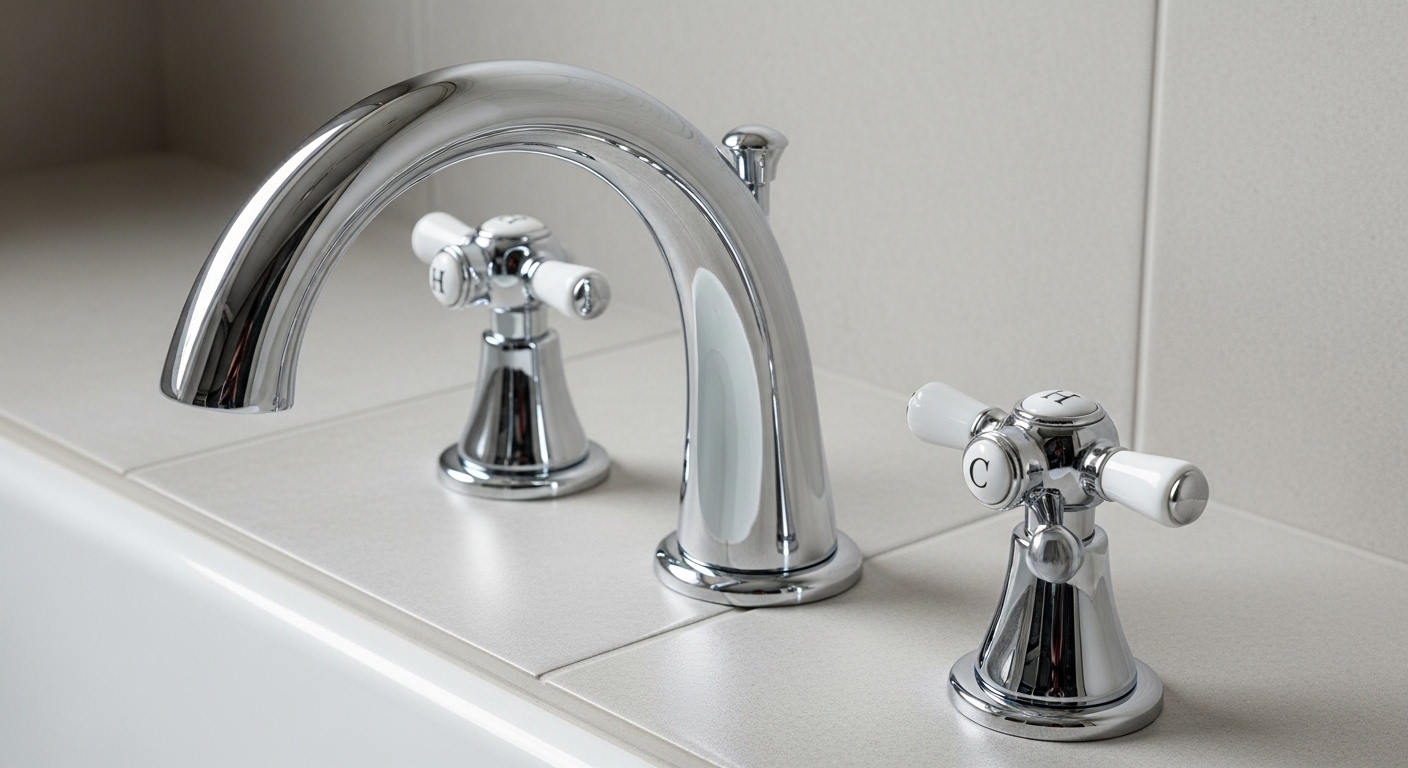
If you’re shopping for delta roman tub faucet valves, here’s the thing nobody explains up front: a “Roman tub faucet” is almost always a two-piece system — a rough-in valve body that gets buried under the tub deck during installation, and a trim kit (the spout, handles, and escutcheons you actually see). The valve is the plumbing engine; the trim is the jewelry. Get the wrong valve for your trim and nothing lines up, so this guide walks you through exactly which valve matches which setup, what the numbers mean, and how to avoid the two mistakes that send people back to the store.
We’ll answer the real questions people ask before they buy: what a Roman tub valve even is, which Delta model fits a two-handle vs. single-handle trim, whether you need the hand-shower version, how deck-hole spacing works, and what to check before you commit. By the end you’ll be able to order the correct valve-and-trim combo with confidence.
What Exactly Is a Delta Roman Tub Faucet Valve?
A Delta Roman tub faucet valve is the deck-mounted rough-in valve body that mounts through holes in the flat deck around your bathtub and feeds water up to the spout and handles. Unlike a wall-mounted tub/shower valve, a Roman tub valve sits horizontally under the deck and is designed for high flow so a big soaking tub fills fast.
The name “Roman” refers to the deck-mount style — the faucet rises up out of the tub surround rather than coming out of the wall. Because the tub deck is thick and the valve is hidden beneath it, Delta splits the product into two purchasable parts:
- The rough-in valve body — the brass or engineered-polymer valve that connects to your hot and cold supply lines and mounts through the deck holes. This is the part with an “R” model number (like R4707 or R2707).
- The trim kit — the visible handles, spout, and finish. This carries a “T” model number (like T4759 or a similar trim series) and comes in finishes like Chrome, Brushed Nickel, Champagne Bronze, and Matte Black.
You need both, and they must be from the same compatible platform. Buying a beautiful trim kit without its matching valve — or vice versa — is the single most common ordering error. Delta sells them separately partly so plumbers can rough in the valve during construction and homeowners can pick the finish later.
Because the valve gets buried, getting your tub shower valve rough-in dimensions right the first time matters — you don’t want to open a finished tub deck to fix a spacing mistake.
Two-Handle or Single-Handle: Which Delta Roman Tub Valve Do I Need?
Pick based on your trim: if your faucet has two separate handles (one hot, one cold) plus a spout, you need a widespread multi-hole valve like Delta’s R4707 series. If you have one lever that controls both temperature and volume, you need a single-handle Roman tub valve body instead. The valve and trim have to agree on handle count — they’re not interchangeable.
Here’s the practical breakdown:
| Configuration | Deck holes | Typical Delta valve platform | Best for |
|---|---|---|---|
| Two-handle widespread + spout | 3 holes | R4707 high-flow rough-in | Traditional and transitional bathrooms, big soaker tubs that need fast fill |
| Two-handle + spout + hand shower | 4 holes | R4707 with hand-shower diverter trim | Tubs where you want a handheld sprayer for rinsing or cleaning |
| Single-handle + spout | 2 holes | Single-handle Roman tub rough-in | Modern minimalist installs, one-lever convenience |
| Single-handle + spout + hand shower | 3 holes | Single-handle rough-in with diverter | Contemporary tubs wanting a sprayer without extra handles |
The R4707 is Delta’s workhorse high-flow valve for two-handle Roman tub trims — it’s rated for the higher gallons-per-minute you want when filling a deep tub. The two-handle setup is by far the most common because the wide-set handle spacing reads as classic and gives you fine control over hot and cold independently.
One caution: count your existing deck holes before you assume. A three-hole deck can take a two-handle spout-only trim, but a four-hole deck usually means the previous faucet had a hand shower or a separate diverter. You can’t easily add or remove deck holes in stone or tile, so your hole count often decides your trim for you.
Do I need the hand-shower (diverter) version?
Get the hand-shower version only if you actually want a handheld sprayer on the tub deck — it adds a fourth deck hole and a diverter to switch flow between the spout and the sprayer. For a pure soaking tub with no sprayer, skip it and save the deck hole and the cost.
A deck-mounted hand shower is genuinely useful if you bathe kids or pets, rinse hair, or clean the tub itself. But it complicates the valve: you now need a diverter built into the trim and a valve body that supports it. If you’re replacing an existing four-hole faucet, match what’s there. If you’re building new, decide now — retrofitting a sprayer later means drilling another hole in your deck.
How Do I Know Which Delta Valve Matches My Trim?
Match by the valve/trim pairing Delta publishes for each collection: every Delta Roman tub trim kit lists the exact rough-in valve it requires (its “R” number) on the spec sheet and the box. Cross-reference the T-number of your trim against its required R-number valve — don’t guess by looks, because visually similar trims can need different valves.
Three reliable ways to confirm the match before you buy:
- Read the trim’s spec sheet. Delta’s product pages and PDF spec sheets state “requires rough-in valve R____.” That line is the authoritative answer.
- Check the box or old packaging. If you’re replacing failed cartridges or handles on an existing Delta Roman tub, the valve model may be printed inside the escutcheon or on paperwork left in a nearby access panel.
- Match the platform, not the finish. Finish (Chrome, Champagne Bronze, Matte Black) never changes which valve you need. A Matte Black two-handle widespread trim uses the same valve body as the Chrome version.
If you’re only replacing worn parts rather than the whole faucet, you may not need a new valve at all — Delta’s cartridges and stems are serviceable. A dripping Roman tub faucet is often just a worn cartridge or seat, and our guide on how to fix a leaking bathtub faucet covers when a rebuild beats a full replacement.
What if I’m replacing an old Roman tub faucet, not building new?
If you’re swapping out an existing deck-mounted faucet, measure your current deck-hole spacing first, then buy a trim that fits that spacing and its matching valve. The old valve body may be reusable if it’s a compatible Delta platform and still in good shape — in many cases you only need new trim.
The critical measurement is the center-to-center distance between deck holes. Roman tub handle spread is commonly in the 6- to 16-inch range, and “widespread” Roman trims are adjustable within a band. Measure hole centers, note the count, and confirm the trim’s adjustable range covers your spacing. Getting your tub spout measurement and hole layout right before ordering saves a return trip.
What Do the Delta Model Numbers Actually Mean?
Delta uses a letter-prefix system: “R” numbers are rough-in valve bodies, “T” numbers are trim kits, and complete faucet part numbers (starting with a plain number) bundle both. So R4707 is a valve, a T-series number is the visible trim, and if you see a single all-in-one SKU it usually includes the valve and trim together.
Understanding this saves real money and confusion:
| Prefix | What it is | Example | Buy it when |
|---|---|---|---|
| R____ | Rough-in valve body only (no finish parts) | R4707, R2707 | New construction, or valve failed and needs replacing |
| T____ | Trim kit only (handles, spout, finish) | T-series Roman tub trim | Valve is already installed and good; you want a new look or finish |
| Plain number | Complete faucet (valve + trim bundled) | Full Roman tub SKU | Full replacement or new install where you want everything in one box |
The reason Delta splits valve and trim is workflow: during a remodel the plumber roughs in the R-valve behind or beneath the deck before tile goes down, then the homeowner picks the T-trim finish at the end. It also means if you ever want to change your faucet’s look years later, you can often buy just a new trim kit and reuse the valve — a much cheaper and cleaner upgrade than a full tear-out.
How Hard Is It to Install a Delta Roman Tub Faucet Valve?
Installing the valve is moderate DIY if you have access under the tub deck; installing just the trim on an existing valve is genuinely easy. The hard part is the rough-in — you need to reach the underside of the deck to secure the valve body and connect supply lines, which is simple in an open construction phase and much harder in a finished bathroom with no access panel.
Here’s the realistic sequence for a valve-and-trim install:
- Confirm deck holes. Verify hole count and center-to-center spacing match your chosen valve and trim.
- Shut off water at the supply valves or the main, and test that flow is fully stopped.
- Mount the valve body through the deck holes and secure it from underneath. This is where under-deck access is essential.
- Connect hot and cold supply lines to the correct inlets — hot on the left, cold on the right, from the user’s facing position.
- Pressure-test for leaks before installing trim, so you catch problems while the connections are still reachable.
- Install the trim — spout, handles, and escutcheons — and set any handle limit stops.
If your bathroom is finished and you have no access panel, this becomes a job where you may need to cut an access opening or call a pro. For the trim-only swap (new finish over an existing valve), most people can handle it with basic tools. If you’re doing broader tub faucet work, our walkthrough on how to change a bathroom faucet on a tub covers the shutoff-and-swap basics that apply here too.
Delta vs. Buying a Complete Arcora Roman-Style Tub Faucet
Delta valves are excellent when you’re staying in the Delta ecosystem or matching existing Delta trim, but if you’re starting fresh, a complete matched valve-and-trim set from one brand removes all the cross-referencing guesswork. The advantage of buying any faucet as a single engineered set — valve and trim designed and tested together — is that compatibility is guaranteed and there’s one warranty covering the whole assembly.
At Arcora, we design tub and bathroom fixtures as complete systems for exactly this reason: fewer part-number mismatches, one point of accountability, and finishes tested to hold up in daily bathroom humidity. If you’re weighing a deck-mount setup for a standalone tub, it’s also worth comparing against freestanding options — our look at whether a freestanding tub faucet setup is worth it helps you decide between deck-mount Roman and floor-mount freestanding before you commit to drilling deck holes.
That said, if your bathroom already has Delta trim or a roughed-in Delta valve, stick with the matching Delta part — mixing valve and trim brands is where leaks and misalignment happen.
FAQ
Are all Delta Roman tub faucet valves the same?
No. Delta makes different rough-in valves for two-handle vs. single-handle trim and for setups with or without a hand shower. The R4707 high-flow valve serves two-handle widespread trims, while single-handle Roman tubs use a different body. Always match the valve to the specific trim’s required R-number.
Can I replace just the trim and keep my old Delta valve?
Often yes. If your existing Delta valve body is a compatible platform and still functions without leaks, you can buy a new trim kit (T-number) in a fresh finish and reuse the valve. This is the cheapest way to update a Roman tub faucet’s look — just confirm the trim you want is rated for the valve you have.
What’s the difference between an R-number and a T-number on Delta faucets?
The R-number is the rough-in valve body — the hidden plumbing part under the deck. The T-number is the trim kit — the visible handles, spout, and finish. You typically need one of each, and Delta’s spec sheets list which R-valve each T-trim requires.
How many holes does a Delta Roman tub faucet need?
It depends on the configuration: a single-handle spout needs 2 holes, a two-handle spout needs 3 holes, and adding a deck-mounted hand shower adds one more hole (3 or 4 total). Count your existing deck holes before buying, since drilling stone or tile decks is difficult.
Do Delta Roman tub faucet valves come with a warranty?
Delta backs its faucets with a limited lifetime warranty on finish and function for residential use, and its valves are built to industry flow and durability standards. Whatever brand you choose, buy valve and trim as a matched set so a single warranty covers the whole assembly, and keep your receipt and model numbers for any future cartridge service.
Why is my Roman tub faucet dripping even though the handles are off?
A drip with the handles closed almost always means a worn cartridge, seat, or O-ring inside the valve — not a valve you need to fully replace. Delta cartridges are serviceable, so a rebuild kit usually fixes it. Shut off the supply, pull the cartridge, and match the replacement to your valve model.
Author note: This guide was written by the Arcora fixtures team, which designs and stress-tests tub, shower, and kitchen faucets for real-world water pressure, hard-water buildup, and daily use. Arcora is a dedicated faucet and bathroom-fixtures brand; our fixtures are built and tested to standard flow-rate and durability benchmarks and backed by warranty. Always verify exact model compatibility on the manufacturer’s current spec sheet before ordering, and consult a licensed plumber for valve rough-in work in a finished bathroom.