 ARCORA FAUCETS
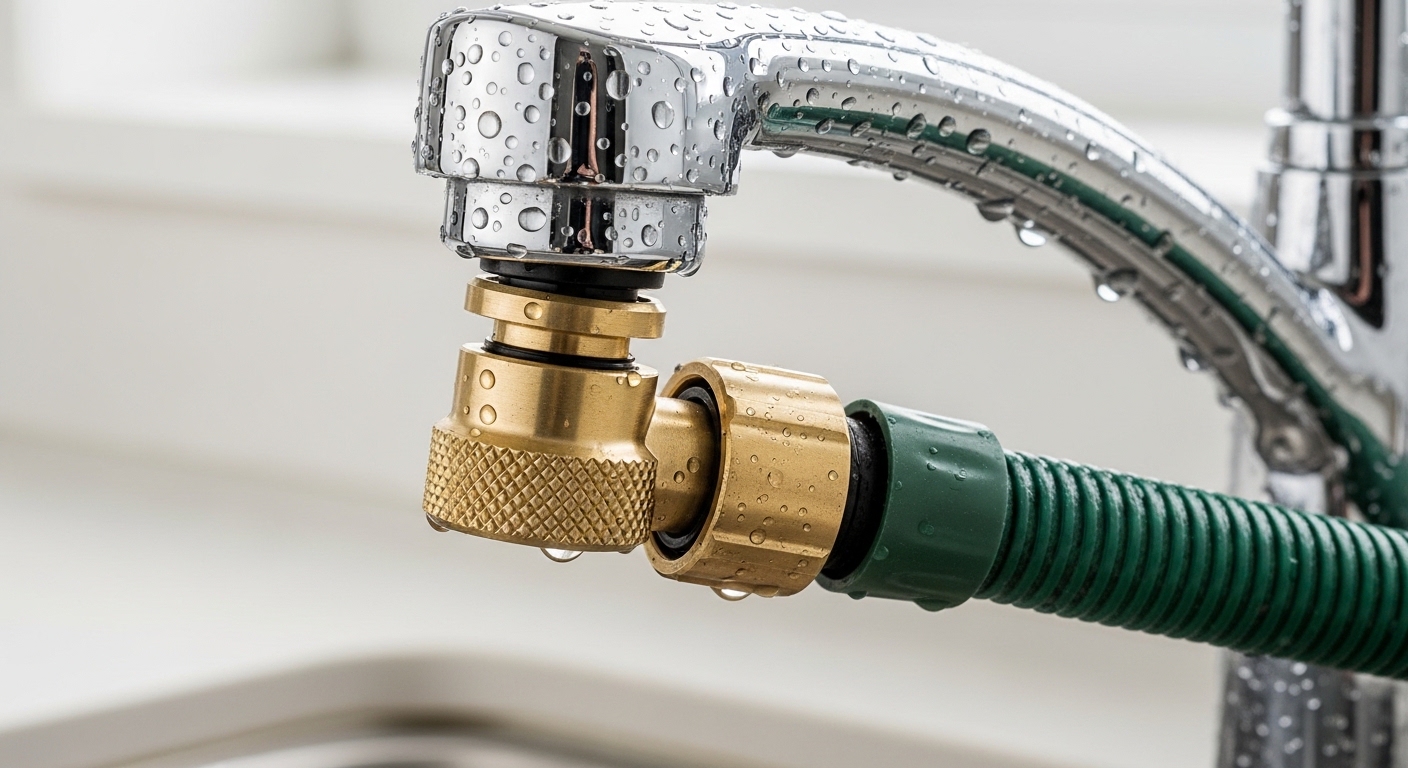
If you’ve ever stood at your sink holding a garden hose in one hand and a faucet in the other, wondering why they refuse to connect, you’re not alone — and the fix is almost always a faucet adapter for garden hose that bridges two threads that were never designed to meet. The garden hose end uses a standard 3/4-inch coupling; your faucet uses something completely different. The adapter is the little brass or plastic piece that translates one to the other. This guide answers the real questions people ask before they buy: which adapter fits, how to measure your faucet, whether to go brass or plastic, and how to stop it from leaking or blowing off under pressure.
Let’s get you the right part the first time.
What faucet adapter do I need to connect a garden hose to my kitchen sink?
For an indoor kitchen or bathroom faucet, you need an aerator-to-garden-hose adapter. It unscrews your existing aerator and threads into that same spot, giving you a male 3/4″ GHT connection your hose can grab. This is the single most common reason people search for a faucet adapter for garden hose — they want to fill a fish tank, run a portable dishwasher, hook up a water filter, or drag a hose out a window to wash the car.
Here’s the catch that trips everyone up: indoor faucets don’t have garden hose threads at all. They have aerator threads, which come in a few standard sizes:
- Regular male (15/16″-27): the aerator threads onto the outside of the faucet tip. Your adapter needs female threads to grab it.
- Regular female (55/64″-27): the aerator threads inside the faucet tip. Your adapter needs male threads.
- Junior/small sizes: found on newer or European-style spouts — less common in the U.S. but worth checking.
The good news: most kitchen-faucet garden hose adapters come as a dual-thread piece, machined with both male and female aerator threads on one end and 3/4″ GHT on the other, so it fits the majority of standard faucets out of the box. Unscrew your aerator, note whether the threads are inside or outside the spout, and match accordingly.
How do I connect a garden hose to an outdoor spigot or utility sink?
An outdoor hose bib (spigot) and most laundry/utility sinks already use 3/4″-11.5 garden hose thread, so you often just screw the hose straight on — no adapter needed. You only need a faucet adapter for garden hose here when the threads are damaged, when you’re connecting a threadless outdoor faucet, or when you want to add a splitter, quick-connect, or backflow preventer.
If your outdoor faucet has no threads at all — some older frost-free spigots and basement laundry taps are like this — you’ll want a clamp-on or push-on adapter that grips a smooth spout with a rubber gasket and a set screw or hose clamp. These are a workaround, not a permanent fix, and they can pop off under full pressure, so keep the valve dialed back.
One more thing outdoor users should know: if you’re threading anything onto a drinking-water spigot, choose a lead-free, potable-water-safe brass adapter (look for the “lead-free” stamp meeting the U.S. Safe Drinking Water Act limit of ≤0.25% lead). This matters if you’ll drink from the hose or fill a pet bowl.
How do I know which thread size and type my faucet has?
The fastest way: unscrew the aerator and look at where the threads sit. If the threads are on the outside of the faucet tip, you have a male-threaded (15/16″) faucet and need a female adapter. If they’re recessed inside the tip, you have a female-threaded (55/64″) faucet and need a male adapter. If you can’t tell, buy a dual-thread adapter and skip the guesswork.
To measure precisely, use a caliper or a thread-gauge card:
- Unscrew the aerator (turn counterclockwise as you face the spout; use a rubber grip or the plastic key that came with the faucet to avoid scratching the finish).
- Measure the diameter across the threads in inches — roughly 15/16″ (0.94″) for regular male, 55/64″ (0.86″) for regular female.
- Count the pitch — U.S. aerators are almost always 27 threads per inch.
- Confirm the hose end is 3/4″-11.5 GHT, which is the American garden-hose standard.
Getting the hole and thread details right the first time saves a return trip — the same “measure before you buy” logic applies to full faucet swaps, which is why we walk through it in detail in our guide on what hole size is needed for a faucet. And if you’re not even sure the metal you’re threading into is solid brass versus plated pot metal, our breakdown of whether a brass faucet is real brass will help you judge durability before you crank down an adapter on it.
Which faucet-to-hose adapter type is best for my situation?
The best adapter depends on what you’re connecting and how much pressure it’ll see. Here’s a quick comparison of the common types so you can match the part to the job.
| Adapter Type | Best For | Fits | Typical Price | Watch Out For |
|---|---|---|---|---|
| Dual-thread aerator adapter (brass) | Kitchen/bathroom faucet to hose | Male & female aerator threads | $8–$15 | Confirm 27 TPI aerator thread |
| Aerator adapter (plastic) | Light, occasional indoor use | Standard aerator threads | $4–$8 | Cross-threads and cracks easily |
| Clamp-on / push-on | Threadless or worn spouts | Smooth round spouts | $6–$12 | Can blow off under full pressure |
| Quick-connect coupler set | Frequent hook-up/removal | 3/4″ GHT connections | $10–$20 | Buy matching male + female ends |
| Garden hose to 3/4″ GHT (spigot) | Outdoor spigot / utility sink | Existing hose threads | $5–$10 | Add backflow preventer for drinking water |
For most people the answer is the brass dual-thread aerator adapter: it fits nearly every standard indoor faucet, survives repeated use, and won’t crack the way cheap plastic does when you tighten it. Save the clamp-on style for spouts that genuinely have no threads.
Why does my garden hose adapter leak or blow off the faucet?
A leaking faucet-to-hose adapter almost always comes down to one of three things: a missing or dry rubber washer, cross-threaded connection, or too much water pressure for a push-on fitting. Fix the washer and the threads first, and 90% of drips disappear.
Run through this checklist before you assume the adapter is defective:
- Check the washer. Every threaded hose connection seals on a rubber washer, not on the threads themselves. If it’s missing, flattened, or cracked, water weeps out. A 10-pack of hose washers costs a couple of dollars.
- Hand-tighten, then a quarter turn. Over-torquing a plastic adapter deforms the seat and makes leaks worse, not better. Snug is enough.
- Look for cross-threading. If it went on crooked, back it all the way off and restart by turning counterclockwise until you feel the threads “drop” into place, then tighten.
- Wrap the aerator threads. A couple of turns of PTFE (plumber’s) tape on the faucet side stops seepage where the adapter meets the spout.
- Respect the pressure. Push-on and clamp-on adapters are rated for low-to-moderate flow. If you open the valve fully and it blows off, that’s the fitting telling you it’s at its limit — dial it back or switch to a threaded connection.
If the leak is coming from the faucet itself rather than the adapter — a drip at the base or handle that started around the same time — that’s a separate repair. Our walkthrough on how to fix a leaky Moen faucet at home covers the cartridge and O-ring fixes that stop those drips without a plumber.
Can I leave a garden hose adapter on my faucet permanently?
You can, but you usually shouldn’t leave it on an indoor kitchen faucet full-time. Removing the aerator to fit the adapter also removes the aerator’s job — mixing air into the stream to reduce splashing and save water — so day-to-day the faucet will spray harder and use more water. Screw the adapter on when you need the hose, then put the aerator back for normal use.
There are two more reasons to treat it as a temporary connection indoors. First, a hose left pressurized against a faucet can create a cross-connection / backflow risk — if the hose end sits in a bucket of soapy water or a pool and pressure drops, contaminated water can be siphoned back. That’s exactly why outdoor spigots increasingly ship with built-in backflow preventers, and why plumbing codes care about it. Second, the constant weight and leverage of a hose hanging off a light aerator thread can loosen the connection over time.
On an outdoor spigot or dedicated utility sink, leaving an adapter or splitter attached year-round is fine — just disconnect and drain hoses before the first hard freeze so trapped water doesn’t crack the fitting or the faucet body. While you’ve got the aerator off, it’s a good moment to check whether the faucet aerator mesh is clogged with mineral buildup; a quick clean or swap restores your normal flow once the hose job is done.
What should I look for in a quality garden hose adapter?
Buy on material and thread quality, not just price. A $4 plastic adapter and a $12 brass one look similar in a photo, but the brass one threads cleaner, seals better, and lasts years instead of one summer. Here’s what actually matters:
- Solid brass body: resists corrosion, tolerates hot water, and won’t crack when tightened. Chrome-plated brass adds a matched look on visible faucets.
- Lead-free certification: essential if the water could be consumed; look for compliance with NSF/ANSI 372 and the ≤0.25% lead standard.
- Machined, not molded, threads: clean threads engage smoothly and don’t cross-thread. Rough, flashy plastic threads are the #1 cause of leaks.
- Quality rubber washer included: a good adapter ships with a proper hose washer, not a flimsy afterthought.
- Right hose standard: in North America you want 3/4″-11.5 GHT on the hose side; don’t accidentally buy a BSP (British) thread version sold for overseas markets.
If your setup is a deep basin or a pull-down spray faucet, also make sure the spout geometry gives you room to thread the adapter on straight — cramped, low-clearance spouts are easier to work with on a long spout reach kitchen faucet, which is worth keeping in mind if you’re shopping for a new faucet and know you’ll be hooking up hoses often.
FAQ
Do all kitchen faucets fit a garden hose adapter?
Most standard U.S. kitchen faucets do, because they use one of two common aerator thread sizes (15/16″ male or 55/64″ female), and dual-thread adapters cover both. The exceptions are pull-down/pull-out spray heads with proprietary snap-on tips and some newer designs with non-threaded or hidden aerators — those may need a brand-specific adapter or none is available at all. Unscrew the spray tip or aerator first to confirm you have real threads to work with.
Is there a difference between a garden hose adapter and a dishwasher/washing machine adapter?
Yes. A garden hose adapter converts your faucet to 3/4″ GHT so a standard hose screws on. Portable dishwashers and some appliances use a quick-connect coupler that snaps onto a special aerator adapter — related, but not interchangeable. If you’re hooking up a portable dishwasher, buy the coupler kit made for it; if you just want a hose, the standard GHT adapter is what you want.
Will a garden hose adapter reduce my water pressure?
The adapter itself barely affects pressure — it’s just a thread converter. What changes the feel is removing the aerator, which actually makes the stream stronger and less controlled because it’s no longer mixing in air. Any pressure drop you notice at the hose end comes from the hose length and diameter, not the adapter.
Can I use a garden hose adapter for hot water?
For warm water, yes — a brass adapter and a standard rubber hose washer handle warm tap temperatures fine. For sustained very hot water, use brass (not plastic) and a hose rated for hot water; standard vinyl garden hoses can soften and leach with prolonged hot use. Never connect a hose to a faucet delivering water hotter than the hose is rated for.
How do I keep the adapter from getting stuck on the faucet?
Wrap the aerator threads with a turn or two of PTFE tape before installing, hand-tighten only, and remove the adapter when you’re done rather than leaving it on for months. If mineral buildup does cement it in place, wrap the fitting in a vinegar-soaked cloth for 15–20 minutes to dissolve the deposits, then back it off gently with a rubber-jaw wrench so you don’t scar the finish.
Are brass or plastic garden hose adapters better?
Brass is better for almost everyone. It threads cleaner, seals more reliably, tolerates heat, resists corrosion, and lasts for years. Plastic is cheaper and fine for occasional, low-pressure indoor use, but it cross-threads and cracks easily — most leaks and stripped fittings come from plastic adapters over-tightened by hand.
The bottom line
Pick the adapter that matches your faucet’s threads: a brass dual-thread aerator adapter for indoor kitchen and bathroom faucets, or a straightforward 3/4″ GHT fitting for an outdoor spigot or utility sink. Confirm the thread type by unscrewing your aerator, always seat a fresh rubber washer, and hand-tighten with a touch of PTFE tape. Do that and a single inexpensive brass adapter will connect your garden hose cleanly, leak-free, for years.
Author’s note: This guide was written by the Arcora product team, drawing on hands-on fixture installation and testing. Arcora designs faucets, shower systems, and bath fixtures built to U.S. plumbing standards, with lead-free brass waterways and finishes tested for durability, and backs its faucets with a limited lifetime warranty on function and finish. When in doubt about thread sizing or water safety, check your local plumbing code or ask a licensed plumber.