 ARCORA FAUCETS
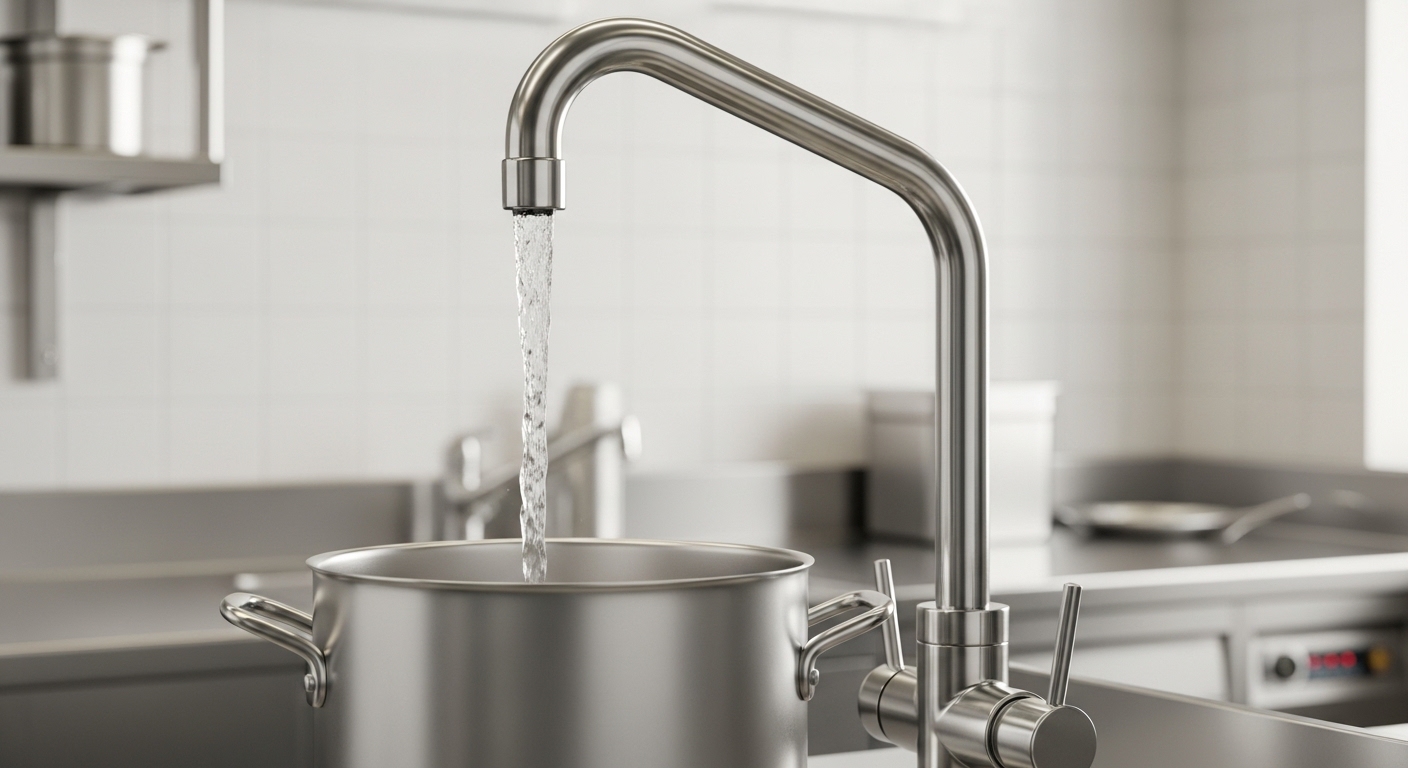
Getting the commercial kitchen tap flow rate right is the single most overlooked decision in outfitting a busy kitchen. Too low and your crew stands around waiting for a pot to fill or a rack to rinse; too high and you burn money on water and the gas or electricity to heat it. This guide breaks down exactly what flow rate means, what number you actually want for each job, how code limits factor in, and how to match a tap to real kitchen demand — in plain language, from people who test this hardware every day.
Flow rate is simply how much water a tap delivers per minute, measured in gallons per minute (GPM) in the US or liters per minute (LPM) elsewhere. It’s always quoted at a reference water pressure — almost always 60 psi — because the same faucet will flow more at high pressure and less at low pressure. That reference matters more than most buyers realize, and we’ll come back to it.
What is a good flow rate for a commercial kitchen tap?
For a standard commercial kitchen faucet, a good flow rate is 1.8 to 2.2 GPM — high enough to fill pots and buckets quickly without wasting water. For a pre-rinse spray unit used to blast food off dishes, aim for 1.15 to 1.6 GPM, because the concentrated spray does the cleaning work, not raw volume.
Here’s the thing most spec sheets won’t tell you plainly: flow rate and cleaning power are not the same thing. A pre-rinse valve at 1.15 GPM can out-clean a 2.5 GPM open spout because it converts that water into a tight, high-velocity fan. Velocity knocks food loose; sheer volume mostly just fills sinks. So the “right” number depends entirely on the task:
- Pot and kettle filling: You want maximum legal flow — 2.2 GPM or a dedicated pot-filler that ignores aerator restrictions — because here volume literally equals speed.
- Pre-rinsing dishes and trays: 1.15–1.6 GPM through a spray valve. Velocity does the work.
- Hand washing at a dedicated sink: 0.5 GPM is often mandated by code, and it’s plenty.
- General prep and vegetable washing: 1.5–1.8 GPM with an aerator gives a soft, splash-free stream.
How many GPM does a commercial faucet need vs. a home faucet?
A commercial faucet generally needs 1.5–2.2 GPM, while modern residential kitchen faucets are capped lower — usually 1.5–1.8 GPM — by consumer efficiency rules. The gap exists because commercial kitchens are regulated under different plumbing and food-safety codes, and because their tasks (filling 5-gallon buckets, rinsing sheet pans) genuinely demand more throughput.
To put the numbers in context, here’s how the common categories stack up. These are real-world figures at the standard 60 psi test pressure:
| Tap type | Typical flow rate (GPM) | Best for | Notes |
|---|---|---|---|
| Residential kitchen faucet | 1.5 – 1.8 | Home cooking, dishes | Federally capped for water efficiency |
| Low-flow residential faucet | 1.0 – 1.5 | Eco-conscious homes | Aerator-restricted |
| Standard commercial faucet | 1.8 – 2.2 | Prep, filling, general use | Higher throughput allowed |
| Pre-rinse spray valve | 1.15 – 1.6 | Scraping/rinsing dishes | ENERGY STAR caps at ≤1.6 |
| Dedicated pot filler | 2.2 – 4.0 | Filling large stockpots | Often exempt from aerator limits |
| Hand-wash sink faucet | 0.35 – 0.5 | Staff hygiene stations | Metered/low-flow by code |
Notice that the pre-rinse valve column looks low, but it’s the workhorse of any dish pit. If you’re weighing a full pre-rinse setup against a standard tap, our guide to what a commercial kitchen faucet pre-rinse unit is and which one to buy walks through the specific spray-valve models and mounting options in detail.
Does higher flow rate mean better water pressure?
No — flow rate and water pressure are two different things, and confusing them is the most common mistake buyers make. Pressure (measured in psi) is the force pushing the water; flow rate (GPM) is how much actually comes out. A faucet rated at 2.2 GPM only delivers that at 60 psi. Drop your building’s supply to 30 psi and that same tap might only give you 1.5 GPM.
This matters when you’re diagnosing a “weak” tap. If your commercial faucet feels underpowered, the problem is usually one of three things: low incoming supply pressure, a clogged aerator, or a spec mismatch where you bought a low-flow model for a high-demand job. Before you blame the faucet, check the aerator — mineral scale and debris throttle flow dramatically. Our step-by-step on faucet aerator removal when it’s stuck shows how to clear it without wrecking the threads.
The practical takeaway: a tap can’t deliver more flow than your supply pressure allows. If you’re building out a kitchen with marginal pressure, size up your supply lines and confirm your incoming psi before you obsess over the faucet’s rated GPM.
What do the codes actually require for commercial kitchen tap flow rate?
Most US jurisdictions cap commercial pre-rinse spray valves at 1.6 GPM or lower (per federal EPAct and state codes like California’s Title 24, which sets 1.15–1.28 GPM depending on spray force), while general-purpose commercial faucets often fall under a 2.2 GPM ceiling. Hand-wash sinks are typically limited to 0.5 GPM. These are legal maximums, not targets — you can always go lower.
Where it gets nuanced: pot fillers and certain fill stations are frequently exempt from aerator flow limits because they’re classified as filling appliances, not general lavatory faucets. That’s why a dedicated pot filler can legally push 3–4 GPM. Always verify with your local Authority Having Jurisdiction (AHJ) and your plumbing inspector before you spec anything, because state and municipal codes layer on top of federal rules and vary widely.
Standards worth knowing when you read a spec sheet:
- ASME A112.18.1 / CSA B125.1 — the core North American faucet standard covering flow-rate testing and construction. If a tap is certified to this, its GPM number was measured under controlled conditions, not marketing guesswork.
- NSF/ANSI 2 — food-equipment sanitation. Commercial kitchen faucets in food-prep areas should carry NSF certification so they’re legal for health-code inspection.
- ENERGY STAR pre-rinse spray valves — certified at ≤1.6 GPM with a minimum cleaning-performance threshold, so you save water without sacrificing scrub power.
- WaterSense — the EPA’s efficiency label; helpful if your operation has water-reduction targets or you’re chasing green-building credits.
How do I calculate the right flow rate for my kitchen’s demand?
Match flow rate to your busiest simultaneous demand: add up the GPM of every fixture likely to run at once during peak service, and confirm your supply and water heater can handle that total. A single 2.2 GPM tap is trivial; four stations plus a dish machine running together is where kitchens run out of hot water.
A quick way to measure any existing tap’s real flow without a gauge: put a 1-gallon container under it, run the tap wide open, and time how long it takes to fill. Divide 60 by the seconds. Fills in 30 seconds? That’s 2.0 GPM. Fills in 40 seconds? 1.5 GPM. This “bucket test” tells you the actual flow at your building’s real pressure — far more useful than the rated number on the box.
Then think about hot-water load, because flow rate isn’t just a water bill — it’s an energy bill. Every gallon you pull through a hot tap is a gallon your water heater has to reheat. Cutting a dish pit from a 2.5 GPM spray valve to a 1.15 GPM one can save thousands of gallons of hot water a year, which is why efficient pre-rinse valves usually pay for themselves within months. If you’re actively trying to trim usage, it’s worth understanding what counts as a low-flow kitchen faucet and whether one fits your operation.
What else matters besides flow rate when choosing a commercial tap?
Beyond flow rate, the deciding factors are spout height and reach, valve durability, spray-force rating, and mounting style — because a tap with perfect GPM that can’t clear your tallest pot or wears out in a year is the wrong tap. Flow gets you in the door; these determine whether the faucet actually works for your line.
Here’s what to weigh alongside the GPM number:
- Spout height and reach: A tall gooseneck clears stockpots and sheet pans. If you’re filling deep or double-bowl sinks, spout geometry matters as much as flow — the same logic we cover for choosing a long spout reach kitchen faucet for deep sinks applies directly to commercial layouts.
- Valve type: Ceramic-disc cartridges last far longer than rubber-washer valves under constant commercial use. Ask about the cartridge rating and cycle life.
- Spray force: For pre-rinse units, the spray-force rating (measured in ounce-force) predicts cleaning speed better than GPM alone. A higher-force, lower-flow head is the efficiency sweet spot.
- Mounting: Deck-mount vs. wall-mount changes cleaning around the faucet base. Wall-mount keeps the deck clear and is easier to sanitize under.
- Material and finish: Commercial-grade brass or 304 stainless resists corrosion from constant use and harsh cleaning chemicals better than budget zinc alloys.
A quick buying scenario: which flow rate for a mid-size restaurant?
For a mid-size restaurant with one dish pit and two prep stations, spec a 1.15–1.6 GPM pre-rinse spray valve at the dish pit, 1.8–2.2 GPM faucets at prep, and 0.5 GPM at the hand-wash sink. This mix maximizes cleaning speed where it counts, keeps prep fast, and stays code-compliant on hygiene stations — while keeping your hot-water heater from getting overwhelmed at peak.
If you’re running hard water — common in much of the US — factor in maintenance too. Mineral scale builds up inside aerators and spray heads and quietly chokes flow over months. Budget for periodic descaling, and know that the flow rate you install will drift downward if you skip that upkeep.
FAQ
What is the standard flow rate for a commercial kitchen faucet?
The standard commercial kitchen faucet flows 1.8–2.2 GPM at 60 psi, while pre-rinse spray valves are capped at 1.6 GPM or lower under federal and state efficiency rules. Hand-wash sinks are typically limited to 0.5 GPM. Always confirm your local code, since state ceilings (like California’s) can be stricter than federal ones.
Is a higher GPM always better for a commercial tap?
No. Higher GPM means faster pot filling, but for rinsing and cleaning, spray velocity matters far more than raw volume. A 1.15 GPM pre-rinse valve can clean dishes faster than a 2.5 GPM open spout because it converts water into a high-force fan. Higher flow also raises water and hot-water heating costs, so match the number to the task rather than just buying the biggest figure.
Why does my commercial faucet have low flow even though it’s rated high?
The two usual culprits are low incoming supply pressure and a clogged aerator or spray head. Rated GPM is measured at 60 psi, so if your building runs lower, you’ll get less flow. Mineral scale from hard water also throttles output over time. Remove and descale the aerator first — it’s the fastest fix and restores most lost flow.
Do commercial pot fillers have to follow the same flow limits?
Often not. Pot fillers and dedicated fill stations are frequently classified as filling appliances rather than general faucets, which exempts them from the aerator flow-rate caps that limit standard taps. That’s why they can legally deliver 2.2–4.0 GPM. Verify with your local plumbing inspector, because classification and exemptions vary by jurisdiction.
How can I measure my tap’s actual flow rate at home?
Use the bucket test: place a 1-gallon container under the tap, run it wide open, and time the fill in seconds. Divide 60 by that number to get GPM — a 30-second fill equals 2.0 GPM. This measures real flow at your building’s actual pressure, which is more useful than the rated number on the spec sheet.
Does a lower flow rate actually save money in a commercial kitchen?
Yes, significantly. Because most kitchen tap use involves hot water, cutting flow reduces both your water bill and the energy to heat it. Swapping an old 2.5 GPM pre-rinse valve for a 1.15 GPM ENERGY STAR model can save thousands of gallons of hot water per year, typically paying for the new valve within a few months.
Author note: This guide was written by the Arcora product team, drawing on hands-on testing of commercial and residential faucet flow rates across a range of supply pressures. We measure flow at the standard 60 psi reference and cross-check against ASME A112.18.1 and NSF/ANSI 2 requirements.
About Arcora: Arcora designs and manufactures kitchen and bathroom faucets built to certified North American standards, backed by a manufacturer’s warranty on cartridges and finishes. Our fixtures are tested for flow accuracy, durability, and corrosion resistance so the GPM on the box is the GPM you actually get. Explore the full range at www.arcorafaucet.com.